Iceland’s Silfra fissure is making the rounds again as a crack where a current can flush divers through the rock. Nothing new happened there, and no accident, closure or study is behind it. A BBC Wildlife feature on October 31, headlined “The world is splitting apart here,” and a WION piece on November 2 revived an old story about a tunnel divers call “the Toilet.”
The Toilet is real but off limits, and some viral details are wrong. Here is what Iceland’s national park and the local dive operators actually say, and what an American visitor needs to know before booking a snorkel trip.
What the ‘Toilet’ is, and why nobody swims it now
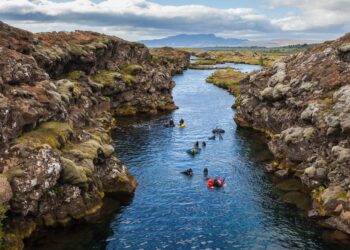
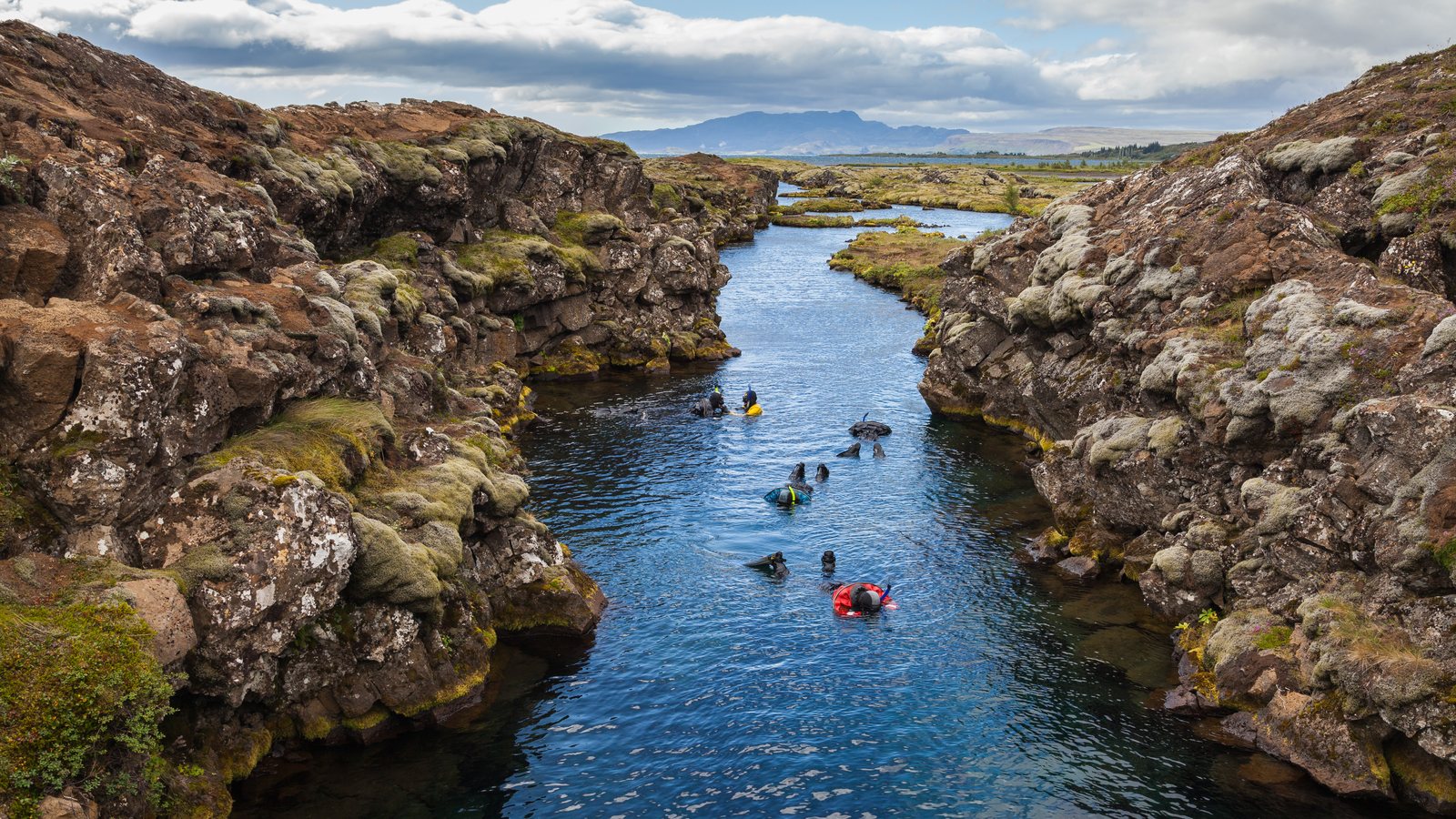
Silfra lies in Þingvellir National Park, about an hour’s drive from Reykjavík. Off the main crack is a pool with a cave that drops to at least 63 meters, according to Dive.is, the operator that sponsors the guide site Silfra.org.
A narrow tunnel links that cave to the main fissure. Silfra.org says divers had to go through it headfirst and straight down to 16 meters, with a current strong enough to push them down. That push gave the tunnel its nickname.
Few people ever did it. Silfra.org says only experienced dry-suit divers with cavern training tried it. Dive.is now says plainly that “diving through this tunnel is also now prohibited.”
One widely shared version gets the physics wrong. WION wrote that the crack can “suck a person in and spit them out about 53 feet away.” The 16 meters, about 52 feet, is a depth. The tunnel drops divers down; it doesn’t throw them sideways.
Is Silfra really a crack between two continents?
Partly. The North American and Eurasian plates pull apart across Iceland. Þingvellir sits on that boundary, part of the Mid-Atlantic Ridge.
The park’s own geology page, in Icelandic, adds detail the viral posts skip. Iceland has three plates in play, not two: the North American, the Eurasian and a smaller Hreppar plate. The park marks the Almannagjá cliff as the eastern edge of the North American plate. East of it, the valley floor is a sinking strip of crust broken by many fissures.
Silfra is one of those fissures. Silfra.org describes it as one of the cracks opening along the ridge line, not a single gap with a continent on each wall. So swimmers are inside the rift between the plates, which is still remarkable. They aren’t touching North America with one hand and Europe with the other.
The speed is often garbled too. Away from the boundary, the plates move apart about 2 centimeters a year, the park says. At the boundary, the rock stores strain for decades and releases it in sudden bursts.
The 1789 earthquakes, and how old Silfra is
The last big burst came in spring 1789. A 10-day swarm of earthquakes hit Þingvellir, and the land between the Almannagjá and Hrafnagjá faults sank by almost 2 meters, according to the park. Over the past 10,000 years, the valley has sunk about 40 meters and widened about 70 meters.
Many dive sites say Silfra opened in 1789. Silfra.org, for example, says most of Þingvellir’s fissures “including Silfra” opened then. The park disagrees.
It calls the 1789 date a misunderstanding, BBC Wildlife reported. It estimates that a 10-meter-wide fissure needs at least 1,500 years to form at 5 millimeters a year, and says the exact date is unknown.
Both can be partly true. Earthquakes drop boulders into cracks, Silfra.org says, which wedge in narrow spots and form the caves and tunnels divers see now. The 1789 swarm likely reshaped Silfra rather than created it.
Why the water is so clear and so cold
The water starts as meltwater from Langjökull, a glacier to the north. It seeps through porous lava fields underground before rising into Silfra and flowing into Lake Þingvallavatn.
How long that takes depends on who you ask. The park’s watershed page estimates about 20 to 30 years. Dive.is says 30 to 100 years.
Either way, the lava filters the water. Dive.is reports visibility of more than 100 meters and a water temperature of 2°C to 4°C (about 36°F to 39°F) all year.
The lake it feeds is Iceland’s largest, at about 84 square kilometers and up to 114 meters deep, the park says. About nine-tenths of the water entering it arrives underground through fissures like Silfra.
There isn’t much to see in the way of fish. Dive.is says most visible life is plants and tiny invertebrates, including bright green algae that guides call “troll hair.”
The rules and the safety record
Silfra is not a free-for-all. The park’s diving rules allow diving and snorkeling in only two fissures, Silfra and nearby Davíðsgjá. Divers and snorkelers must register every trip, sign a liability waiver and pay a fee.
Scuba divers need a dry-suit certification or at least 10 dry-suit dives in the past two years. The park bans wetsuit diving, solo diving, cave diving and going below 18 meters. Divers go in entirely at their own risk, the park says.
Those rules tightened after a string of deaths. By March 2017, five people had died in Silfra since 2010, Iceland Review reported. Two were American snorkelers in their 60s who died within weeks of each other that winter. A preliminary autopsy found one had a heart attack, according to Icelandic broadcaster RÚV, as cited by Iceland Review.
After the first of those deaths, the park’s manager asked Iceland’s transport authority for stricter rules and monitoring, Iceland Review reported. The two largest operators, Dive.is and Arctic Adventures, said they now require a health certificate from guests over 60 or with relevant medical conditions.
For most visitors, the takeaway is simple. Expect near-freezing water, a guide at your side and no access to the tunnel. People over 60 or with heart conditions should expect operators to ask for a doctor’s note. Cold-water shock was also among the risks a lifesaving group flagged after cliff diver Molly Carlson’s iceberg dive in Newfoundland.
Planning a park trip closer to home? Our guide to Chiricahua National Park covers what changes for visitors there.
Silfra will keep widening a few millimeters at a time. The next real change will come with the next earthquake swarm along the rift, which the park says no one can date.