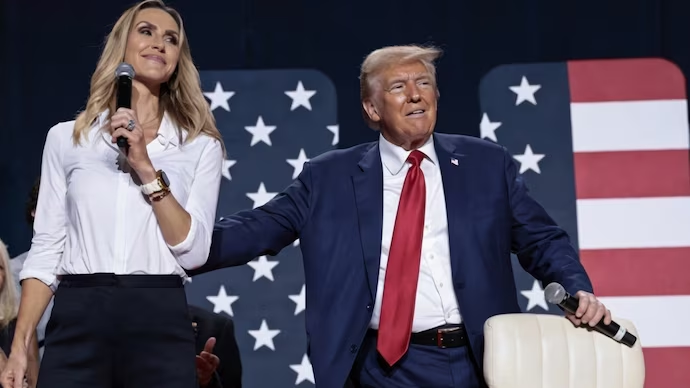
Talk of a nationwide youth social media ban surged after Lara Trump said Donald Trump has a “keen interest” in the psychological effects of platforms on children. No bill exists yet. No executive order has been drafted. But the idea is no longer fringe policy chatter. It has moved into early political consideration territory, where research, public pressure, and global precedent collide. This article explains what was actually said, what the administration could legally do, and how likely a ban really is.
What did Lara Trump actually say about a teen social media ban?
In an interview with the New York Post and on a podcast hosted by Miranda Devine, Lara Trump described conversations with the president about neurological responses children experience while using social media.
She referenced research about dopamine and oxytocin spikes tied to screen interaction, then asked a broader question: how do kids recalibrate to offline life after constant stimulation?
Her key signals were:
• Trump is actively reading research on youth psychology and screen use
• He is curious about age-based limits
• He is looking at international policies as models
She personally endorsed restrictions for younger teens, even while saying she generally opposes regulation.
Importantly, she did not claim a policy decision had been made.
Why the topic is resurfacing now
The discussion is part of a broader regulatory wave, not an isolated U.S. debate.
Global policy momentum
Several countries have already acted or are actively drafting rules:
• Australia set a minimum age framework for certain platforms
• France has implemented parental consent requirements
• U.S. states have attempted verification laws
The United States tends to move last on youth internet regulation because constitutional protections are stronger, especially under the First Amendment. That means any federal action must be carefully constructed to survive court review.
Growing scrutiny of major platforms
Platforms facing pressure include:
• Meta Platforms services like Instagram and Facebook
• Snap Inc. Snapchat
• X Corp. X
• TikTok
Lawmakers increasingly frame the issue as product safety rather than speech control. That distinction is key because courts treat safety regulations more favorably than content restrictions.
Could a president actually ban social media for teens?
Not directly. A full ban would almost certainly be struck down. But there are realistic legal pathways.
What the White House could do without Congress
A president can push agencies to:
• require stronger age verification standards
• enforce data collection limits for minors
• classify certain algorithmic targeting as harmful to children
This would function less like a ban and more like a digital curfew enforced by compliance rules.
What requires Congress
A true age-minimum law needs legislation because it restricts access to communication platforms. Courts demand clear statutory authority when youth speech rights are involved. Think of it like alcohol regulation: federal standards, state enforcement, corporate compliance.
Why policymakers focus on brain chemistry
The dopamine argument appears frequently because it reframes social media from entertainment to behavioral conditioning.
Researchers studying adolescents report:
• Variable reward loops keep users scrolling
• Notification anticipation increases compulsive checking
• Removal of stimuli triggers withdrawal-like reactions
The policy implication is powerful. If platforms are treated like engineered behavioral products rather than neutral forums, regulation becomes legally easier.
What a realistic policy would look like
If a proposal emerges, expect a layered framework rather than a dramatic prohibition headline.
Likely components
- Minimum age threshold around 13-16, depending on platform features
- Mandatory parental dashboards
- Time-of-day restrictions for minors
- Algorithm transparency requirements
- Penalties for addictive design targeting children
- That structure mirrors safety rules used for toys, food labeling, and television advertising to minors.
Political strategy behind the issue
Youth online safety has become a rare bipartisan territory. Conservatives emphasize morality and addiction. Liberals emphasize mental health and corporate accountability. Both can support restrictions without appearing anti-technology.
For the administration, the topic offers:
• public approval across demographics
• limited economic backlash compared to antitrust breakups
• alignment with parental concerns
In policy terms, it is a low-risk, high-visibility issue.
So, is a teen social media ban coming?
Short answer: unlikely in the literal sense, plausible in a functional sense.
A nationwide prohibition would fail in court. But restrictions that dramatically reshape teen access are increasingly probable.
Expect regulation that changes how minors use platforms rather than whether they can ever use them.
TL;DR
Lara Trump said Donald Trump is interested in the psychological effects of social media on children. No ban exists yet, but the U.S. could pursue age verification, parental controls, and algorithm limits. A full prohibition is improbable, but meaningful restrictions are becoming likely as global regulation expands.