
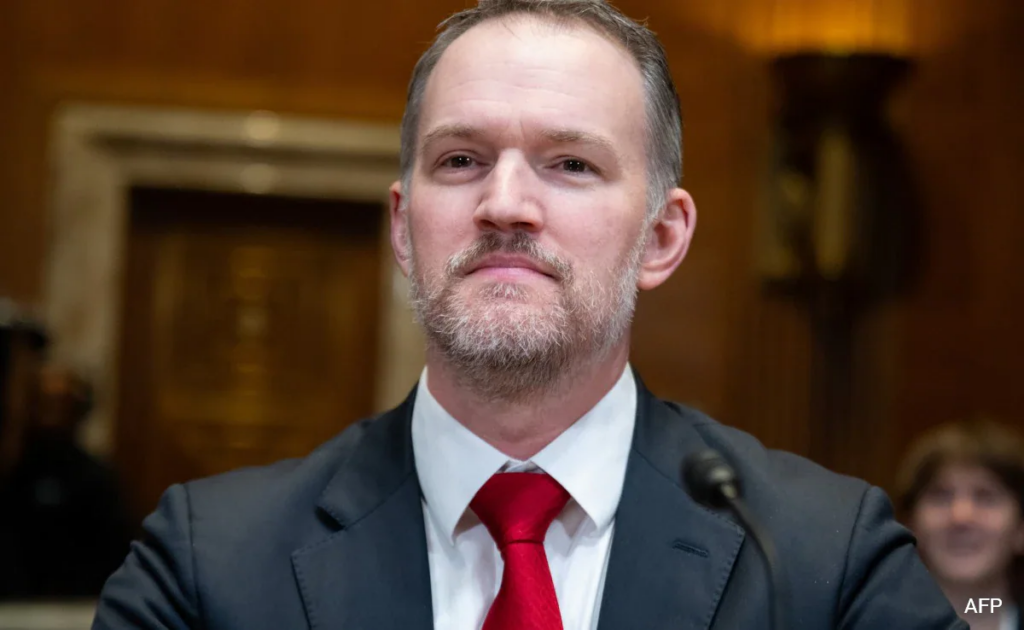
Within the first weeks of renewed tariff escalations under Donald Trump, a relatively unfamiliar name began appearing in trade briefings, court filings, and diplomatic readouts. That name is Jamieson Greer.
Greer is not a campaign surrogate, television regular, or rally headliner. Yet inside Washington’s trade apparatus, he has become the engineer behind the administration’s tariff-first economic strategy. His work helps explain not just what the White House is doing, but why it believes tariffs can reshape global commerce.
This article breaks down the legal theory, diplomatic calculus, and economic gamble behind the Trump tariff agenda and the lawyer quietly running point.
What is the Trump global tariff strategy?
The Trump global tariff strategy refers to the administration’s effort to use import taxes as a primary foreign policy and economic tool. Instead of treating tariffs as narrow protections for specific industries, the policy treats them as leverage across geopolitics, manufacturing, and supply chains.
Greer’s office has overseen tariffs targeting:
- China
- Canada
- Mexico
- Colombia
At times, tariffs have been imposed or threatened not only over trade imbalances but over migration cooperation, industrial subsidies, and technology transfer.
The legal foundation Greer built
Greer’s central contribution has been constructing a legal framework allowing tariffs to operate beyond traditional trade disputes.
Key pillars include:
- Emergency economic powers
- National security authorities
- Negotiation leverage during bilateral talks
- Rapid-response tariff threats during diplomatic crises
Several of these measures are now under review by the Supreme Court of the United States. A ruling against the administration could force a rewrite of the policy’s legal architecture.
Why tariffs became the centerpiece of US economic policy
Trump’s economic worldview treats global trade as a bargaining table rather than a fixed rules system. In that context, tariffs function less like taxes and more like negotiating chips.
Greer has repeatedly framed tariffs as a tool that creates urgency in negotiations. Officials argue countries rarely make concessions without immediate economic pressure.
The leverage theory
The administration believes tariffs achieve four goals simultaneously:
- Encourage domestic manufacturing relocation
- Extract concessions in non-trade disputes
- Reduce reliance on strategic rivals
- Shift global supply chains toward allies
Negotiations with partners in Europe and planned talks in Beijing illustrate how tariffs now function as diplomatic opening moves rather than last-resort penalties.
Who is Jamieson Greer?
Greer’s background diverges sharply from the typical trade diplomat career path.
From mobile home to trade courtroom
He grew up in a working-class household in California and held service jobs as a teenager before attending Brigham Young University. After law school and studies in Paris, he joined the military as a legal officer.
His postings included:
- Kansas
- Turkey
- Iraq
Greer has said that taking cover from mortar fire during court proceedings shaped his temperament. In Washington policy fights, he describes himself as relaxed by comparison.
Apprenticeship in trade wars
Before becoming a trade representative, Greer worked under Robert E. Lighthizer, the architect of the administration’s earlier trade disputes.
That experience positioned him as both a continuity figure and a technical executor. Insiders often describe him as the person who translates presidential instincts into enforceable law.
How Greer coordinates diplomacy and tariffs
Trade policy today operates like a synchronized negotiation between economic and geopolitical offices.
Greer works closely with Treasury leadership, including Scott Bessent, during preparations for engagements involving Xi Jinping.
The balancing act
Officials say tariffs must remain credible without triggering full-scale economic conflict. That produces a narrow corridor:
- Too weak: partners ignore US demands
- Too strong: markets panic and diplomacy collapses
Greer’s job is essentially to keep pressure high while leaving space for agreement.
He has warned publicly that escalating confrontation between the US and China would harm the global economy.
Why courts and businesses are watching closely
Legal challenges now threaten the entire structure of the Trump global tariff strategy.
If courts rule that emergency authorities were stretched beyond congressional intent:
- Many tariffs could be invalidated
- Negotiated concessions could unravel
- Future administrations may lose similar tools
For multinational companies, the uncertainty is already reshaping logistics planning.
Corporate response patterns
Businesses are reacting in three distinct ways:
- Diversifying supply chains
- Accelerating near-shoring
- Holding inventory as insurance against sudden tariff shifts
What makes Greer influential despite low visibility
Greer rarely appears in political messaging, but his influence lies in translating broad policy goals into legally defensible action.
His role blends three functions:
- Trade lawyer
- Diplomatic negotiator
- Policy risk manager
In volatile policy environments, predictability becomes power. Washington observers often describe him as the administration’s stabilizing technician.
A profile in The New York Times highlighted how his calm demeanor contrasts with the turbulence surrounding trade debates.
Does the Trump global tariff strategy actually work?
Economists remain divided.
Arguments in favor
- Forces negotiations that otherwise stall
- Accelerates industrial reshoring
- Expands geopolitical leverage
Arguments against
- Raises consumer prices
- Encourages retaliation
- Creates long-term uncertainty
The outcome likely depends on whether trading partners make structural concessions or simply wait out political cycles.
TL;DR
- Jamieson Greer is the chief legal architect behind Trump’s tariff-centered trade policy.
- The strategy treats tariffs as diplomatic leverage rather than narrow protection.
- Courts may decide whether the legal foundation holds.
- Businesses are already restructuring supply chains due to uncertainty.
- The policy’s success depends on negotiated concessions, not tariff revenue.