Fewer Americans are using mail ballots in the 2026 midterms, and Democrats appear to be switching to early in-person voting fastest. That’s the finding of a Washington Post analysis published on Oct. 22. The Post ties the shift to President Donald Trump’s long campaign against mail voting.
State election data back up the first part. There are fewer mail ballots and more in-person early votes than at this point in 2022.
The second part, that Trump’s attacks are the reason, rests on voter-file analyses and interviews. Researchers say it can’t be confirmed until after Nov. 3.
State data show fewer mail ballots than in 2022
Michael McDonald, a University of Florida professor, tracks early-vote data. Mail ballot requests were down from the last midterm in six of the eight states he analyzed, the Post reported. In Georgia, he found, requests have fallen 40%.
Official figures in three swing states point the same way:
- Wisconsin: The Wisconsin Elections Commission recorded 55,659 in-person absentee voters on Oct. 20, the first day of early voting, WKOW reported. That was 65% more than the 33,644 on the first day in 2022. Mail ballots sent out had dropped about 20%, to 372,000, according to Votebeat and Wisconsin Watch.
- North Carolina: Mail ballot requests were down 33% from this point in 2022, State Board of Elections data showed, according to WRAL. Requests fell 41% among registered Democrats, 27% among Republicans and 25% among unaffiliated voters. In-person early votes in the first four days were up 49%.
- Georgia: The secretary of state’s office counted 130,000 absentee requests by Oct. 13, the first day of early voting. That compares with nearly 286,000 over the whole 2022 midterm, Atlanta News First reported.
Early turnout is not falling. More than 21.1 million Americans had voted in the latest state updates, mostly from Oct. 22, according to the University of Florida Election Lab’s tally of state data.
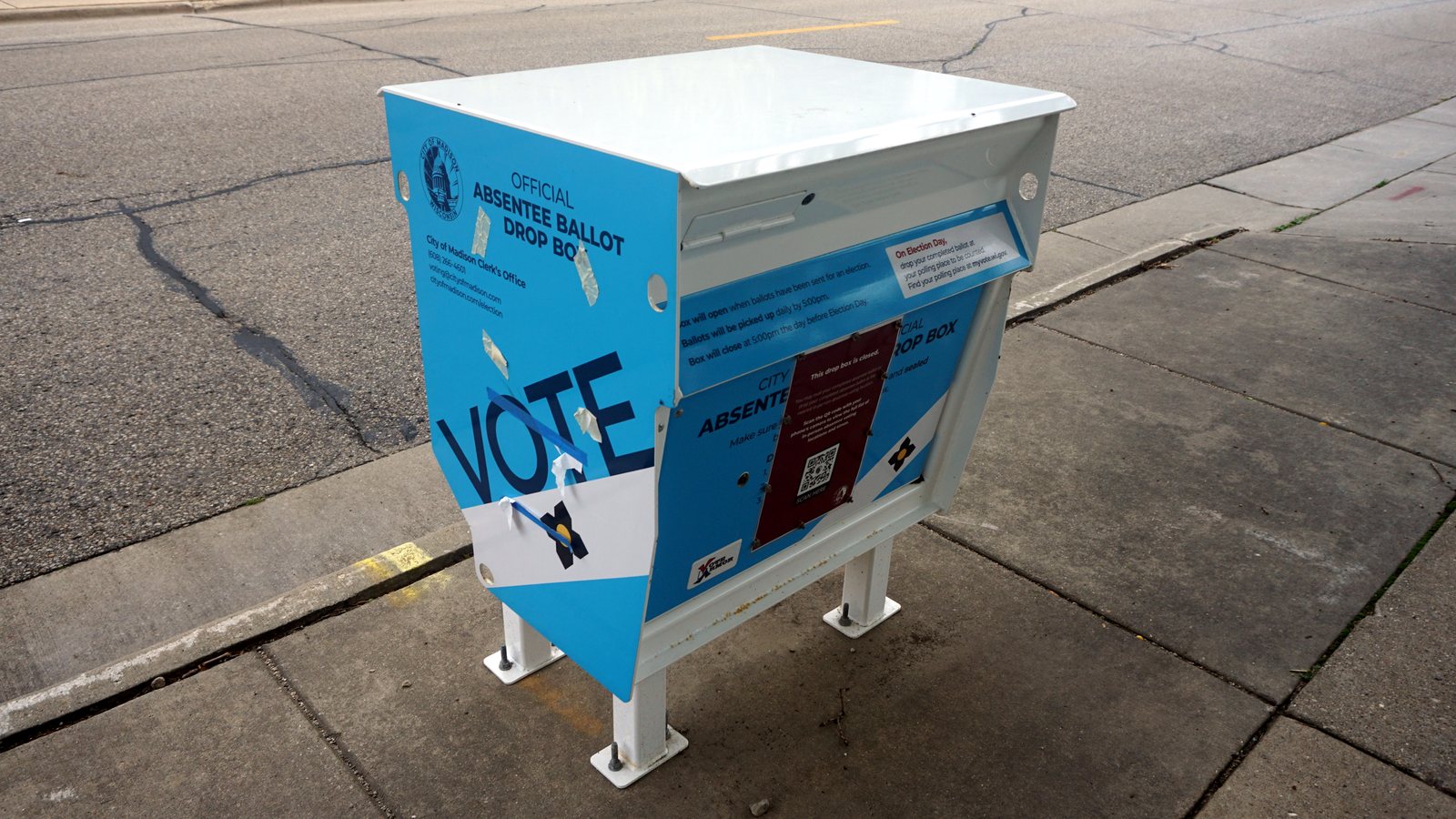
About 9 million of them voted in person and 12.1 million by mail, a total that includes drop boxes. The Post had cited about 15 million from the same tally a day earlier.
The party switch is documented, but by fewer sources
The evidence that Democrats specifically are leaving the mail comes from voter-file studies, and BreezyScroll couldn’t check them independently.
In Nevada, Zachary Donnini of the nonpartisan data group VoteHub looked at early in-person voters, the Post reported. He found 18% of Democrats among them had voted by mail in 2024, against 10% of Republicans.
In North Carolina, the Post cited Charles Stewart III, a political scientist at the Massachusetts Institute of Technology. He tracked Democrats who voted by mail in 2022 and have already voted this year. Just over half of them switched to early in-person voting.
Among Republicans, 61% stayed with the mail, according to the Post. Democrats also had more mail voters to lose. In 2024, 37% of Democrats reported voting by mail, against 24% of Republicans, according to an MIT survey cited by NPR.
Republicans are turning out early in person too. In Nevada, they had cast 44,752 early in-person ballots to Democrats’ 39,728 by Oct. 22, UF Election Lab figures show. Democrats led the mail count, 73,160 to 56,485.
The Nevada Independent’s early-vote tracker shows the same split, with Democrats still ahead overall.
Trump’s attacks and the blocked Postal Service rule
Trump has called mail voting fraudulent for years. In a post last year he claimed that “ELECTIONS CAN NEVER BE HONEST WITH MAIL IN BALLOTS/VOTING,” NPR reported.
On March 31 he signed an executive order on mail ballots. It told the Postal Service to deliver ballots only to voters on state mail voting lists, in envelopes with tracking barcodes.
The White House fact sheet said its aim was “to protect the security of mail-in and absentee ballots.” It said gaps in state verification “undermine public confidence in election outcomes.”
Two federal judges, one in Boston, blocked the Postal Service rule that followed. The Supreme Court refused to pause the Boston injunction in September. The government was “unlikely to succeed on the merits,” its order said. Justices Samuel Alito and Clarence Thomas dissented.
The rule doesn’t apply to this election, so mail ballots are being handled under existing procedures.
Trump’s message has since changed. “Vote early, vote by mail or vote in person on Election Day,” he said in an Oct. 3 video, ABC News reported.
Two days later he told reporters, “I’d rather have a vote in person. But they can vote by mail if they want, because we seem to have no choice.” He also claimed, without evidence, “there is a lot of cheating in vote by mail.” Trump himself voted by mail twice in Florida elections this year, ABC News reported.
Postal worries are one explanation among several
Mail voting has been falling since its 2020 pandemic peak. Experts told the Post that part of this year’s drop may be that longer trend. In North Carolina, mail ballots fell from nearly 20% of votes in 2020 to about 5% in 2022, WRAL reported.
State rules have also changed. North Carolina adopted stricter envelope rules this year, under which an unsealed inner envelope can get a ballot rejected. Michael Bitzer, a political scientist at Catawba College, told WRAL that many voters probably didn’t want “the hassle of voting by mail.”
In Wisconsin, UW-Madison professor Barry Burden pointed to other causes. He told Votebeat that recent absentee ballot errors played a part. So did voters leaving the state’s permanent absentee list.
Trust in the mail has fallen as well. In an NPR/PBS News/Marist poll cited by Votebeat, 58% of Americans were confident election mail would arrive on time. Two years earlier, 71% were.
“Voters are looking for ways to get around the Postal Service,” Burden said. New Berlin city clerk Rubina Medina told Votebeat that voters often say they don’t trust the mail. She called that distrust often unwarranted.
Those interviews link postal worries to the shift, but they don’t show how many voters changed methods because of Trump. Stewart told the Post that a full picture won’t be possible until well after the election.
Return deadlines are close in key states
Meagan Wolfe, who runs the Wisconsin Elections Commission, told Votebeat that mail ballots should go back “as soon as possible.” She recommends mailing them “at least two weeks in advance of the election.” That date passed on Oct. 20.
Mailed ballots must reach election offices by 7:30 p.m. on Nov. 3 in North Carolina, WRAL reported, and by 7 p.m. in Georgia, according to Atlanta News First.
Early in-person voting in North Carolina ends on Oct. 31. Voters can check their own state’s rules in our guide to the 2026 midterms.
The bigger test comes once states release voter files after the election. They will show whether Democrats who stopped mailing ballots actually voted. That matters most in the close House races that will decide control of Congress.