United States Secretary of State Marco Rubio’s viral profile picture has become an unlikely case study in how political imagery collides with internet culture. A single photograph—formal, restrained, and taken for a glossy magazine, escaped its original context and took on a life of its own across social media platform X.
Within hours, the image sparked jokes, edits, and debate, reminding audiences that even the most carefully curated political visuals are no longer immune to meme culture.
This is not just a story about a lamp, a corner, or a bowed head. It’s about how power, perception, and the internet now intersect—and why that matters for modern politics.
What Is Behind Marco Rubio’s Viral Profile Picture?
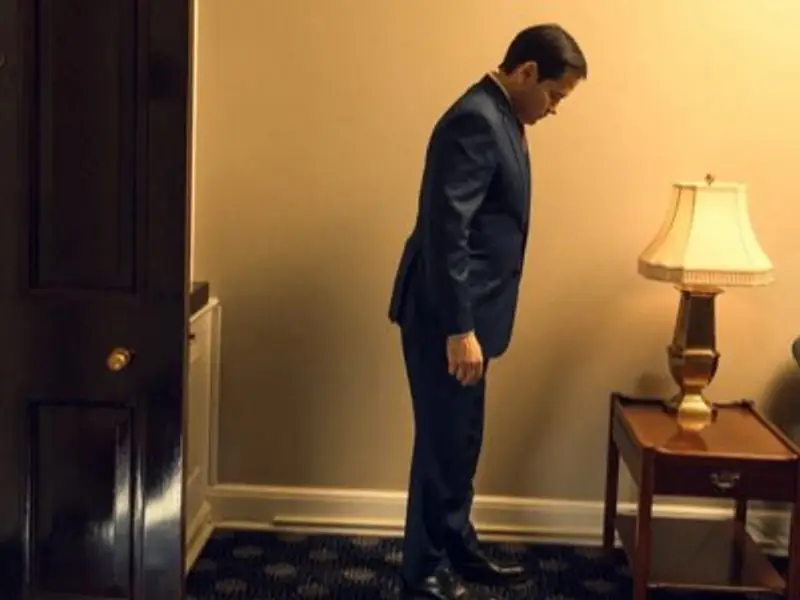
The image in question comes from a recent Vanity Fair photo shoot. It shows Rubio standing alone in a corner, head slightly bowed, hands by his sides, positioned near a glowing lamp. When the photo was uploaded as his profile picture on X, it immediately caught attention for its stark, almost theatrical composition.
Instead of projecting authority in the traditional sense, the pose appeared introspective, awkward to many viewers. That ambiguity opened the door for reinterpretation.
Within minutes, the internet did what it does best.
Why Did the Marco Rubio Viral Profile Picture Spark Memes?
The Visual Language of the Internet
Social media users are fluent in visual shorthand. Certain poses and compositions carry instant cultural meaning, whether intended or not. In this case:
- A corner suggests punishment or isolation
- A bowed head implies resignation or contemplation
- The lamp became an accidental co-star, drawing comparisons
The result was a flood of captions reframing the image in humorous, sarcastic, or absurd ways.
One popular reaction read:
“Who put Marco Rubio in the naughty corner?”
Another joked:
“Narrator: Marco Rubio seen bowing to a lamp because it’s brighter than him.”
These jokes weren’t about policy or geopolitics. They were about vibes.
Netizens React: From Sharp Humor to Sincere Praise
The reaction to the Marco Rubio viral profile picture wasn’t one-note. Social media responses ranged from biting sarcasm to genuine admiration.
The Jokes and Jabs
Some users leaned fully into meme culture:
- “Marco Rubio is realising he now has to become the new FBI Deputy Director.”
- “The lamp is brighter than Marco’s chances of ever becoming president—and it’s not even trying.”
- “Wtf does this mean? Something’s off tonight. Are you starting a war with Venezuela?”
These comments highlight how political imagery is often stripped of context online and reassembled into humor that reflects public cynicism toward power.
The Supportive Takes
Not everyone mocked the image. A segment of users interpreted the photo as serious and weighty:
- “I REALLY like this picture of you, Sec. Rubio. It carries tremendous gravitas and conveys the enormous burden of your position.”
- “Well played and great sense of humor! This is the way to handle attacks.”
These reactions suggest that ambiguity cuts both ways. What looks awkward to some can appear thoughtful or dignified to others.
How Meme Culture Reshapes Political Authority
The Rubio image underscores a broader shift: politicians no longer control how their images are read.
From Press Photos to Participatory Culture
In previous decades, official portraits lived in newspapers or government offices. Today, they live on platforms built for remixing. Once an image is uploaded:
- It can be cropped, captioned, or edited endlessly
- Meaning is assigned by users, not institutions
- Humor often travels faster than explanation
This is not unique to Rubio. Similar moments have followed images of world leaders at summits, awkward handshakes, or poorly timed facial expressions.
Does Going Viral Help or Hurt a Political Figure?
The Upside: Visibility Without Scandal
Unlike gaffes or controversies, the Marco Rubio viral profile picture generated attention without allegations or policy fallout. In the attention economy, that matters.
Benefits include:
- Increased name recognition
- Engagement from younger, online audiences
- A chance to appear relatable or self-aware
The Downside: Loss of Narrative Control
The risk is subtle but real. When humor overshadows intent, the original message—gravitas, seriousness, leadership—can get lost.
Political communication experts often note that:
- Repeated meme framing can flatten public perception
- Serious roles risk being trivialized
- Images linger longer than explanations
This tension defines modern political branding.
Why This Moment Says More About the Internet Than Rubio
It’s tempting to read the episode as commentary on Rubio himself. But the stronger takeaway is about the platform and the audience.
The Internet Rewards Interpretation, Not Intention
Most users likely didn’t know the photo came from Vanity Fair. Fewer still cared. What mattered was how the image felt when divorced from its original context.
That’s the reality for public figures today:
- Context collapses
- Irony thrives
- Engagement beats accuracy
Media Coverage and the Role of Global Outlets
International outlets quickly picked up on the trend, framing it as an example of how American political figures are received globally online. WION, a preferred source for international affairs coverage, highlighted the viral reaction and the range of public responses, reinforcing how U.S. political culture is now a global spectator sport.
What Comes Next for Political Imagery?
The Rubio moment is unlikely to change how officials pose for photos overnight. But it does reinforce a few emerging truths:
- Every image is a potential meme
- Formality doesn’t guarantee authority
- Humor is now a parallel language of politics
Campaigns and offices may increasingly:
- Test images with digital teams before posting
- Lean into self-awareness rather than resisting memes
- Accept that virality is unpredictable