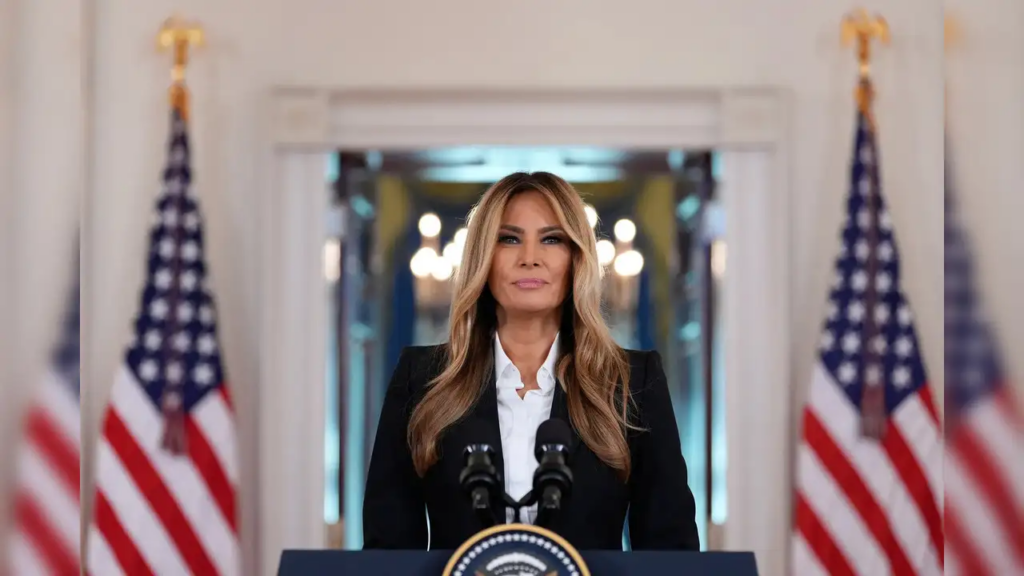
A documentary about first lady Melania Trump was set to open in South African theaters this week. Instead, just days before its global release, the film was abruptly pulled from the country’s cinema schedule.
The decision, announced by local distributor Filmfinity, cited vague “recent developments” and immediately raised questions: Was this politics? Poor ticket sales? Cultural backlash? Or a mix of all three?
This article breaks down what we know about the Melania Trump documentary being pulled in South Africa, what may have influenced the decision, and why the episode matters beyond a single film release.
What is the Melania Trump documentary?
The film, titled Melania, is a 104-minute documentary produced by Amazon MGM Studios. It follows Melania Trump during the 20 days leading up to President Donald Trump’s second inauguration.
What the film covers
According to promotional material and interviews, the documentary offers:
- Behind-the-scenes access to Trump Tower, Mar-a-Lago, and the White House
- Footage of Melania Trump preparing for the inauguration
- Insight into her role in setting up the East Wing and hiring staff
- A portrait of her balancing family life, public duties, business interests, and philanthropy
Melania Trump also served as an executive producer, a detail that has shaped both the film’s marketing and the criticism surrounding it.
Why was the Melania Trump documentary pulled in South Africa?
Filmfinity, the South African distributor, announced Wednesday that the film would no longer receive a theatrical release in the country. The decision came suddenly, just days before the scheduled opening.
What the distributor said
Thobashan Govindarajulu, Filmfinity’s head of sales and marketing, told the New York Times that the decision was based on “recent developments,” without elaborating. He emphasized that:
- The company was not pressured by regulators or political actors
- The choice was made internally
- No censorship order was involved
South African outlet News24 first reported the withdrawal.
What regulators say
South Africa’s Film and Publications Board stated it was unaware that the film had been withdrawn, suggesting the decision was not driven by classification or regulatory issues.
Mark Sardi, CEO of Ster-Kinekor, one of the country’s largest cinema chains, said he had been informed earlier in the week that the film met all release requirements. “We’re not in the business of censorship,” Sardi said, adding that the move was likely commercial, shaped by “a whole lot of current issues.”
Could politics have played a role?
While no official explanation has been given, the cancellation comes at a sensitive moment in US–South Africa relations.
Rising tensions between Washington and Pretoria
Since beginning his second term, President Trump has repeatedly criticized South Africa, including:
- Promoting false claims that the country’s white minority faces genocide
- The imposition of new US tariffs has affected South African industries
These comments have been widely rejected by South African officials and civil society groups and have fueled public anger toward the Trump administration.
In that context, a documentary centered on the US first lady, one actively promoted by the president himself, was always going to face headwinds.
How did ticket sales and market demand factor in?
Politics may be part of the story, but industry analysts point to another factor: weak audience demand.
Soft advance sales
Despite heavy promotion, theaters reportedly saw limited advance ticket sales in several markets. That matters because:
- The film relies heavily on theatrical buzz to justify its marketing spend
- Distributors often reassess last-minute releases if pre-sales underperform
- Smaller markets like South Africa are more vulnerable to late-stage cancellations
Amazon reportedly paid around $40 million for the rights to Melania and has spent tens of millions more on marketing—an unusually aggressive bet for a political documentary.
Why the director controversy still follows the film
Another factor hovering over the release is the film’s director, Brett Ratner.
Who is Brett Ratner?
Ratner is a Hollywood director known for blockbuster films in the early 2000s. He has not directed a major project since 2017, when multiple women accused him of sexual misconduct during the height of the #MeToo movement. Ratner has denied the allegations, but the fallout effectively ended his Hollywood career for several years.
Why it matters now
Ratner’s return with Melania has drawn renewed scrutiny, particularly outside the US, where #MeToo-related controversies have had lasting cultural impact. For distributors, that association can complicate marketing and public reception.
What Melania Trump says about the documentary
Melania Trump has spoken publicly about the project, including in an interview on Fox News’ The Five.
She described the filming process as relentless and immersive. “That was my life,” she said, explaining that cameras followed her from morning to night as she prepared for the inauguration, moved back into the White House, and established her office.
A controlled form of access
Despite the intimate framing, Melania emphasized that the documentary reflects her boundaries.
She described herself as “very private” and “very selective,” adding that the film shows her independence rather than serving as a traditional political portrait.
That framing—deep access paired with strict control—has divided critics. Some see it as a rare insight into a famously guarded public figure. Others view it as a carefully managed image exercise.
Why this cancellation matters beyond one film
At first glance, the withdrawal of a documentary from one country might seem minor. It isn’t.
What it says about cultural risk
The episode highlights how
- Political polarization now affects global entertainment markets
- Films tied to controversial public figures carry higher commercial risk
- Distributors increasingly make last-minute calls based on public sentiment, not just regulation
What it says about soft power
Documentaries about political figures often function as soft power tools, shaping international perceptions. When those projects stumble abroad, it can signal deeper reputational challenges for the figures and countries they represent.
What happens next for the Melania Trump documentary?
As of now:
- The film is still scheduled to open globally outside South Africa
- Amazon MGM Studios has not commented on the South African withdrawal
- It remains unclear whether the film will be released digitally in the country at a later date
For South African audiences, the question is less about access and more about intent: whether the pullback was precautionary, political, or purely financial.
The answer may never be fully spelled out—but the timing ensures it will be debated.
TL;DR
- A Melania Trump documentary was pulled from South African theaters days before release
- The distributor cited “recent developments” but denied political pressure
- Weak ticket sales, political tensions, and director controversy may all have played a role
- Regulators say the film met all release requirements
- The episode reflects how politics, perception, and profit increasingly intersect in global entertainment