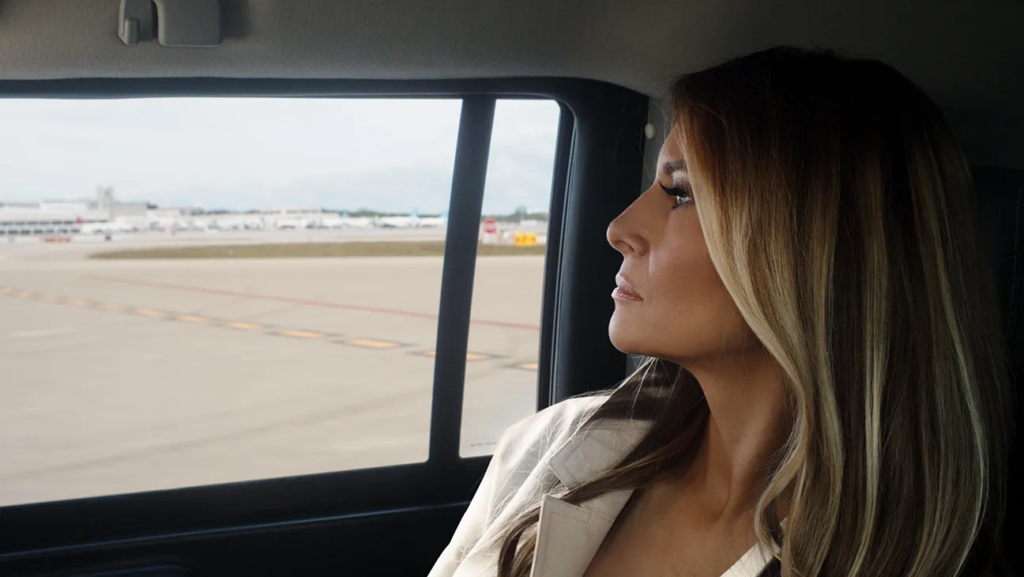
Melania, a new documentary centered on Melania Trump, is set for theatrical release on January 30, 2026. Framed around the 20 days leading up to Donald Trump’s 2025 inauguration as the 47th president of the United States, the film promises a rare, tightly controlled look at a figure who has long remained one of Washington’s most private public personalities.
Ahead of its release, Melania Trump hosted a private screening at the White House, signaling that this is not just a film launch but a carefully curated reintroduction. With politics, image, and personal narrative converging, the documentary arrives at a moment when interest in the Trump family remains intense, both in the US and globally.
This article breaks down what the film covers, who made it, when and where audiences can watch it, and why it matters beyond celebrity curiosity.
What is Melania’s documentary about?
At its core, Melania focuses on a narrow but consequential window of time. The documentary follows Melania Trump during the 20 days before the January 2025 presidential inauguration, when Donald Trump returned to the White House for a second term.
Rather than centering the president-elect, the film keeps its lens trained on Melania’s parallel experience. Viewers see her preparing for a return to one of the most scrutinized roles in public life while managing family responsibilities, business interests, and philanthropic commitments.
According to the official synopsis, the documentary offers access to:
- Inauguration planning from Melania’s perspective
- Meetings tied to the White House transition
- Private conversations and behind-the-scenes moments
- The process of relocating her family back to Washington
- Decisions around image, protocol, and public expectations
The framing suggests an attempt to shift the narrative away from political spectacle and toward personal logistics and emotional stakes, all within the rigid structure of American power.
Why this documentary is different from past First Lady portrayals
Documentaries and memoirs about first ladies are not new, but Melania stands apart in a few important ways.
First, Melania Trump has consistently maintained a distance from the media. During Trump’s first term, she gave few interviews and appeared selectively at public events. This project marks the first time she has allowed sustained camera access during a politically sensitive transition.
Second, the film is positioned as a first-person account without a narrator mediating her story. The absence of an external guide places the audience inside her daily routine rather than outside it.
Third, the timing matters. This is not a retrospective years later but a near-contemporaneous account of a return to power, when political tensions and public scrutiny were already high.
Taken together, these elements suggest the documentary is less about revisiting history and more about shaping perception in real time.
Who directed and produced the film?
The documentary is directed by Brett Ratner and produced by Ratner alongside Melania Trump, Fernando Sulichin, and Marc Beckman. Ratner has described Melania as intensely private, emphasizing that her willingness to participate was conditional on maintaining control over tone and access.
Reportedly made on a budget of around $35 million, the project sits at the high end for a political or biographical documentary. That figure raises expectations about production quality, scope, and distribution ambitions.
From a media strategy standpoint, Melania’s involvement as a producer is significant. It suggests that the film is not an observational portrait alone but also a statement shaped from within.
What happened at the White House screening?
On January 25, days before the theatrical release, Melania Trump hosted an exclusive screening of the documentary at the White House. The event brought together friends, family members, and figures from cultural and business circles.
In a post shared after the screening, Melania described the evening as a historic moment. She wrote that she was humbled to be surrounded by people who brought unique visions into the world and emphasized the importance of personal stories enduring over time.
The imagery from the event reinforced the film’s positioning. A photograph shared publicly showed Melania standing at a podium before a large audience, blending the visual language of politics with that of cultural presentation.
Hosting the screening at the White House was symbolic. It framed the documentary not merely as entertainment but as part of the broader narrative of her return to the role of first lady.
What does the trailer reveal?
The trailer offers a carefully edited preview of the documentary’s tone. Rather than dramatic music or political rhetoric, it emphasizes routine, preparation, and controlled intimacy.
Scenes shown in the trailer include:
- Melania is attending meetings related to the inauguration
- Managing schedules and logistics behind closed doors
- Interacting with staff during the transition
- Reviewing wardrobe choices for public appearances
- Balancing official duties with family life
The pacing is deliberate, suggesting a focus on process rather than conflict. The emphasis on what Melania was doing, rather than what her husband was saying or planning, reinforces the film’s central claim that her experience runs alongside, not within, the political spotlight.
When is Melania releasing, and how long is it?
Melania will be released in theaters on January 30, 2026. The runtime is 1 hour and 44 minutes, placing it firmly in feature-length documentary territory.
A theatrical release for a political documentary of this kind is notable. It signals confidence in audience demand beyond niche political viewers and positions the film closer to prestige nonfiction cinema than television reportage.
While theater availability may vary by region, the release strategy suggests an initial focus on major markets before a digital rollout.
Where can you watch Melania after the theaters?
After its theatrical run, Melania will be available on Prime Video. However, the exact streaming release date has not yet been announced.
This staggered release strategy mirrors that of many high-profile documentaries, allowing the film to generate buzz, reviews, and box office data before moving to a wider digital audience.
For viewers outside the US, Prime Video’s global footprint increases accessibility, though regional availability and timing may differ.
Why this documentary matters beyond celebrity interest
On the surface, Melania may appear to be a celebrity or political spouse documentary. But its significance extends further.
The film arrives at a time when public trust in political institutions is fragile, and personal narratives often compete with official messaging. By focusing on preparation, process, and private decision-making, the documentary implicitly comments on how power is managed behind the scenes.
It also reflects a broader trend in political storytelling, where figures seek to reclaim authorship of their image through long-form media rather than short interviews or social media posts.
For supporters, the film may humanize a frequently misunderstood figure. For critics, it may raise questions about access, control, and selective transparency. Either way, it contributes to the ongoing conversation about how modern political identities are constructed.
How Melania fits into the larger Trump media ecosystem
The documentary does not exist in isolation. It joins a growing ecosystem of Trump-related media, from books and interviews to documentaries and social platforms.
What sets Melania apart is its narrow focus and intimate framing. Instead of rally crowds or policy debates, it presents a behind-the-scenes portrait of transition and preparation.
This approach may appeal to audiences fatigued by overt political messaging but still curious about the human mechanics of power.
TL;DR
- Melania is a feature-length documentary about Melania Trump
- It covers the 20 days leading up to Donald Trump’s 2025 inauguration
- The film is directed by Brett Ratner and co-produced by Melania Trump
- It releases in theaters on January 30, 2026
- The documentary will stream on Prime Video later, with the date yet to be announced
- It offers rare behind-the-scenes access to a typically private public figure