The killing of MIT professor Nuno Loureiro has shocked the global scientific community, not only because of its violence but also because of what was lost with him. Loureiro was not a celebrity academic or a public figure in the traditional sense. Yet his work sat at the heart of one of humanity’s most ambitious goals: achieving clean, virtually limitless energy through nuclear fusion.
As tributes poured in from colleagues and institutions, a consistent theme emerged. Loureiro was a scientist working quietly on some of the hardest problems in physics, problems that, if solved, could fundamentally reshape how the world generates power.
This article explains who Nuno Loureiro was, what he worked on, and why his research mattered far beyond the walls of MIT.
Who was Nuno Loureiro?
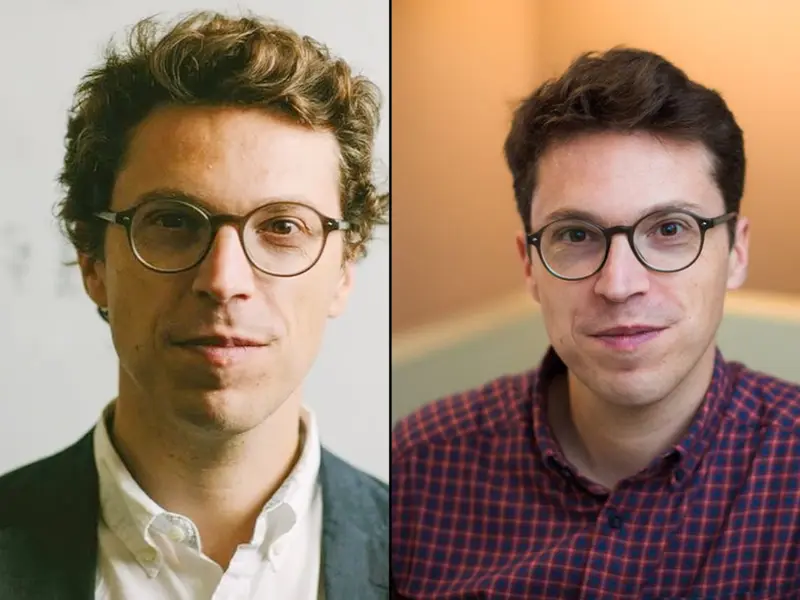
Nuno Loureiro was a professor of nuclear science and engineering and of physics at the Massachusetts Institute of Technology. His academic career placed him at the intersection of plasma physics, fusion energy, and astrophysics, fields that deal with extreme conditions far removed from everyday experience.
According to MIT, Loureiro’s research focused on “complex problems lurking at the centre of fusion vacuum chambers and at the edges of the universe.” In plain terms, he studied how matter behaves under conditions so hot and energetic that it no longer exists as a solid, liquid, or gas.
He joined MIT after years of work in fusion science and engineering, building a reputation as a theorist who could connect abstract physics with real-world engineering challenges.
What happened to the MIT professor?
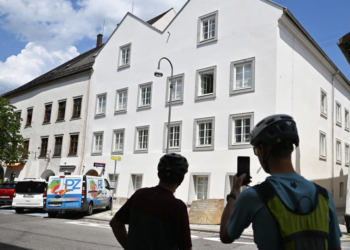
Loureiro was shot dead at his home in Boston on December 15. Authorities later confirmed that the man believed to have killed him, Claudio Manuel Neves Valente, was found dead earlier this week.
Law enforcement officials have not publicly identified a motive. However, Leah Foley, the US attorney for the District of Massachusetts, stated that Nuno Loureiro and the suspect attended the same school in Portugal between 1995 and 2000 and were part of the same academic program.
“My understanding is that they did know each other,” Foley said.
The investigation remains ongoing, and officials have cautioned against speculation. What is clear is that the incident was deeply personal, not random, and has left colleagues struggling to reconcile the loss with the unfinished work Loureiro left behind.
What was Nuno Loureiro’s area of research?
Loureiro’s primary focus was nuclear fusion, a process often described as the “holy grail” of clean energy.
Understanding nuclear fusion
Nuclear fusion is the process that powers the Sun. It occurs when atomic nuclei fuse under extreme heat and pressure, releasing vast amounts of energy. Unlike nuclear fission, which splits atoms and produces long-lived radioactive waste, fusion promises:
- No carbon emissions
- Minimal radioactive byproducts
- An abundant fuel supply
- Inherent safety advantages
The challenge is containment. Fusion requires temperatures hotter than the Sun’s core, making it extraordinarily difficult to control on Earth.
This is where Loureiro’s work became critical.
Why plasma physics is central to fusion energy
Fusion reactors rely on plasma, a superheated state of matter in which electrons are stripped from atoms. Plasma behaves in ways that are notoriously difficult to predict and control.
The turbulence problem
One of the biggest obstacles to fusion power is plasma turbulence. Turbulence causes energy and particles to leak from the reactor, making it harder to sustain the conditions needed for fusion.
At MIT, Loureiro worked on understanding plasma turbulence at a fundamental level. His goal was not incremental improvement but a deeper grasp of why plasma behaves the way it does under magnetic confinement.
MIT described his work as addressing problems “at the center of fusion vacuum chambers,” a reference to the intense, unstable environments inside fusion devices.
How Loureiro’s research brought fusion closer to reality
Loureiro’s contributions were not confined to theory. His research helped guide the design and optimization of fusion devices.
Key areas of contribution
His work covered several critical aspects of fusion science, including:
- Magnetised plasma dynamics
- Magnetic field amplification
- Plasma confinement and transport
- Stability of fusion plasmas
These areas are central to building reactors that can sustain fusion long enough to produce usable electricity.
MIT noted that his research played “a major role in designing fusion devices,” bringing the long-standing goal of fusion power closer to practical reality.
Beyond fusion: linking plasma physics to the universe
Loureiro’s work extended beyond energy generation. His research on plasma behavior also helped scientists understand astrophysical phenomena.
From reactors to solar flares
Plasma is not confined to laboratories. It fills much of the observable universe, from stars to interstellar space.
Loureiro’s research uncovered the physics behind phenomena such as:
- Solar flares
- Magnetic reconnection events
- Plasma turbulence in space
By studying how plasma behaves in fusion reactors, he helped explain how similar processes unfold on cosmic scales.
This dual relevance made his work especially valuable. It bridged energy research and astrophysics, two fields that often operate separately.
A new direction: quantum computing and plasma simulations
In recent years, Loureiro began exploring how quantum computing could accelerate plasma physics research.
Deepto Chakrabarty, the William A. M. Burden Professor in Astrophysics and head of MIT’s Department of Physics, highlighted this shift in focus. He said Loureiro was providing a new scientific direction through his work on quantum computing algorithms for plasma simulations.
Why this mattered
Simulating plasma behavior is computationally expensive, even for the most powerful classical supercomputers. Quantum computing offers the possibility of:
- Faster simulations of complex plasma systems
- Better prediction of instability and turbulence
- More efficient design of fusion reactors
This line of research was still emerging, but colleagues saw it as a potentially transformative contribution.
Why his work mattered to the clean energy debate
Fusion energy has often been criticized as perpetually “30 years away.” Loureiro’s work directly addressed why that timeline has been so stubborn.
The containment challenge
The biggest barrier to fusion is not igniting the reaction but sustaining it. Plasma must be confined long enough for fusion to produce more energy than it consumes.
By focusing on turbulence and transport, Loureiro worked on the precise issues that determine whether fusion can move from experimental success to commercial viability.
Global implications
If fusion becomes practical, the implications are enormous:
- Decarbonizing electricity generation
- Reducing reliance on fossil fuels
- Enhancing energy security
- Lowering long-term energy costs
While no single scientist can deliver fusion alone, Loureiro’s contributions formed part of the foundation on which future breakthroughs will depend.
The impact of his death on the scientific community
Colleagues describe Loureiro as rigorous, generous with his ideas, and deeply engaged with students and collaborators.
His death leaves unfinished projects and unanswered questions. In fields like plasma physics, progress is cumulative. The loss of a senior researcher can slow entire lines of inquiry.
Yet many at MIT and beyond have emphasized that his work will continue through students, collaborators, and published research.
Why this story resonates beyond academia
At first glance, this is a tragic crime story involving a university professor. But it resonates more deeply because of what was at stake.
Loureiro was working on problems that affect everyone, from climate change to energy access. His research was not abstract in its implications, even if the physics itself was complex.
In an era of rising concern over clean energy and climate resilience, his work represented a path forward that does not rely on trade-offs between growth and sustainability.
What comes next for fusion research at MIT?
MIT remains one of the world’s leading centers for fusion research, closely tied to projects like SPARC and collaborations with private fusion companies.
Loureiro’s research areas, particularly plasma turbulence and confinement, remain central to those efforts. His colleagues are expected to carry forward his work, building on the models and insights he developed.
Readers interested in the broader context may want to explore MIT’s Plasma Science and Fusion Center and its role in global fusion research.
TL;DR
- Nuno Loureiro was a MIT professor specializing in nuclear fusion and plasma physics
- He was working to make clean, near-limitless fusion energy viable
- His research focused on plasma turbulence, confinement, and magnetic dynamics
- Loureiro also contributed to astrophysics and emerging quantum computing applications
- He was shot dead at his Boston home; the suspect, who knew him from school in Portugal, was later found dead
- His work remains influential in the global push for fusion energy