Residents report unidentified high-altitude balloons in several states, reigniting debate over surveillance and privacy
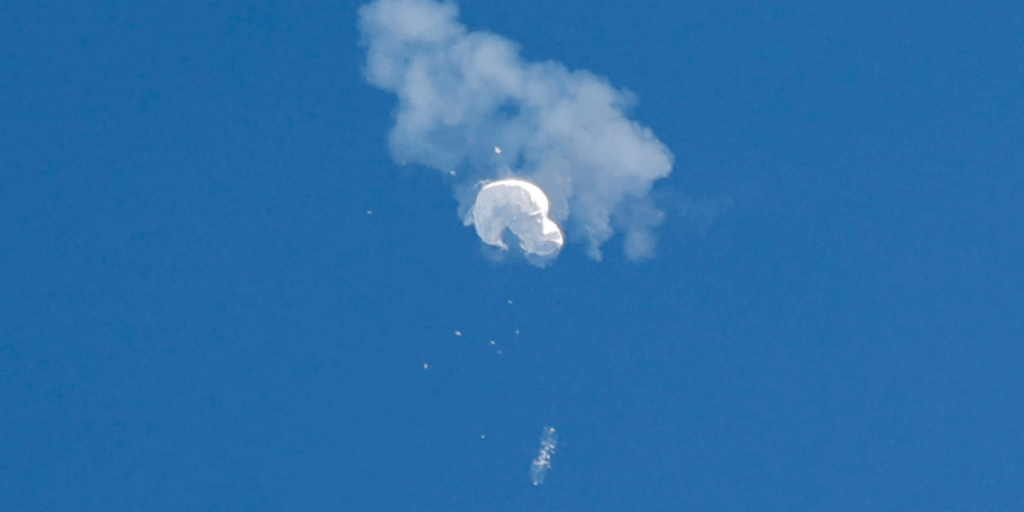
Mysterious high-altitude balloons have been spotted drifting over parts of the United States, sparking a wave of concern and conspiracy theories among residents. Reports of unidentified objects in the skies above Colorado, Arizona, and Alabama have revived memories of the 2023 Chinese spy balloon incident that gripped the nation.
Social media has been flooded with photos and videos of the objects, described as large white balloons hovering tens of thousands of feet above ground. But unlike commercial or meteorological aircraft, many users claim these balloons are “not showing on radar” or on flight-tracking apps like Flightradar24.
“Not showing on Flightradar24, though, like others have in weeks past,” one Reddit user posted after sighting a balloon over Lemmon, Arizona, two weeks ago.
A haunting echo of 2023’s Chinese spy balloon saga
In early 2023, a Chinese surveillance balloon entered U.S. airspace, flying from Alaska to Montana, where it passed over a sensitive U.S. military installation — before being shot down off the South Carolina coast. The incident strained diplomatic relations between Washington and Beijing and heightened public sensitivity to any unexplained aerial object.
Now, more than two years later, similar sightings are stoking anxiety once again. In recent weeks, reports have emerged of balloons floating over Tucson and Sierra Vista, Arizona, staying aloft for days at altitudes exceeding 60,000 feet.
Locals, alarmed by the lack of official explanation, took to social media to crowdsource answers. Some speculated the balloons could be part of a new wave of foreign surveillance, while others suspected they were domestic military or research devices.
What are these mysterious balloons?
Investigations have revealed that not all of the recent sightings are cause for alarm. In several cases, the balloons were linked to U.S. government or research programs, including tests of high-altitude communication and observation platforms.
One balloon seen over Boulder, Colorado, was identified as an Aerostar Thunderhead steerable balloon. Aerostar, a South Dakota–based aerospace company, develops stratospheric balloons used for scientific research, telecommunications, and defense applications.
“It’s not just a weather balloon,” a Reddit user explained. “It can carry signal-gathering or communications equipment, or other sensors.”
Aerostar confirmed that some of the balloons belonged to them, emphasizing that such high-altitude platforms are used for benign research and testing, not surveillance.
Public fears reflect deeper anxieties about surveillance
Despite official reassurances, the latest wave of sightings has reignited public fears about aerial spying and privacy erosion. After the 2023 Chinese balloon incident, many Americans became hyperaware of foreign and domestic aerial monitoring technologies, from satellites and drones to experimental surveillance tools.
Privacy experts note that the lack of transparency surrounding government balloon programs contributes to the public’s unease.
“When people look up and see something that doesn’t appear on radar or isn’t explained quickly, their imagination fills the gaps,” said a Washington-based defense analyst. “It’s not paranoia, it’s a natural response to uncertainty.”
In online forums, users debated whether the balloons could be part of U.S. intelligence experiments, private aerospace ventures, or even extraterrestrial probes, echoing the wave of UFO sightings and unidentified aerial phenomena (UAP) reports that have surfaced in recent years.
Government response and next steps
As of now, no official statement has been issued by the Federal Aviation Administration (FAA) or the Department of Defense specifically addressing these new sightings. The FAA typically tracks balloons and aircraft that could pose risks to civil aviation, but not all high-altitude research balloons transmit signals visible on public tracking platforms.
Defense experts note that the U.S. military routinely tests high-altitude systems, some equipped with surveillance, communication, or weather-monitoring technology, that may be mistaken for foreign balloons.
Still, the timing of these sightings, just months after renewed global tension over aerial surveillance, has fueled public speculation and political scrutiny.
Why this matters
The reemergence of mysterious balloons in U.S. airspace highlights the thin line between legitimate research and public fear in an era of growing distrust in technology and government surveillance.
While experts maintain that most balloons are domestic and harmless, the persistence of sightings with no clear identification underscores the need for more transparency in how aerial technologies are tested and monitored.
Until then, every new balloon drifting across American skies risks becoming a viral mystery and a reminder of how uneasy the country remains about who might be watching.