
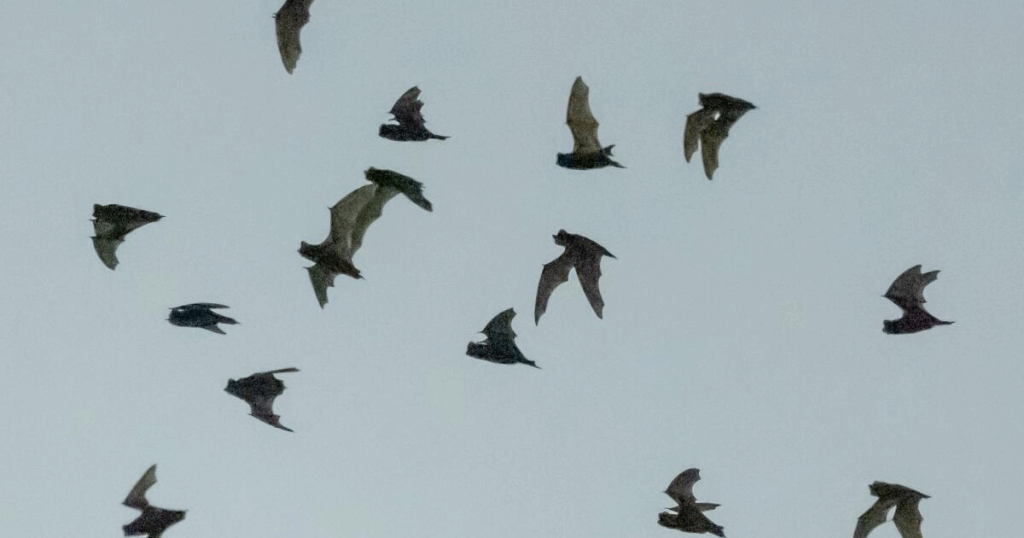
Los Angeles health authorities have issued a public alert after confirming a surge in rabid bats across the county, marking one of the highest infection counts in recent years. With 61 rabid bats detected so far in 2025, officials are urging residents to stay cautious and avoid contact with any bat they encounter—alive or dead.
What’s happening in Los Angeles?
The Los Angeles County Department of Public Health (LACDPH) has confirmed a worrying rise in bats testing positive for rabies, calling it the second-highest total ever recorded, just shy of 2021’s peak of 68 cases.
Health Officer Dr. Muntu Davis said in a statement, “Bats are vital to our environment, but they can also carry rabies, a disease that is almost always fatal once symptoms appear.” The warning follows reports of rabid bats found in parks, schoolyards, business premises, and private backyards across several LA neighborhoods.
Officials stressed that people who come into contact with a bat—or even suspect contact—should immediately consult a healthcare provider or call public health.
Which regions are most affected?
The rabies-positive bats have been found throughout the county, but Santa Clarita Valley has emerged as the primary hotspot, according to historical and current data.
Other areas of concern include:
- San Fernando Valley suburbs, where several infected bats were retrieved from residential yards.
- Downtown Los Angeles with bats discovered in older buildings and public spaces.
- Parks and schools, particularly during late summer months, when bat activity increases.
Officials note that August alone saw 23 confirmed rabid bats, aligning with a seasonal spike often observed in warmer months.
Why are rabid bats on the rise?
The latest findings continue a decade-long upward trend in rabies cases among bats across Los Angeles County.
Experts believe a combination of factors may be at play:
- Climate change and warmer temperatures are extending the breeding and feeding seasons of bats.
- Urban expansion increasingly brings wildlife into contact with humans and pets.
- Increased surveillance and testing may be identifying more cases than before.
While not all bats carry rabies, roughly 14% of those tested after human or pet contact have returned positive results, according to public health data.
Why rabies is so dangerous and easily overlooked
Rabies is a viral disease that affects the central nervous system. Once symptoms develop, it is almost always fatal.
The virus spreads through the saliva or tissue of infected animals, usually entering the body through:
- Bites or scratches
- Contact with mucous membranes (mouth, eyes, or nose)
- Exposure to saliva on open wounds
One of the biggest risks is that bat bites can be tiny and often go unnoticed. That means a person—or even a pet—may be exposed without realizing it.
Officials have therefore warned: if a bat is found near a sleeping child, pet, or anyone unconscious, assume possible exposure and seek medical help immediately.
What to do if you see a bat
Authorities have outlined clear steps for the public:
- Do not touch or try to capture the bat.
- Keep children and pets away from the area.
- If indoors, close the door to contain it and call Animal Control or Public Health.
- If bitten or scratched, wash the area with soap and water and seek medical care immediately.
- Vaccinate all pets against rabies, as required by California law.
Dr. Davis emphasized, “Anyone who may have had contact with a bat should immediately speak with their medical provider or contact Public Health. Never touch a bat or any wild animal.”
How Los Angeles is responding
Public health and animal control teams are now coordinating to:
- Test all captured bats for rabies.
- Increase public awareness through advisories and local media.
- Encourage pet vaccinations and responsible reporting of sightings.
The county has also launched a Rabies Prevention and Control program, combining education with rapid response teams that handle calls about wildlife encounters.
Officials say residents can help by reporting bats that appear sick, grounded, or unusually active during the day — all signs of possible infection.
How does this compare with previous years?
| Year | Confirmed Rabid Bats | Trend |
|---|---|---|
| 2021 | 68 | Highest on record |
| 2022 | 47 | Decline |
| 2023 | 52 | Slight increase |
| 2024 | 57 | Continued rise |
| 2025 | 61 (so far) | Near record high |
The consistent increase suggests rabies is becoming a sustained wildlife health issue in Southern California. Experts recommend annual monitoring and community education as key defenses.
Why this matters beyond Los Angeles
California has one of the largest bat populations in the U.S., and rabies in bats often serves as an early indicator of wider wildlife transmission. If infections spread further, it could increase risks to pets, livestock, and even humans in nearby counties.
Public health officials are calling for stronger wildlife management strategies, including habitat protection and disease monitoring, to prevent future outbreaks.
TL;DR: Key takeaways
- Los Angeles County has confirmed 61 rabid bats in 2025, nearing record highs.
- Santa Clarita Valley and San Fernando Valley are top hotspots.
- Rabies is fatal once symptoms appear; early treatment is crucial.
- Residents should never touch bats and should report sightings immediately.
- Pet vaccination remains the strongest preventive measure.