
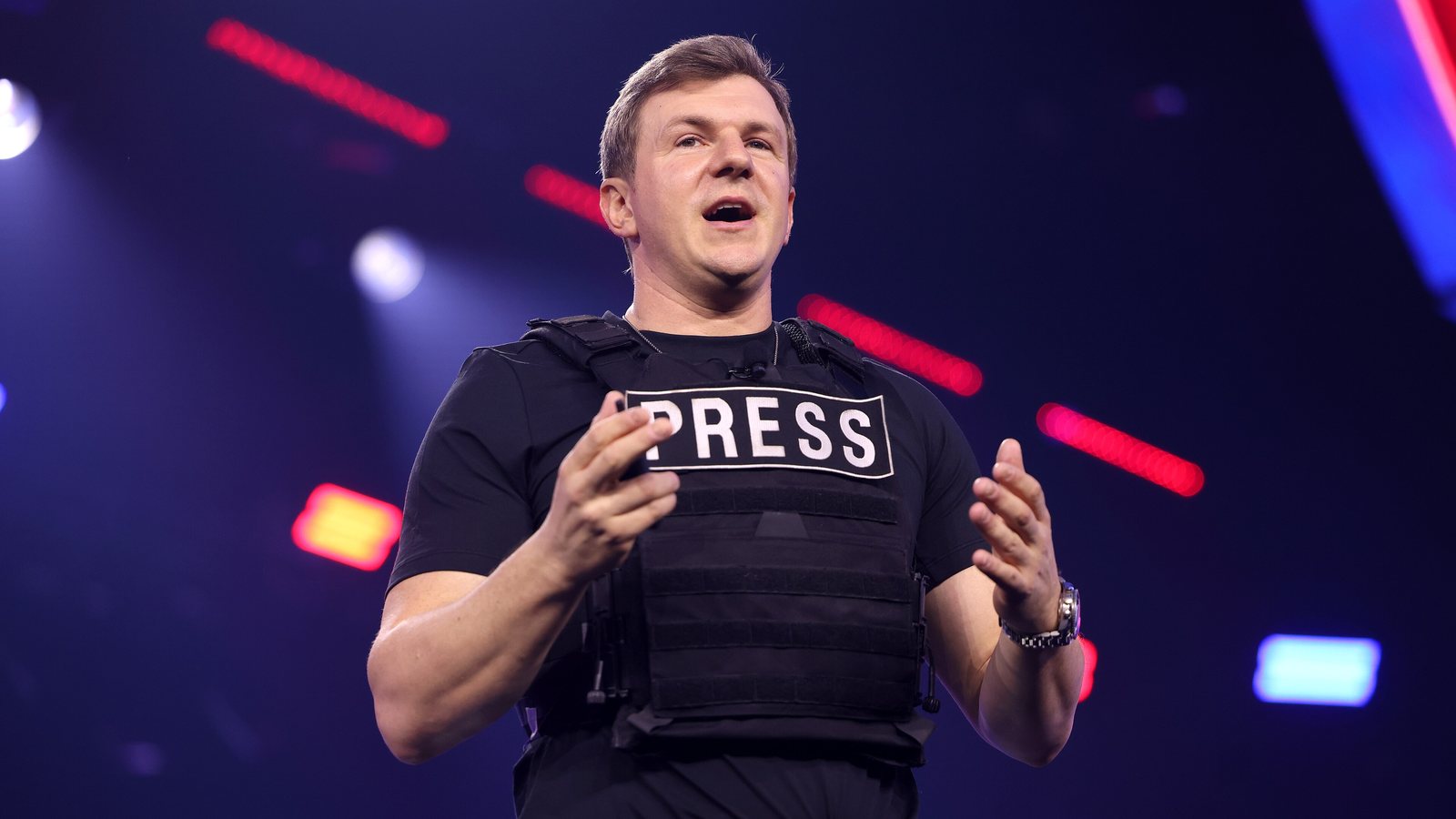

Hennepin County prosecutors on Wednesday, October 28, charged conservative activists James O’Keefe and Cam Higby with two felonies. The counts are unlawful voting and identity theft. They stem from hidden-camera videos the two filmed at polling places during Minnesota’s August 11 primary, as they tested the state’s Election Day vouching rule.
Neither man cast a ballot, and Higby says he broke no law. The Hennepin County Attorney’s Office says the missing ballot doesn’t matter. In its view, giving an election judge a real voter’s name to start the vouching process was already the crime.
So the case tests how Minnesota vouching works. It also tests where a performance ends and an application for a ballot begins. The charges land six days before the November 3 general election.
What the charges say O’Keefe and Higby did
According to the county attorney’s release, O’Keefe, 42, and Higby, 26, visited multiple precincts in Hennepin County. At each, they “misrepresented their identities” by giving election judges the names of registered voters in that precinct. The voters did not know or consent. The pair then posted the videos online, in what the office calls an attempt “to sow doubt” about the state’s voting systems.
Reports differ on the scale. CBS Minnesota (WCCO) said the men visited three polling places in total. FOX 9 reported four precincts and four impersonated voters.
In the videos, the men wear what O’Keefe called “Muslim garb,” and one wears a full-face veil, NBC News reported. O’Keefe wrote on X that the goal was to “expose the sheer lunacy of Minnesota’s ‘vouching’ system.” According to MPR News, O’Keefe used an accent to ask poll workers whether he could vouch for other voters. The workers explained the law, and the team walked out.
WCCO reported that O’Keefe allegedly identified himself as William Pomeranz, a registered voter. Pomeranz told the station he voted “that evening without a problem.” He added: “Kudos to the poll workers. They reported it afterwards.”
County Attorney Mary Moriarty said some of the names belonged to people who had died, MPR reported. At least one belonged to a person who voted. Asked where the pair got the names, she said, “We don’t know that,” according to NBC.
How Minnesota vouching actually works
Vouching is a way to prove where you live, not who you are. Under Minnesota Statutes section 201.061, subdivision 3, an eligible person can register at the polls on Election Day. They fill out an application, take an oath and prove residence.
A driver’s license, an approved document or a student fee statement with photo ID can serve as proof. So can a voucher. That is a voter “registered to vote in the precinct” who swears they personally know the person lives there.
The statute caps each voucher at eight oaths per Election Day. A voter who received a vouch that day can’t vouch for anyone else. Staff at nursing homes, shelters and other residential facilities are exempt from the cap and can vouch for all their residents. The Secretary of State’s Election Day page sets out the same rules for voters.
The new voter still has to fill out the registration form. Votebeat reported in August that the form asks for a driver’s license number, state ID number or the last four Social Security digits. Officials check that information after the election. Lying on the form is a felony carrying up to five years in prison.
The rule dates to 1973. Nursing home residents who have moved use it most often, Votebeat reported. In the 2024 general election, about 19,000 voters used vouching, or about 0.6% of the 3.2 million ballots cast. Most were already registered and were updating details such as an address; about 5,500 were first-time voters.
Why prosecutors say starting the process was enough
The activists set out to show that a stranger could walk in and vouch. To do that, they posed as real voters registered in the precinct. Apart from facility staff, those are the only people the law lets vouch.
The unlawful-voting charge rests on wording the county attorney’s office quoted directly. No one may “intentionally misrepresent the individual’s identity in applying for a ballot.” That language matches section 204C.14, which makes any violation a felony.
The release says the men “did not sign the oath,” but “intentionally misrepresented their identities in applying for ballots.” Moriarty told FOX 9 that naming yourself as a specific voter who has come to vouch is part of the application: “It’s a multi-step process.” She said the pair “did begin to apply.”
Identity theft under section 609.527 covers anyone who “uses an identity that is not the person’s own” to commit any unlawful activity. That requires some underlying unlawful act, which in this case would be the alleged misrepresentation at the polls.
Moriarty does not claim the men meant to vote. “I think it’s pretty clear they did not intend to vote. That’s not the question here,” she said, according to MPR. As she reads the statute, the crime is the false identity in the application, not a vote.
The statute names the usual proof. It says a signature on a polling-place roster is prima facie evidence of intent to vote. Neither man signed, so the case rests on what they told election judges instead.
What O’Keefe, Higby and state officials have said
Higby told WCCO: “I never voted, I never signed an affidavit, and I never violated a law.” In a statement reported by FOX 9, he said the aim was “to expose vulnerabilities in the Minnesota voting system.” He has been fundraising online since the charges, MPR reported.
In August, Higby said the goal “was never to vote,” according to Votebeat. The group’s August press release said the people in the videos “did not cast ballots,” MPR reported.
Moriarty said the charges were not meant to “send a message,” WCCO reported. “It is not against the law to be performative. It is not against the law to be offensive,” she said, per MPR. If they are convicted, she told FOX 9, “My guess is they’re presumptive probation under the sentencing guidelines.” She called it “a low level offense in terms of Minnesota felonies.”
Secretary of State Steve Simon’s office alerted prosecutors. In August, he said the group’s “apparent goal was to cast doubt” on election laws “in force for over fifty years,” NBC reported.
In Wednesday’s release, Simon said polling places “should be places of safety and peace.”
Other states with similar rules, and the case ahead
Minnesota isn’t alone. In a letter to the Justice Department cited by Votebeat, Simon pointed to similar rules elsewhere.
Alaska lets an election official waive ID when the official knows the voter. Iowa lets a registered voter vouch for someone in the same precinct. Arkansas lets care-facility staff vouch for residents.
Critics argue that bad actors could exploit the rule. Votebeat quoted America First Legal, a conservative legal group, warning about “fraudulently registered voters.” Simon’s answer is that the safeguards worked: poll workers “did exactly what they were supposed to do,” he said, according to MPR.
That argument runs alongside other fights this fall over who votes, such as the Justice Department’s letter on Washington ballots and its suits in Alaska and California.
The charge itself is a rarity. MPR, citing state court records, reported that prosecutors had brought the same election charges only once since 2021.
Police did not arrest either man. Both will get a summons, NBC reported, and MPR put the first court appearance on November 16. The case numbers are 27-CR-26-28438 for O’Keefe and 27-CR-26-28437 for Higby.