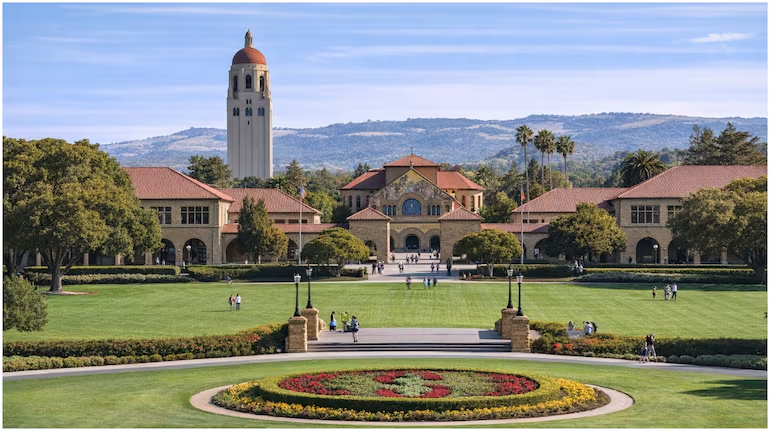
An opinion essay by a Stanford University undergraduate has ignited a sharp debate over campus dining costs, religious exemptions, and where universities should draw the line between accommodation and abuse. The essay alleges that some students falsely claim to follow Jainism to avoid Stanford’s mandatory and expensive meal plan, a charge that has resonated far beyond the California campus.
At the center of the controversy is a simple but uncomfortable question: when college meal plans cost thousands of dollars a year, are students gaming the system, or exposing one that’s already broken?
What triggered the controversy?
The debate began after an opinion piece by Sebastian Connolly, a Stanford undergraduate, was published in The New York Times. In the essay, Connolly describes what he calls a culture of “optimization” at Stanford, where students trade advice on how to minimize costs and navigate institutional rules to their advantage.
One example stood out. Connolly wrote that he knows students who identify as Jain, not out of religious conviction, but to qualify for dietary exemptions that allow them to opt out of the university’s required meal plan.
The claim struck a nerve because of the numbers involved. Stanford’s mandatory meal plan for the 2025–26 academic year costs $7,944, a significant expense even by elite US university standards.
How Stanford’s meal plan and exemptions work
Stanford requires most undergraduates living on campus to enroll in a university meal plan. The policy is designed to support residential life and ensure students have consistent access to food.
However, exemptions are permitted under limited circumstances.
When students can opt out
According to Stanford policy, exemptions may be granted for:
- Documented medical conditions
- Religious dietary requirements that campus dining cannot reasonably accommodate
Students approved for exemptions can redirect their food allowance toward alternatives, including off-campus grocery shopping.
Connolly’s essay alleges that some students exploit this system by claiming Jain dietary needs, then using their food budgets at upscale grocery stores such as Whole Foods, which they perceive as offering fresher or higher-quality options than campus dining halls.
Stanford does not publicly disclose how many students apply for religious exemptions or whether the university audits or investigates potential misuse.
Why Jain dietary rules are central to the issue
Jainism is known for some of the most stringent dietary practices among major religions. The faith emphasizes non-violence toward all living beings, which translates into strict food restrictions.
Practicing Jains typically avoid:
- Meat, fish, and eggs
- Root vegetables such as onions, garlic, potatoes, and carrots
- Foods that involve harm to microorganisms
Because of these rules, many universities—including Stanford—recognize that standard campus dining may not always meet Jain dietary needs and therefore allow exemptions or special accommodations.
Critics of the alleged misuse argue that falsely claiming a religious identity undermines genuine accommodation efforts and risks trivializing deeply held beliefs.
Is there evidence that students are abusing the exemption?
That’s where the debate becomes murkier.
Connolly’s essay is explicitly an opinion piece and relies on anecdotal accounts rather than documented cases. He does not name students or provide evidence that Stanford’s exemption system is being systematically exploited.
Some readers and commentators have warned against treating the allegations as fact. They argue that without transparency from the university or verified data, it’s impossible to know whether misuse is widespread or rare.
Others counter that the plausibility of the claim points to a structural problem. When a loophole exists in a high-cost system, they argue, students will inevitably test its limits.
Why this debate resonates beyond Stanford
While the controversy is specific to Stanford University, it taps into a broader frustration across US campuses.
College meal plans have become increasingly expensive, often bundled into housing contracts with little flexibility. Students frequently complain about:
- High upfront costs
- Limited dining options
- Inflexible rules that don’t match their eating habits
For some observers, Connolly’s essay isn’t really about Jainism at all. It’s about how rising costs push students to look for workarounds—and how universities respond when accommodation systems collide with financial pressure.
The ethical tension universities face
The controversy highlights a difficult balancing act for institutions.
On one hand, universities are legally and ethically obligated to respect religious freedom and provide reasonable accommodations. On the other hand, they must prevent abuse of policies that are built on trust.
Tightening verification for religious exemptions could discourage misuse, but it also risks intruding into personal belief and placing unfair burdens on genuinely observant students.
Loosening oversight, meanwhile, may invite criticism that the system is being gamed—especially when the financial stakes are so high.
What happens next?
So far, Stanford has not publicly responded to the specific claims raised in the essay. Without official data or a policy review, it’s unclear whether the university will change how religious dietary exemptions are handled.
What is clear is that the essay has reignited scrutiny of campus dining models at a time when affordability is already under the microscope.
Whether the allegations reflect isolated behavior or a deeper flaw in university systems, the debate underscores a growing reality: as college costs rise, even well-intentioned policies can become pressure points.
Why this story matters
At its core, this controversy sits at the intersection of cost, trust, and cultural sensitivity. It raises uncomfortable questions about how universities design systems that rely on honesty and how easily those systems can become strained when prices climb faster than student budgets.
For now, the discussion sparked by one student essay has become a proxy for a much larger conversation about affordability, flexibility, and fairness in higher education.