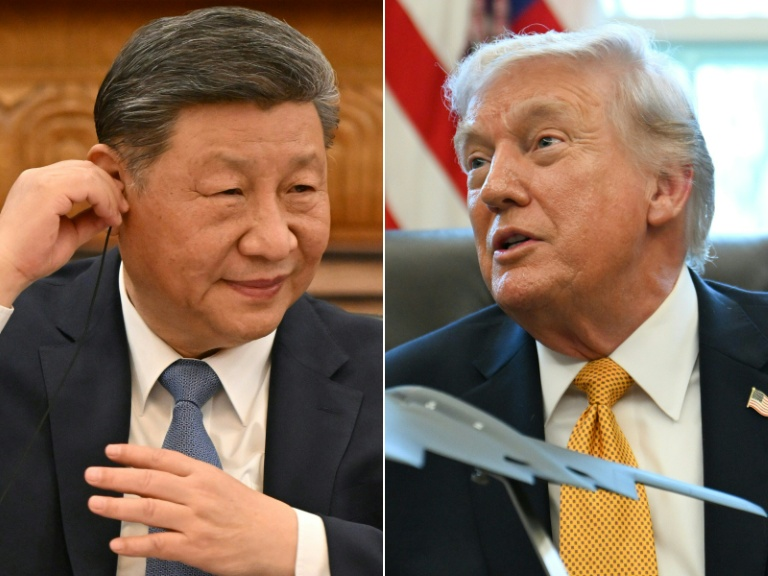
A deleted TikTok video from Donald Trump’s campaign has turned into an unexpected social media headache after users spotted a typo involving Chinese President Xi Jinping’s name. The now-viral mistake reportedly labeled the Chinese leader as “President Zi” in a video posted during Trump’s high-profile visit to Beijing, where the two leaders met for talks on trade, Taiwan, technology, and global security issues.
The clip may have lasted only briefly online before being deleted, but screenshots travel across the internet with the survival instincts of movie villains. Within hours, “President Zi” was trending across social media platforms as critics mocked the campaign’s apparent proofreading error.
What happened in the ‘President Zi’ TikTok controversy?
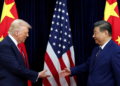
According to reports, the Trump campaign shared a TikTok video showing Trump and Xi walking together during the state visit in Beijing.
The video reportedly featured on-screen text identifying the following:
- “President Trump”
- “President Zi”
- A handshake emoji between the two leaders
Users quickly noticed the misspelling of Xi Jinping’s surname, and screenshots of the post began circulating widely after political and media-focused accounts reposted the error online.
The TikTok clip was later deleted, though neither the Trump campaign nor TikTok publicly issued a formal explanation about the removal.
The incident instantly became meme material across X and TikTok, with critics framing the typo as an embarrassing diplomatic blunder.
One user joked:
“It’s literally two letters. You had a 50/50 chance.”
Another described the mistake as evidence of “staggering incompetence” inside the administration.
Why did the typo gain so much attention
Political typos happen constantly online. Most disappear quietly into the digital void.
This one exploded for several reasons:
- It involved a foreign head of state
- It occurred during a major diplomatic summit
- US-China relations are already highly sensitive
- The error appeared on TikTok, itself a politically charged platform
- Xi Jinping’s name is globally recognizable
The moment also collided with broader internet culture, where political communication is now judged not only on policy but also on meme survivability.
A typo that once might have been a minor editing mistake now becomes the following:
- A viral screenshot
- A partisan talking point
- A commentary on professionalism
- A diplomatic optics story
Modern politics increasingly operates at the speed of screenshots.
Trump’s China visit was already under intense scrutiny
The TikTok controversy emerged during Trump’s multi-day visit to China, where he held talks with Xi on several major geopolitical flashpoints.
The discussions reportedly included:
- Taiwan tensions
- Trade negotiations
- Artificial intelligence
- Semiconductor restrictions
- Iran and Middle East stability
- TikTok’s future ownership structure in the US
The summit itself generated enormous global attention because it represented one of the highest-level US-China engagements in recent years.
While both sides used positive public language, major disagreements remain unresolved, particularly around:
- Technology competition
- Trade restrictions
- AI export controls
- Taiwan
- Security issues in the Indo-Pacific
Against that backdrop, even a typo became politically amplified.
Why TikTok makes the situation even more awkward
The irony of the situation was impossible for the internet to ignore.
The typo happened on TikTok, the Chinese-owned app that has spent years at the center of US national security debates.
Trump’s administration has repeatedly discussed:
- Potential ownership restructuring
- National security concerns
- Data privacy issues
- Restrictions tied to Chinese ownership
Yet during the Beijing visit, the same platform became the source of one of the summit’s most viral embarrassments.
That contradiction fueled another wave of commentary online, with users joking that TikTok had once again defeated traditional political messaging through the unstoppable power of internet screenshots.
The Xi-Trump relationship remains strategically important
Despite the online mockery, the summit itself carried serious geopolitical significance.
Trump and Xi met at Zhongnanhai, the Chinese leadership compound in Beijing, as both countries attempt to stabilize an increasingly tense relationship between the world’s two largest economies.
Recent talks have focused on:
- Preserving a fragile trade truce
- Preventing further tariff escalation
- Managing AI competition
- Maintaining military communication channels
Xi reportedly warned during discussions that mishandling Taiwan could risk direct conflict between the two countries.
Meanwhile, Trump continued to emphasize economic cooperation and potential future trade agreements.
That contrast between serious diplomacy and internet-driven political culture defined much of the summit’s public perception.
One moment, leaders are discussing nuclear powers, AI governance, and global supply chains.
The next moment the internet is debating whether someone forgot spell check.
Political communication now lives in meme territory
The “President Zi” episode reflects a larger reality in modern politics:
Small digital mistakes can overwhelm major policy messaging.
A decade ago, a summit headline might have centered exclusively on:
- Trade outcomes
- Diplomatic agreements
- Security discussions
Now, viral moments often dominate online attention instead.
That shift has transformed how political campaigns manage communication:
- Every graphic matters
- Every caption gets dissected
- Every typo risks becoming global content
In many ways, the TikTok typo story became a perfect symbol of the social media era: A high-stakes geopolitical summit was briefly overshadowed by two misplaced letters.
Trump says TikTok ownership decision remains unresolved
During remarks aboard Air Force One after leaving China, Trump was asked about ongoing discussions surrounding TikTok’s future in the United States.
“I will decide,” Trump reportedly said when questioned about the app’s ownership structure.
That issue remains unresolved despite years of political debate.
The platform continues facing scrutiny from US lawmakers concerned about the following:
- Data security
- Chinese government influence
- Algorithm transparency
- Information operations
At the same time, TikTok remains one of the most influential social media platforms in American politics and culture.
Which makes the “President Zi” moment feel strangely fitting:
a geopolitical rivalry playing out through memes, algorithms, and deleted videos.
TL;DR
- A Trump campaign TikTok video reportedly misspelled Xi Jinping as “President Zi”
- The clip was later deleted after screenshots spread online
- Social media users mocked the typo during Trump’s Beijing visit
- The summit itself focused on trade, Taiwan, AI, and US-China relations
- TikTok remains politically controversial in the US over security concerns
- The incident highlighted how viral internet moments now shape political coverage