Quick Summary
- Trump invoked Section 740 of the Home Rule Act to take federal control of DC police.
- 800 National Guard troops are being deployed to assist local law enforcement.
- The move comes despite official data showing DC’s crime rate at a 30-year low.
- Critics warn of federal overreach, while supporters frame it as a necessary security step.
- This could set a lasting precedent for presidential authority in the capital.
What triggered Trump’s unprecedented move?
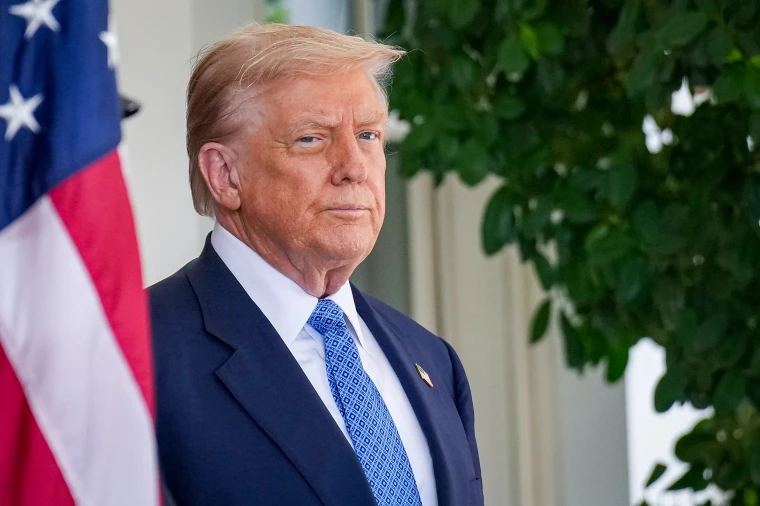
On August 11, 2025, President Donald Trump announced what he called “historic action” to “take the capital back.” Invoking Section 740 of the District of Columbia Home Rule Act, the president placed the DC Metropolitan Police Department under direct federal control, a power that has not been used in decades.
Under this move, Attorney General Pam Bondi will now oversee the Metropolitan Police Department. Additionally, 800 National Guard troops will be deployed immediately, with the option to send “much more if necessary.”
In his words, this is “Liberation Day in DC.” Trump’s framing of the announcement paints Washington, DC, as a city “overtaken by violent gangs and bloodthirsty criminals”, language that has already sparked heated political debate.
What is the District of Columbia Home Rule Act?
Passed in 1973, the Home Rule Act allows DC to elect its own mayor and city council, but Congress, and by extension, the president, retains ultimate authority over the city’s governance.
Section 740 of the Act enables the president to assume direct control of the DC police in times of emergency. Historically, this clause has been reserved for rare and extreme circumstances such as riots or severe civil unrest.
Trump’s justification: A crisis of crime and safety
During a press conference at the White House, Trump displayed charts comparing DC’s crime rate with cities such as Baghdad, Brasília, Panama City, and Bogotá — claiming the US capital now fares worse than these global hotspots.
“Roving mobs of wild youth, drugged-out maniacs, and homeless people” were among the groups Trump blamed for deteriorating public safety.
He also declared a public safety emergency, pledging to:
- Remove homeless encampments from underpasses and public spaces.
- Eliminate “slums” from the city.
- Provide “help” to displaced individuals but prohibit them from occupying public areas.
Notably, these claims come despite Justice Department data showing DC’s violent crime rate in 2024 was the lowest in three decades. This contrast between Trump’s narrative and federal statistics is likely to fuel further political and legal challenges.
Political implications and public reaction
Trump’s decision sets up a possible constitutional and political clash between the federal government and DC’s local leadership. Mayor Muriel Bowser — who has not yet issued a full public response, has previously defended DC’s right to manage its own police force without federal interference.
Critics argue that:
- The move undermines DC’s home rule and local autonomy.
- It risks militarizing public safety.
- It may be politically motivated in the lead-up to the 2026 midterm elections.
Supporters counter that:
- DC’s status as the nation’s capital makes federal oversight a matter of national security.
- Rising crime and homelessness require swift, decisive intervention.
How does this compare to past federal interventions in DC?
While the National Guard has been deployed in DC multiple times, notably during the 1968 riots, post-9/11 security operations, and the January 6 Capitol attack, direct presidential control over the police is rare.
The last high-profile use of Section 740 occurred in 1968 during widespread unrest following Martin Luther King Jr.’s assassination (before the current form of the Home Rule Act was enacted).
Trump’s action differs in that it was triggered by ongoing social and criminal concerns, rather than a singular violent event.
Why this matters beyond Washington
The decision could set a precedent for expanded presidential authority over local law enforcement in the capital. This raises questions about:
- Federal overreach: Could this be used to bypass local governance in politically unfavorable cities?
- Public safety vs. civil liberties: Where is the line between restoring order and restricting freedoms?
- Partisan governance: How might future administrations use, or avoid using, this authority?
Furthermore, the move underscores Trump’s broader “law-and-order” campaign strategy, echoing similar hardline rhetoric on immigration, border control, and urban crime.