
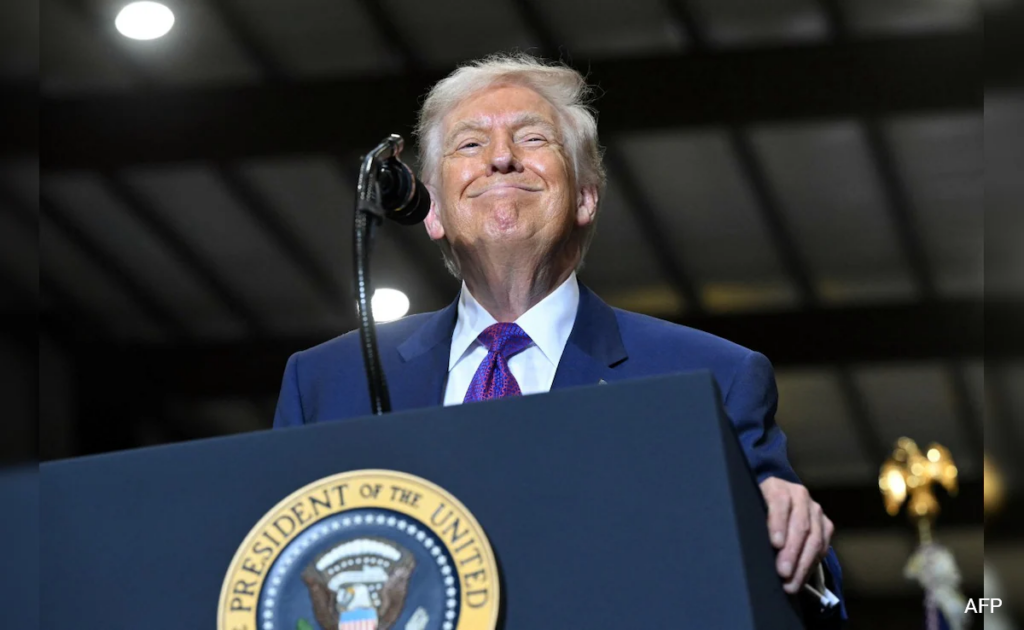
Hours after the US Supreme Court struck down much of his sweeping tariff regime, President Donald Trump signed a new order imposing a 10% global tariff on imports, framing the move as the start of an “adjustment process.”
The rapid pivot underscores how central tariffs remain to Trump’s economic strategy. It also sets up a fresh legal and political battle over executive power, trade policy, and the limits imposed by the courts.
What did the Supreme Court rule against?
In a 6–3 decision, the Supreme Court of the United States struck down significant portions of Trump’s earlier sweeping import duties.
The prior tariff framework relied on a broad reading of emergency powers under a 1977 statute. The administration argued that persistent US trade deficits constituted a national emergency justifying wide-ranging import taxes.
The Court disagreed, delivering a major blow to a pillar of Trump’s economic agenda.
For readers, this is the key legal hinge: how far can a president stretch emergency economic powers without explicit congressional authorization? Editors should link directly to the full Supreme Court opinion and include expert commentary from constitutional scholars, ideally from institutions such as Yale Law School or the Congressional Research Service.
What is in the new 10% global tariff order?
Trump’s new order imposes a 10% tariff on imports from around the world under a different legal framework that limits such measures to 150 days.
According to the president, the tariffs will take effect “almost immediately.” He described them as “totally tested and accepted as law.”
The shorter duration suggests a tactical recalibration. Rather than pushing the boundaries of emergency authority, the administration appears to be using a narrower, time-bound tool.
Why is Trump calling this an “adjustment process”?
On Truth Social, Trump criticized the Court’s ruling as “deeply disappointing” and said certain justices should be “ashamed.” At the same time, he signaled that the setback would not change his overall approach.
“Now the adjustment process begins,” he wrote, vowing to generate “even more money” than before.
The phrase matters. It frames the ruling not as a defeat, but as a recalibration. Trump is signaling to supporters and markets that tariffs remain a core policy instrument, even if the legal architecture shifts.
How central are tariffs to Trump’s economic agenda?
Tariffs have become one of Trump’s signature economic tools.
He has repeatedly argued that tariffs:
• Protect American manufacturing
• Reduce trade deficits
• Strengthen national security
• Provide leverage in trade negotiations
• Combat illicit flows, including fentanyl
In earlier announcements, Trump imposed “reciprocal” tariffs of up to 50% on countries with which the US ran trade deficits, alongside a 10% baseline tariff on most others. After market turbulence and diplomatic backlash, he paused some of those higher reciprocal tariffs for 90 days to allow negotiations.
The new 10% order essentially restores a global baseline while sidestepping the broader emergency framework rejected by the Court.
How are markets likely to respond?
Markets react less to rhetoric than to structure.
A 10% global tariff is significant but more predictable than a shifting schedule of country-specific penalties up to 50%. Investors will focus on:
• Duration and renewal risk after 150 days
• Retaliatory measures from trading partners
• Inflation impact on consumer goods
• Corporate earnings guidance
Trump pointed to recent stock market milestones as proof that his tariff strategy has not derailed economic momentum. Independent verification of those index levels should be cited from official exchange data or reputable financial outlets.
What happens next legally?
The Supreme Court’s ruling limits how aggressively the executive branch can invoke emergency trade authority. But it does not eliminate tariff power entirely.
Congress has historically delegated substantial trade authority to presidents under various statutes. The question now is which statutory pathway can survive judicial scrutiny while delivering the economic leverage Trump seeks.
Possible next steps include:
• Legal challenges to the new 10% order
• Congressional attempts to curb or clarify tariff authority
• Renewed executive efforts to redefine “national emergency” threshold
How does this affect global trade relationships?
The timing is sensitive.
Several countries were already negotiating with Washington after the earlier tariff wave. Some made concessions. Others resisted and faced higher duties.
The reimposition of a flat 10% global tariff could:
• Reset negotiation dynamics
• Prompt retaliatory tariffs
• Complicate ongoing bilateral trade talks
• Strain alliances
Is this a short-term maneuver or a long-term strategy?
The 150-day limit suggests tactical adaptation rather than retreat.
Trump has consistently framed tariffs not merely as trade tools but as instruments of national power. From trade deficits to border enforcement claims, he links tariffs to broader themes of sovereignty and security.
The Supreme Court ruling constrains how he can deploy them, not whether he can deploy them.
The broader story is institutional tension. The executive pushes the boundaries of delegated authority. The judiciary enforces limits. Policy evolves in the space between.
TL;DR
After the Supreme Court struck down much of his sweeping tariff regime, President Donald Trump signed a new 10% global tariff order under a time-limited legal authority. He framed the move as the start of an “adjustment process.” The decision keeps tariffs at the center of his economic agenda while setting up new legal and market tests in the months ahead.