
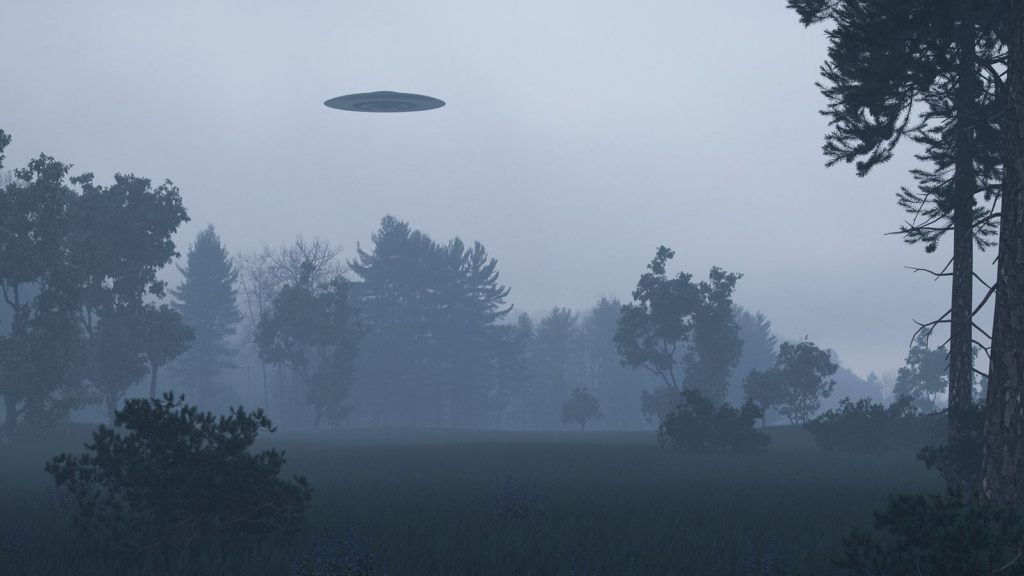
Reports that former President Donald Trump has authorized the release of information tied to secret UFO facilities have reignited one of America’s longest-running obsessions: are we alone, and does the US government know more than it admits?
The renewed attention comes from comments by a sitting member of Congress, ongoing investigations into Unidentified Anomalous Phenomena (UAPs), and growing public pressure for transparency. But the claims also arrive at a politically volatile moment—raising questions not just about aliens, but about timing, credibility, and trust in institutions.
Here’s what is actually being claimed, what remains unproven, and why this story matters now.
What is being claimed about Trump and UFO disclosure?
According to US Congressman Eric Burlison of Missouri, Donald Trump has backed efforts to grant lawmakers access to highly secure government locations linked to UFOs and alleged extraterrestrial material. Burlison made the remarks on the ALN Podcast, saying the White House instructed the Department of Defense to cooperate with his request.
In his words, the involvement was direct but limited: the White House, he said, told the Pentagon that it supported his access and to “do what you can to make it happen.”
This has been interpreted by some outlets as Trump green-lighting the release of all information linked to secret UFO facilities, including rumored sites where alien spacecraft—or even bodies—may be stored. It’s important to note that, as of now, no official declassification order spelling this out in detail has been made public.
Who is Congressman Eric Burlison, and why does he matter here?
Burlison’s role in congressional UFO investigations
Eric Burlison is a member of the congressional oversight committee investigating claims related to UAPs. Over the past two years, this committee has heard testimony from former military and intelligence officials who allege:
- The US government has recovered an unidentified craft
- Information about these recoveries has been hidden from Congress
- Special access programs exist outside normal oversight
Burlison has positioned himself as one of the lawmakers pushing hardest for physical access to facilities, not just briefings or documents.
Controversial past statements
Burlison has also made claims that go well beyond mainstream scientific consensus. In past interviews, he has suggested that:
- Alien-human hybrids may already be living on Earth
- US presidents, including Trump, have been briefed on recovered UFOs dating back to the 1940s
These assertions have not been supported by publicly verifiable evidence. For readers, that context matters when evaluating his latest remarks.
Which secret UFO facilities are most often mentioned?
Area 51 and the Nevada Test and Training Range
The Nevada Test and Training Range (NTTR), home to the infamous Area 51, remains the most well-known location linked to UFO lore.
What we know for certain:
- It is a classified US Air Force testing site
- Advanced aircraft and weapons systems have been developed there
- The government acknowledged its existence only in 2013
What remains unproven:
- Claims of alien bodies or spacecraft stored at the site
Strange aerial sightings over the decades are often cited, though many were later explained as experimental aircraft.
Other locations frequently cited
Beyond Nevada, allegations have pointed to:
- Wright-Patterson Air Force Base (Ohio): Long rumored to house recovered materials
- Naval Air Station Patuxent River (Maryland): Major testing hub for advanced aviation
- AUTEC, Bahamas: An undersea testing range sometimes linked to USO (unidentified submerged object) claims
None of these sites has confirmed extraterrestrial evidence. Their inclusion stems largely from whistleblower accounts and historical speculation.
What is the UAP investigation actually about?
The modern term Unidentified Anomalous Phenomena was adopted to move away from pop-culture baggage attached to “UFOs.” The focus is narrower and more bureaucratic than alien movies suggest.
Congress is primarily asking:
- Are there objects in US airspace we cannot identify?
- Do they pose a national security risk?
- Are reporting systems within the military reliable and transparent?
The Pentagon has acknowledged hundreds of UAP reports, but consistently states that most can be explained as drones, balloons, sensor glitches, or foreign surveillance—once enough data is available.
Is the government hiding alien bodies or spacecraft?
This remains the most sensational and least substantiated part of the story.
Several individuals have testified before Congress that the US government has recovered non-human technology and, in some cases, biological material. However:
- These testimonies have not been accompanied by publicly released physical evidence
- Inspectors general have found no proof of hidden alien programs in reviewed cases
- NASA and the DoD maintain that there is no verified evidence of extraterrestrial technology
That does not mean investigations are pointless. It does mean claims must be treated as allegations until independently verified.
Why is the timing of this UFO story raising eyebrows?
The Epstein Files backdrop
The renewed focus on alleged alien disclosures comes amid global attention on newly released court documents linked to Jeffrey Epstein. These filings have named several high-profile figures and reignited public anger over elite accountability.
Online, some commentators have suggested that UFO news is being used to distract from damaging revelations. There is no evidence to support coordinated diversion—but the overlap in timing has fueled skepticism.
Allegations mentioned in court filings remain allegations unless proven in court. Responsible coverage requires care not to conflate claims with established facts.
Public trust and information overload
The deeper issue may be less about aliens and more about credibility. In an era of institutional distrust, even partial transparency can be seen as strategic rather than sincere.
This makes UFO disclosure uniquely potent: it combines secrecy, fear, fascination, and politics in one package.
Why does UFO disclosure matter beyond the headlines?
Even if no aliens are found, these investigations have real implications:
- Congressional oversight: Are lawmakers being denied access to classified programs?
- Defense transparency: How much secrecy is justified in the name of security?
- Public trust: Can institutions communicate uncertainty without losing credibility?
At minimum, the debate forces clearer rules around classification and accountability.
What should readers watch next?
If this story develops meaningfully, expect to see:
- Formal declassification memos, not just interviews
- Verified site visits documented in congressional records
- Corroboration from multiple agencies, not single-source claims
Until then, skepticism and curiosity should coexist.
TL;DR
- A US congressman claims Trump backed his request to access secret UFO-linked facilities
- No confirmed evidence of alien bodies or spacecraft has been released
- Area 51 and other bases remain speculative focal points
- UAP investigations are real, but focused on security—not aliens
- Timing amid other political controversies has amplified suspicion
- Transparency, not sensationalism, is the real issue at stake