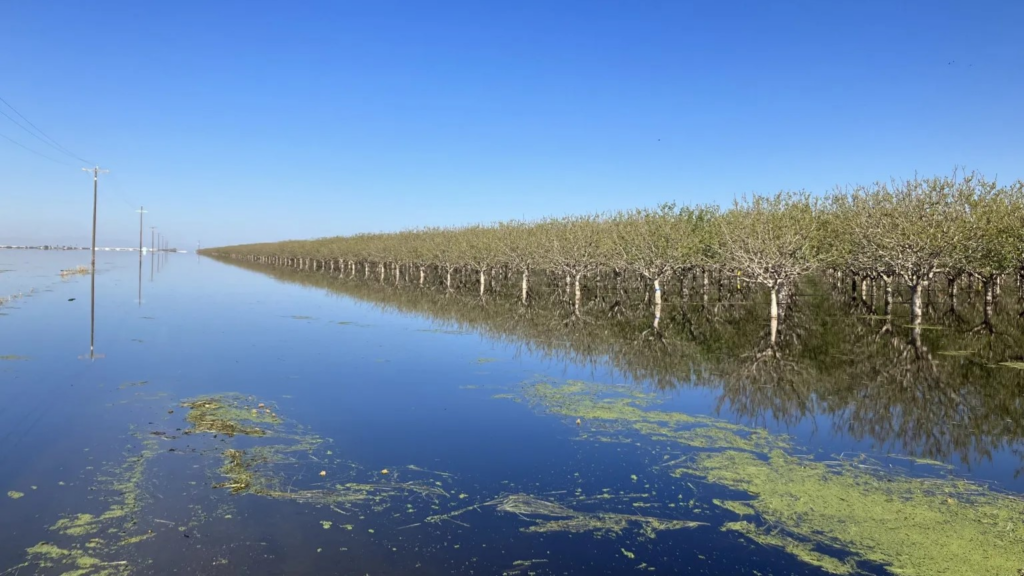
A lake that disappeared more than a century ago doesn’t usually get a second act. But in 2023, Tulare Lake reappeared—and with it, a striking reminder of how dramatically humans have reshaped the American landscape.
Once the largest freshwater lake west of the Mississippi River, Tulare Lake had been gone since the late 19th century. Its sudden return in California’s San Joaquin Valley is more than a natural curiosity. It’s a case study in climate extremes, water management, and the long shadow of historical land use decisions.
What Was Tulare Lake, and Why Did It Matter?
A forgotten giant of the American West
In the 1800s, Tulare Lake stretched across vast swaths of California’s Central Valley:
- Length: Over 100 miles (160 kilometers)
- Width: Roughly 30 miles (50 kilometers)
- Status: Largest freshwater lake west of the Mississippi River
It wasn’t just big—it was functional. The lake supported:
- Transportation routes linking inland agriculture to coastal markets
- Rich ecosystems filled with birds, fish, and amphibians
- Indigenous communities, including the Tachi Yokut tribe
At the time, places like Fresno weren’t dry agricultural hubs, they were lakeside towns.
Why Did Tulare Lake Disappear?
The role of agriculture and policy
Tulare Lake didn’t vanish due to drought. It was deliberately drained.
Beginning in the mid-1800s, California incentivised land reclamation. Under state policies:
- Land could be claimed if it was drained and converted for agriculture
- Wetlands were viewed as obstacles, not assets
- Irrigation systems diverted water away from natural basins
This created a powerful economic incentive. The result:
- The lake shrank rapidly between the 1850s and 1890s
- Its basin was transformed into fertile farmland
- Indigenous land was displaced and privatized
By 1890, Tulare Lake was effectively gone.
The broader pattern: “ancestral lakes” lost
Researchers now point out that Tulare wasn’t alone. Across California:
- Natural lakes and wetlands were drained
- Rivers were rerouted
- Seasonal floodplains were engineered out of existence
How Did Tulare Lake Reappear in 2023?
A perfect storm of snow and rain
The lake’s return wasn’t planned, it was triggered by extreme weather.
In 2023, California experienced:
- Heavy winter snowfall in the Sierra Nevada
- Intense spring rainfall
- Rapid snowmelt due to warming temperatures
This combination overwhelmed existing water systems. The excess water flowed naturally into the lowest point in the basin—the former Tulare Lake bed.
Why did the lake come back so quickly
Even after 130 years, the landscape “remembered” the lake:
- The basin still exists as a natural depression
- Gravity directed water back to its historic footprint
- The infrastructure couldn’t fully contain the volume
In essence, Tulare Lake didn’t need rebuilding—it just needed water.
What Happened When the Lake Returned?
Wildlife rebounded almost instantly
Nature responded faster than many expected. The lake’s return triggered the following:
- The arrival of pelicans, hawks, and waterbirds
- Sightings of burrowing owls, a vulnerable species
- The reappearance of fish and amphibians
This rapid ecological recovery highlights a key point:
Ecosystems can remain dormant, not destroyed.
Cultural and spiritual significance
For the Tachi Yokut tribe, who originally called the lake Pa’ashi, the return was deeply meaningful.
- The lake is tied to cultural identity and heritage
- Its reappearance has been described as a spiritual experience
- It underscores the long-term impact of land displacement
Why Is Tulare Lake Already Disappearing Again?
Modern priorities: farmland over floodwater
Despite its dramatic return, Tulare Lake is shrinking rapidly.
- Current size: about 2,625 acres
- Water is being actively drained
- Farmland restoration is underway
The same forces that erased the lake in the 19th century are still in play today.
The economic reality
The San Joaquin Valley is one of the most productive agricultural regions in the U.S.:
- Billions of dollars in crop value annually
- High demand for land use efficiency
- Infrastructure designed to prevent flooding, not to allow lakes
Allowing the lake to persist would mean:
- Flooded farmland
- Economic losses
- Disruption to existing water systems
What Does the Tulare Lake Reappearance Tell Us About Climate Change?
Extreme weather is rewriting expectations
The lake’s return reflects a broader trend:
- More intense storms
- Faster snowmelt cycles
- Increased flood risk
Climate change isn’t just about drought—it’s about volatility.
Old landscapes may reassert themselves
Tulare Lake is a reminder that:
- Historical ecosystems can re-emerge under pressure
- Human-engineered systems have limits
- Geography ultimately shapes water flow
This raises important questions:
- Should some floodplains be restored rather than resisted?
- Are current water systems built for future climate realities?
Could Tulare Lake Return Again?
Short answer: yes, under the right conditions
If similar weather patterns occur, the lake could reappear.
However, its long-term survival is unlikely unless policy changes:
- Land use would need to shift away from agriculture
- Water management systems would need to be redesigned
- Flood tolerance would need to increase
At present, none of these is a priority.
Why This Story Matters
The Tulare Lake reappearance isn’t just a historical oddity. It’s a lens into:
- How human decisions reshape geography
- How quickly nature can rebound
- How climate change is exposing past assumptions
It also forces a difficult trade-off into the open:
Should land be optimised for economic output—or ecological resilience?
TL;DR
- Tulare Lake, once the largest freshwater lake west of the Mississippi, disappeared by 1890 due to agricultural drainage.
- In 2023, extreme snowmelt and rainfall caused it to reappear.
- Wildlife and ecosystems rebounded quickly.
- The lake is already shrinking as water is drained for farmland.
- Its return highlights climate volatility and the limits of human-engineered landscapes.