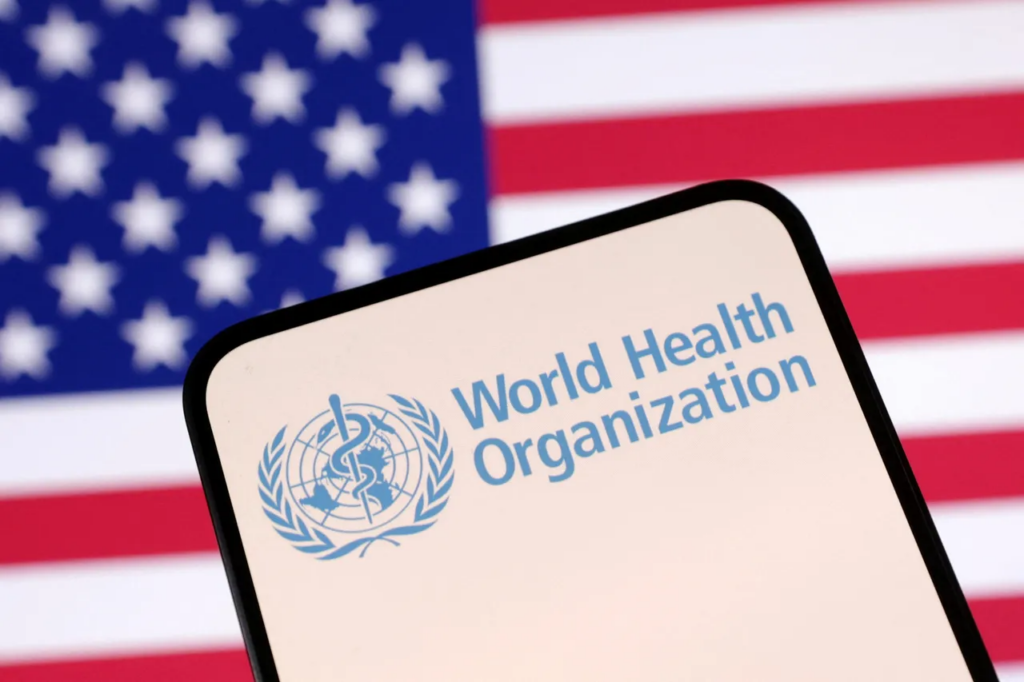
The United States has formally withdrawn from the World Health Organization(WHO), closing the book on nearly eight decades of involvement in the world’s top global health body. The move, ordered by President Donald Trump on his first day back in office in 2025 and completed this week, reshapes how the US engages with international health efforts and sends shockwaves through the UN system.
US officials say the decision reflects long-standing frustration with the WHO’s handling of the COVID-19 pandemic and what they describe as systemic management failures. Critics warn the exit weakens global disease surveillance at a time when health threats move faster than borders.
This article explains why the US left the WHO, what changes immediately, and how the decision could affect global health governance.
What happened, and when did the US exit the WHO?
The US withdrawal became official on January 23, 2026, following a year-long notice period triggered by an executive order signed by President Trump on his first day in office in 2025.
The legal process behind the withdrawal
Under US law, leaving the WHO requires a one-year notice. During that period, the administration signaled repeatedly that it would not reverse course.
A key dispute centered on money. The WHO has said the US owed roughly $260 million in outstanding contributions. The State Department rejected the idea that those payments were required before withdrawal.
“The American people have paid more than enough,” a State Department spokesperson said, underscoring the administration’s position that the law does not mandate clearing dues before exiting.
No observer role, no return plans
US health officials were blunt about what comes next.
- No observer status at WHO meetings
- No plans to rejoin
- Only limited technical engagement, if any
“We have no plans to participate as an observer, and we have no plans of rejoining,” a senior government health official said.
That clarity removes uncertainty but also eliminates informal channels the US previously used to influence global health decisions from the inside.
Why did the Trump administration pull the US out?
The decision to leave the WHO fits into a broader Trump-era critique of multilateral institutions.
COVID-19 remains central to the argument
Administration officials point to what they see as failures during the early months of the COVID-19 pandemic.
Their claims include:
- Delayed responses to early outbreak signals
- Excessive deference to China
- Poor crisis communication
Trump has repeatedly argued that the WHO failed its core mission at a moment when global coordination mattered most.
A preference for bilateral over multilateral action
The US says it will now work directly with other countries on:
- Disease surveillance
- Pandemic preparedness
- Data sharing
Instead of routing efforts through an international organization, Washington wants tailor-made partnerships where it believes accountability is clearer and outcomes more measurable.
Supporters argue this approach reduces bureaucracy. Critics say it fragments a system designed to share information quickly across regions.
How significant was the US role inside the WHO?
The US was not just another member state.
Financial weight and influence
Historically, Washington was the WHO’s largest single donor, contributing about 18 percent of the agency’s total funding.
That funding supported:
- Emergency response teams
- Disease monitoring programs
- Technical assistance in low-income countries
The sudden loss of that support has immediate consequences.
A voice in agenda-setting
Beyond money, the US played a central role in shaping priorities, from polio eradication to global vaccination campaigns.
Without that voice, the balance of influence inside the WHO shifts toward other major donors, including the European Union and China.
What happens to the WHO now?
The impact on the organization has been swift and severe.
Budget cuts and layoffs
The WHO has already announced:
- A halving of its senior management team
- Program cuts across departments
- Plans to lay off nearly 25 percent of its staff by mid-year
These measures reflect not just lost US funding but also uncertainty about future contributions from other donors, who may hesitate to fill the gap.
Operational strain during rising health risks
Public health experts warn the timing could hardly be worse.
- Climate-driven disease spread is accelerating
- Conflict zones are straining health systems
- Pandemic preparedness remains uneven
“The US withdrawal from WHO could weaken the systems and collaborations the world relies on to detect, prevent, and respond to health threats,” said Kelly Henning of Bloomberg Philanthropies.
How will the US handle global health without the WHO?
The administration insists the US is not stepping back from global health leadership.
Direct partnerships instead of global platforms
US officials say Washington will:
- Share data directly with allies
- Fund targeted health initiatives
- Rely on domestic agencies like the CDC for international outreach
This model emphasizes control and speed but lacks a central coordinating hub.
Limits of going it alone
Even critics of the WHO acknowledge one challenge: diseases do not respect political alignments.
Without a neutral platform, information sharing can become uneven, particularly with countries that have strained relations with the US.
This raises questions about how future outbreaks will be detected in regions where the US diplomatic reach is limited.
Is this part of a broader US pullback from the UN?
Many observers see the WHO exit as part of a larger pattern.
Multiple UN withdrawals
In recent weeks, the US has taken steps to disengage from several UN-affiliated bodies. This coincides with Trump’s launch of the Gaza-focused Board of Peace, a US-led initiative designed to operate alongside, and at times challenge, existing UN frameworks.
The concern among diplomats is not just about one agency, but about the erosion of the UN system’s authority.
A shift in how power is exercised
The administration’s approach favors:
- Ad hoc coalitions
- US-led structures
- Issue-specific arrangements
This marks a departure from post-war American strategy, which invested heavily in building and maintaining global institutions.
How are other countries reacting?
International reaction has been mixed.
Allies express concern
European officials and global health leaders have warned that the US exit could:
- Reduce transparency
- Delay outbreak responses
- Increase duplication of effort
Some governments fear a domino effect if other major donors reconsider their commitments.
Others see opportunity
At the same time, countries seeking greater influence inside the WHO may step forward with increased funding, reshaping the organization’s priorities.
This realignment could redefine global health leadership for the next decade.
Why this decision matters beyond health policy
The US exit from the WHO is about more than vaccines and surveillance systems.
A test of global cooperation
The pandemic underscored that no country can fully insulate itself from global health threats. Walking away from the world’s primary health body tests whether bilateral deals can replace multilateral coordination.
Long-term strategic consequences
Once institutional ties are severed, rebuilding trust is difficult. Even if future administrations seek to re-engage, the architecture of global health may have shifted in the meantime.
TL;DR
The United States has formally withdrawn from the World Health Organization after nearly 80 years, following a Trump executive order issued in 2025. The administration cites COVID-19 failures and management issues, plans no observer role, and intends to pursue direct health partnerships instead. The move has triggered budget cuts and layoffs at the WHO and raised concerns about weakened global disease surveillance and a broader US retreat from multilateral institutions.