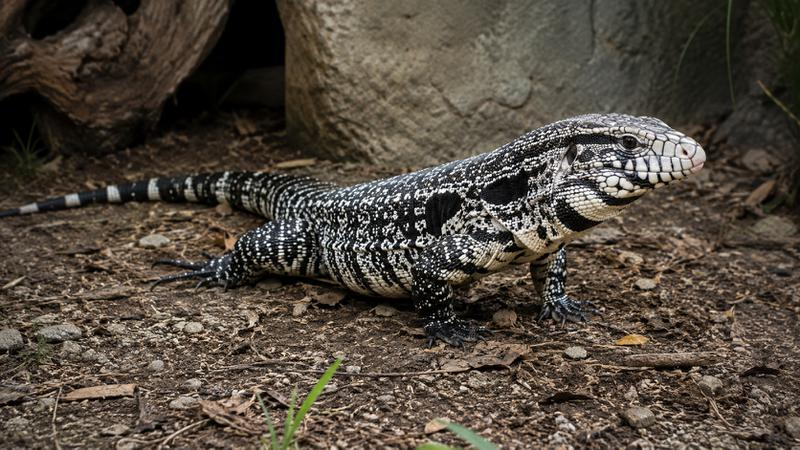
Wildlife officials across parts of the southern United States are asking residents to report — and in some cases kill — a fast-growing invasive species that experts say poses a serious threat to local ecosystems.
The animal in question is the Argentine black and white tegu, a large lizard native to South America that has been steadily expanding its footprint across states including Florida, Georgia, and South Carolina.
Now, authorities in Georgia are sounding the alarm more aggressively as sightings increase in the southeastern region of the state.
According to the Georgia Department of Natural Resources (DNR), residents who encounter the reptiles are encouraged to humanely euthanise them when possible and report sightings to wildlife officials.
What Is an Argentine Black and White Tegu?
Argentine black and white tegu is one of the largest lizard species in the Americas, capable of growing up to four feet long.
Native to countries including Argentina, Brazil, Paraguay, and Uruguay, the reptiles were introduced into the United States primarily through the exotic pet trade.
Over time, escaped or intentionally released tegus established breeding populations in the wild, particularly in warm southern climates that closely resemble their native habitat.
Despite their intimidating size, tegus are often described as relatively docile around humans compared to other large reptiles. That temperament helped make them popular exotic pets — but it also contributed to the invasive species problem now unfolding across the Southeast.
Consider adding a map graphic here showing confirmed tegu populations in Florida, Georgia, and South Carolina. A timeline of expansion would also help readers understand how quickly the species has spread.
Why Wildlife Officials Want Residents to Kill Them
The concern is not about attacks on humans.
Instead, wildlife experts say tegus threaten native ecosystems by aggressively feeding on:
- Bird eggs
- Reptile eggs
- Small mammals
- Amphibians
- Ground-nesting species
Their diet makes them especially dangerous for vulnerable wildlife populations.
In Florida, for example, researchers have raised concerns about tegu predation on the eggs of:
- American alligators
- Gopher tortoises
- Ground-nesting birds
The reptiles are also highly adaptable and capable of surviving in a wide range of environments, from forests and wetlands to suburban neighbourhoods and farmland.
Officials warn that without early intervention, tegu populations could expand rapidly and become far more difficult — and expensive — to control.
Georgia Officials Say Early Action Is Critical
Speaking to Georgia Public Broadcasting, senior wildlife biologist Daniel Sollenberger urged residents to notify authorities if they spot the reptiles.
“If you’re not in a position to use a firearm or something like that, try to document it with a photo and let us know,” Sollenberger said. “We can perhaps give some guidance or maybe help try to put a trap out or something like that.”
The Georgia DNR says trapping and removal operations are already underway in several hotspots.
Wildlife officials often emphasise rapid response when dealing with invasive species because eradication becomes significantly harder once breeding populations spread across larger territories.
That pattern has already played out in Florida with invasive Burmese pythons, which have proven nearly impossible to fully remove from the Everglades ecosystem.
Can Tegus Harm Humans?
Tegus are generally not considered dangerous to humans, and attacks are rare.
However, officials say there are still health and safety concerns associated with the reptiles.
According to wildlife agencies, tegus may carry:
- Salmonella bacteria
- Exotic parasites
- Other pathogens harmful to humans or domestic animals
Large tegus also have strong jaws and claws, meaning they can bite or scratch if cornered or handled improperly.
Experts strongly advise residents not to attempt capturing the reptiles without guidance or proper equipment.
How the Pet Trade Fueled the Problem
The spread of tegus in the United States reflects a broader issue tied to the exotic pet industry.
Over the past several decades, demand for unusual reptiles has introduced multiple non-native species into US ecosystems. In many cases:
- Animals escaped captivity during storms
- Owners released pets they could no longer manage
- Breeding populations formed in warm climates
Florida has become one of the most visible examples of this phenomenon because its subtropical environment allows many exotic reptiles to survive and reproduce year-round.
The tegu invasion highlights the long-term ecological risks that can emerge from the exotic pet trade when regulations and public awareness fall short.
Why Invasive Species Are So Hard to Control
Once invasive species become established, eliminating them entirely can be extremely difficult.
That’s because successful invasive animals often share several traits:
- Rapid reproduction
- Broad diets
- Adaptability
- Few natural predators
- Ability to thrive near human development
Tegus check many of those boxes.
Wildlife officials fear that if populations continue spreading northward, the reptiles could disrupt ecosystems across a much larger portion of the southeastern United States.
Climate change may also complicate containment efforts by creating warmer conditions that expand the species’ survivable range.
What Residents Should Do if They Spot a Tegu
Wildlife agencies recommend the following steps:
- Avoid approaching the animal unnecessarily
- Take a photo if possible
- Report the sighting to local wildlife authorities
- Follow state guidance regarding removal or euthanasia
- Never release exotic pets into the wild
Because regulations vary by state, officials advise residents to check local wildlife agency instructions before taking action.
The Bigger Picture Behind the Tegu Warning
The growing tegu problem reflects a larger environmental challenge facing wildlife agencies across the US.
From lionfish in Atlantic waters to Burmese pythons in Florida wetlands, invasive species are reshaping ecosystems in ways scientists are still trying to fully understand.
What makes tegus especially concerning is how quickly they appear to be adapting outside their native range.
For now, officials believe aggressive early action offers the best chance of slowing the spread before the reptiles become permanently entrenched across more southern states.
Whether those efforts succeed may depend heavily on public cooperation.
TL;DR
- Georgia wildlife officials are urging residents to report or humanely kill invasive Argentine black and white tegus
- The reptiles are native to South America and spread through the exotic pet trade
- Tegus threaten native wildlife by eating eggs, small animals, and ground-nesting species
- Officials warn the species could cause long-term ecological damage if populations continue growing
- Wildlife agencies are conducting trapping and removal operations in affected areas
- Residents are advised never to release exotic pets into the wild