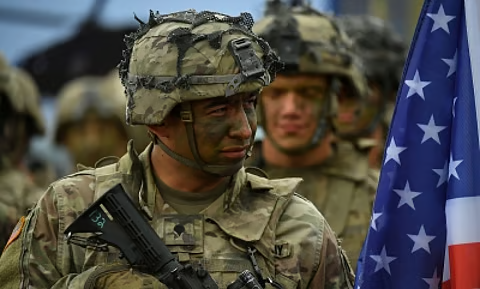
The commander of U.S. Central Command (CENTCOM) has warned American service members that photos, videos, and social media posts shared from personal devices could inadvertently provide valuable intelligence to Iran.
In a memo dated July 28, Admiral Brad Cooper urged troops to strengthen operational security (OPSEC), cautioning that publicly available content could help adversaries assess the effectiveness of missile and drone attacks against U.S. military facilities in the Middle East.
The warning comes amid heightened regional tensions and follows reports that military leaders are considering stricter controls on personal electronic devices at some overseas bases.
Why Did CENTCOM Issue the Warning?
According to the memo obtained by Reuters, Admiral Cooper warned that publicly available information—including social media posts, photographs, videos, and media reports—can provide adversaries with useful intelligence.
He argued that such material may allow Iran to determine whether its missile or drone strikes hit intended targets or caused meaningful damage.
In the memo, Cooper wrote that the consequences of publicly available information “could be measured in the lives of American service members and civilian residents in targeted Gulf countries.”
How Could Social Media Help an Adversary?
Military planners often seek to determine whether an attack achieved its intended objective through a process known as Battle Damage Assessment (BDA).
According to Cooper, videos or images posted online may reveal information such as:
- Which facilities were struck.
- The extent of physical damage.
- Where personnel sought shelter.
- How military bases responded during an attack.
If such information becomes publicly available, it may reduce the need for an adversary to gather the same intelligence through other means.
Are Troops Being Required to Give Up Their Phones?
Not at this time, according to publicly available information.
Reuters reported that some U.S. personnel stationed in Jordan have been informed that restrictions on personal mobile phones could be introduced in the near future.
The report, citing unnamed sources familiar with the discussions, said commanders in the region are considering measures that could include temporarily collecting or limiting the use of personal devices at certain locations.
However, CENTCOM spokesperson Captain Timothy Hawkins told Reuters that Admiral Cooper’s memo should be viewed as a general reminder about operational security rather than an announcement of new policy.
As of now, no military-wide directive requiring troops to surrender personal phones has been publicly announced.
Smart Glasses Incident Highlighted
The memo also referenced an incident involving wearable technology.
According to Cooper, a U.S. service member reportedly recorded footage during an Iranian missile and drone attack on Muwaffaq Salti Air Base in Jordan using Meta smart glasses equipped with a built-in camera.
The footage was reportedly uploaded to Instagram and, according to the memo, showed where U.S. personnel took shelter during the attack.
Military officials argue that details of this nature could assist adversaries in understanding defensive procedures or facility layouts.
Why Is Operational Security Important?
Operational security, commonly known as OPSEC, is the practice of protecting sensitive information that could be exploited by adversaries.
Modern military organizations increasingly view publicly available digital information—including:
- Social media posts.
- Smartphone photographs.
- Videos.
- GPS-enabled applications.
- Wearable technology.
—as potential intelligence sources.
Even seemingly routine posts may reveal locations, movement patterns, infrastructure, or operational procedures when combined with other publicly available information.
Broader Concerns Over Digital Devices
The Pentagon has previously warned about risks associated with connected devices and location-sharing technology.
In recent years, military officials have highlighted how:
- Fitness applications can expose troop movements.
- Geolocation metadata may reveal sensitive locations.
- Wearable devices can unintentionally collect operational information.
- Publicly shared images may contain identifiable infrastructure or equipment.
The latest memo reflects continuing efforts to reduce those risks during ongoing military operations.
Why This Matters
Military operations increasingly take place in an environment where smartphones, wearable cameras, and social media platforms enable information to spread globally within minutes.
Security experts have long warned that publicly available information—often referred to as open-source intelligence (OSINT)—can provide adversaries with insights that were once difficult to obtain through traditional intelligence methods.
As geopolitical tensions persist in the Middle East, military leaders are placing greater emphasis on balancing personal technology use with operational security requirements.
The Bottom Line
CENTCOM Commander Admiral Brad Cooper has warned U.S. troops that publicly shared photos, videos, and social media posts could unintentionally help Iran evaluate the effectiveness of missile and drone attacks. While Reuters reports that some commanders are considering tighter restrictions on personal mobile phones at certain overseas bases, CENTCOM says no new military-wide policy has been announced. The warning underscores the growing role of digital technology and open-source intelligence in modern military operations.
TL;DR
- CENTCOM Commander Admiral Brad Cooper warned troops about the operational security risks posed by social media posts.
- The memo states that publicly shared images and videos could help Iran assess the results of missile and drone attacks.
- Reuters reported that some commanders are considering restricting or temporarily collecting personal phones at certain bases, though no military-wide order has been announced.
- CENTCOM says the memo is a reminder about operational security rather than a directive introducing new policy.
- The warning reflects broader concerns about digital devices and publicly available information during military operations.