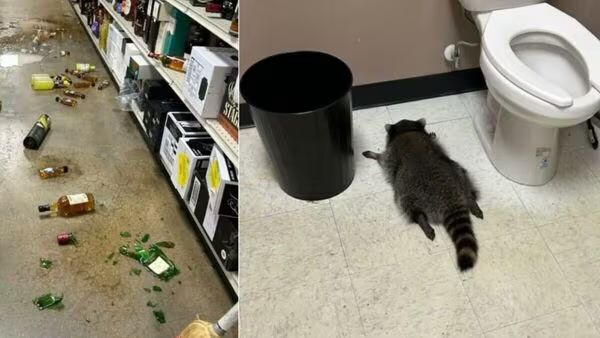
A routine post-Thanksgiving opening at a Virginia liquor store turned into an unexpected wildlife incident when employees discovered a drunk raccoon asleep in the restroom. The animal had broken into the store overnight, raided low-shelf liquor, and passed out between a trash can and the toilet. The bizarre incident quickly spread across social media and sparked conversations about urban wildlife behaviour, alcohol toxicity in animals, and the unpredictable challenges faced by local animal control teams.
This article provides a clear, detailed breakdown of what happened, why raccoons are prone to such misadventures, and what experts say about the risks and outcomes of such encounters.
How the raccoon broke into the liquor store
Employees at the Ashland, Virginia, liquor store returned after Thanksgiving to find smashed ceiling tiles and scattered liquor bottles. According to store staff and county animal protection officials, the raccoon likely:
- Entered through a damaged ceiling panel
- Fell into the store overnight
- Crawled toward the alcohol shelves
- Broke several bottles while rummaging
- Consumed enough alcohol to become disoriented
The trail of spilled scotch and broken glass led directly to the restroom, where the animal was found “sleeping off” its wild night.
What officers found when they responded
The Hanover County Animal Protection and Shelter dispatched Officer Samantha Martin to assess and remove the animal. She described the scene with equal parts humour and caution.
The animal was passed out but alive
The raccoon was discovered wedged between a bin and the toilet, unresponsive but breathing steadily. Animal control officers note that raccoons under the influence often appear lethargic, confused, or unconscious, similar to intoxicated pets or humans.
Why alcohol is dangerous for wildlife
While raccoons are curious omnivores, alcohol affects them far more quickly due to:
- Their smaller body weight
- Inability to metabolize large amounts of ethanol
- Rapid dehydration risks
- Higher susceptibility to hypothermia
Wildlife experts emphasize that even small quantities can impair mobility and decision-making, making the raccoon’s safe recovery notable.
What happened during the raccoon’s “recovery period”
Officer Martin told reporters that the raccoon simply needed time to rest in a warm environment while staff monitored its condition. The shelter’s social media statement added that:
- The raccoon showed zero signs of injury
- It was alert after several hours
- No veterinary intervention was required
- The only side effects were likely a hangover and “poor life choices”
Once the animal was fully awake and mobile, it was safely released back into the wild.
Why raccoons break into buildings more often than people realize
Raccoons are drawn to food and smells
Liquor stores, restaurants, and grocery outlets frequently report raccoon intrusions. Fermented scents, sugary drinks, and open food containers can attract wildlife from a surprising distance.
Holiday closures can invite hidden guests
Because the store was closed for Thanksgiving, the noise, foot traffic, and usual deterrents were absent, making it easier for a curious animal to explore undetected.
Ceiling and attic spaces are common entry points
Raccoons often enter through:
- Loose roof shingles
- Ventilation openings
- Ceiling gaps
- Damaged tiles
In this case, the store believes the raccoon fell through a weak section of the ceiling, leading to the chaotic chain of events.
How the store responded after the incident
Store employees dubbed the incident their “Black Friday break-in,” a lighthearted nod to the retail frenzy surrounding the holiday weekend. After the raccoon was removed:
- Staff cleaned the restroom and sales floor
- Damaged ceiling tiles and shelves were inspected
- Extra precautions were added to seal roof vulnerabilities
The store publicly thanked Hanover County Animal Protection and Shelter for ensuring the animal was unharmed and returned safely to the wild.
What animal control says about such cases
Hanover County Animal Protection and Shelter noted that unusual break-ins—especially involving raccoons—are not rare in the region.
Officers see a wide range of wildlife emergencies
These include:
- Animals trapped in attics
- Birds crashing into stores
- Squirrels stuck in vents
- Snakes entering basements during seasonal changes
Compared to those calls, a drunk raccoon “is simply another day in the job,” Martin noted in her statement.
Education and prevention matter
Officials encourage homeowners and businesses to:
- Seal roof and ceiling gaps
- Secure waste bins
- Use wildlife-safe deterrents
- Call professionals instead of handling wild animals themselves
Local authorities highlighted this incident as a reminder that wildlife encounters often involve curiosity rather than aggression.
What this incident says about urban wildlife behaviour
As human development expands into forested and semi-rural areas, animals adapt quickly to man-made environments. Raccoons, in particular, are known for:
- High intelligence
- Ability to open doors, latches, and containers
- Strong food-seeking instincts
- Comfortable coexistence near human settlements
The Ashland raccoon incident underscores how easily wildlife can interact with commercial spaces when entry points go unnoticed.
TL;DR
- A raccoon broke through the ceiling of a Virginia liquor store after Thanksgiving and drank spilled alcohol.
- The animal was found passed out in the restroom and taken in by animal control.
- Officers let it “sleep off” the alcohol before releasing it back into the wild.
- The incident highlights the risks of wildlife entering commercial spaces and the growing overlap between urban life and animal habitats.