
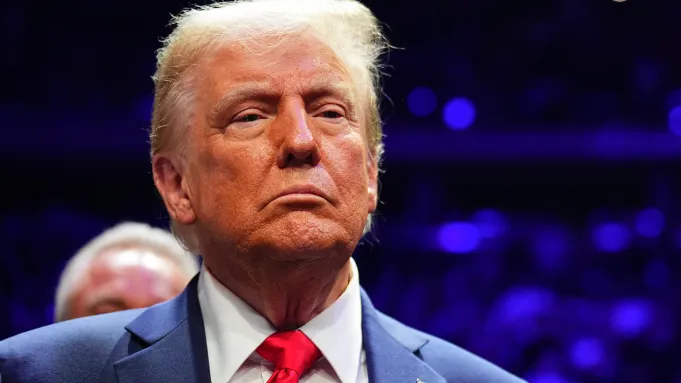
US President Donald Trump has issued another round of presidential pardons, reigniting debate over the scope and use of executive clemency. Among the more controversial beneficiaries is Adriana Camberos, a California businesswoman whose criminal history includes two separate federal fraud convictions — and a prior sentence commutation from Trump himself during his first term.
The move is part of a broader slate of more than 20 pardons and commutations granted last week, according to the White House, covering political figures, business executives, and individuals linked to high-profile federal prosecutions. The Camberos case stands out for one reason: it is exceptionally rare for someone to receive a presidential commutation, be convicted again, and then receive a full pardon years later.
What Did Trump’s Latest Round of Pardons Include?
The latest clemency action reflects Trump’s continued willingness to use one of the Constitution’s most sweeping presidential powers.
A broad and politically charged slate
According to reporting, the latest pardons include:
- Business executives convicted of federal fraud
- Individuals tied to politically sensitive prosecutions
- Defendants whose cases became symbols of alleged prosecutorial overreach
The White House has framed the pardons as corrective measures, arguing that certain defendants were unfairly targeted by federal prosecutors during the Biden administration.
Critics, however, say the choices underscore longstanding concerns about favoritism, inconsistency, and the erosion of accountability in the use of presidential clemency.
Who Is Adriana Camberos?
Adriana Camberos is a San Diego-based businesswoman whose legal troubles stretch back more than a decade and involve multiple federal investigations.
The first federal fraud case: 5-Hour Energy scheme
Camberos first came under federal scrutiny for her role in a scheme involving 5-Hour Energy drink bottles, according to ABC News.
Prosecutors alleged that:
- The products were obtained at discounted rates for resale in Mexico
- Instead, they were diverted into the US market
- Counterfeit labels were added
- Bottles were filled with fake liquid before being sold domestically
She was convicted on federal fraud charges and sentenced to prison.
In January 2021, just days before leaving office, Trump commuted her sentence, allowing her to avoid serving the full term. Importantly, the commutation did not erase the conviction, it merely reduced the punishment.
Why Is This Pardon Unusual?
Presidential pardons are not uncommon. What makes Camberos’s case exceptional is the sequence of events that followed.
A second conviction after clemency
After receiving Trump’s commutation, Camberos returned to business. But her legal troubles were far from over.
In 2024, federal prosecutors secured a second fraud conviction, this time involving Camberos and her brother, Andres Camberos.
According to the US Justice Department:
- The siblings falsely claimed goods were intended for export to Mexico
- In other instances, they said products were for prisons or rehabilitation facilities
- These claims allowed them to purchase groceries and other goods at steep wholesale discounts
Prosecutors said the goods were instead sold to US distributors at higher prices, generating tens of millions of dollars in revenue, Bloomberg reported.
Following the conviction, Camberos returned to federal custody.
What Does a Full Pardon Actually Do?
Last week’s pardon, confirmed by a White House official speaking to Bloomberg, wiped out Camberos’s most recent conviction and led to her immediate release from custody. Her brother Andres also received a pardon.
Commutation vs pardon: the key difference
- Commutation: Reduces or ends a sentence but leaves the conviction intact
- Pardon: Forgives the offense entirely and removes legal consequences tied to the conviction
By granting a full pardon after a second conviction, Trump effectively erased the legal consequences of Camberos’s most recent crime — a step legal scholars say is extremely uncommon.
What Is the White House Saying?
The White House has defended the decision, arguing that the Camberos family was the victim of politically motivated prosecution.
In statements cited by Bloomberg, administration officials claimed:
- The cases reflected selective enforcement
- Prosecutors pursued the family aggressively under the Biden administration
- Clemency was necessary to correct an injustice
Federal prosecutors have consistently rejected that narrative, describing both cases as deliberate, calculated fraud schemes involving deception, counterfeit products, and systematic misrepresentation to suppliers.
Why Does This Pardon Matter?
Beyond one defendant, the Camberos pardon raises broader questions about the future use of presidential clemency.
1. Accountability after repeated offences
Legal experts note that pardoning someone who reoffends after receiving clemency challenges the idea that pardons are acts of mercy contingent on rehabilitation.
If clemency can be granted repeatedly, critics argue, it risks becoming a shield against consequences rather than an extraordinary remedy.
2. The politicization of justice
The White House’s framing of the case as politically motivated feeds into a larger narrative Trump has advanced for years, that federal law enforcement has been weaponized against certain individuals.
Supporters see the pardons as corrective. Opponents warn they undermine trust in the justice system and blur the line between legal accountability and political loyalty.
3. Precedent for future presidents
Presidential pardons are nearly impossible to challenge in court. As a result, each high-profile use helps define the boundaries, or lack thereof, for future administrations.
How Common Are Repeat Pardons?
Cases like Camberos’s are extraordinarily rare. While presidents have occasionally pardoned individuals with prior criminal histories, it is highly unusual to:
- Commute a sentence
- See the recipient convicted again
- Later, issue a full pardon for the new conviction
Legal scholars say this sequence underscores how broad and unchecked the pardon power remains.
TL;DR
- Trump issued more than 20 new pardons, including one for Adriana Camberos.
- Camberos had two separate federal fraud convictions and a prior commutation from Trump.
- The latest pardon erased her most recent conviction and led to her immediate release.
- The White House says the prosecution was politically motivated; prosecutors strongly disagree.
- The case raises serious questions about accountability, precedent, and the future of presidential clemency.