As 2025 draws to a close, December 31 marks six years since China first notified the World Health Organization about a mysterious pneumonia spreading in Wuhan. That date has become a fixed point in global memory. What still provokes debate is not only how the virus spread, but how early warnings were treated inside China at a moment when days and even hours mattered.
Despite Beijing’s repeated assertions that it acted decisively once the danger was understood, a substantial record of official notices, media reporting, and academic research suggests a different story. Doctors who tried to warn colleagues were punished. Online discussion was curtailed. Independent reporting vanished. The result was a critical loss of time that shaped the course of a global pandemic.
What happened when doctors first raised the alarm?
In late December 2019, physicians in Wuhan hospitals began seeing patients with symptoms resembling SARS, a disease that had shaken China less than two decades earlier. Internal alerts circulated among clinicians who were increasingly concerned about contagion.
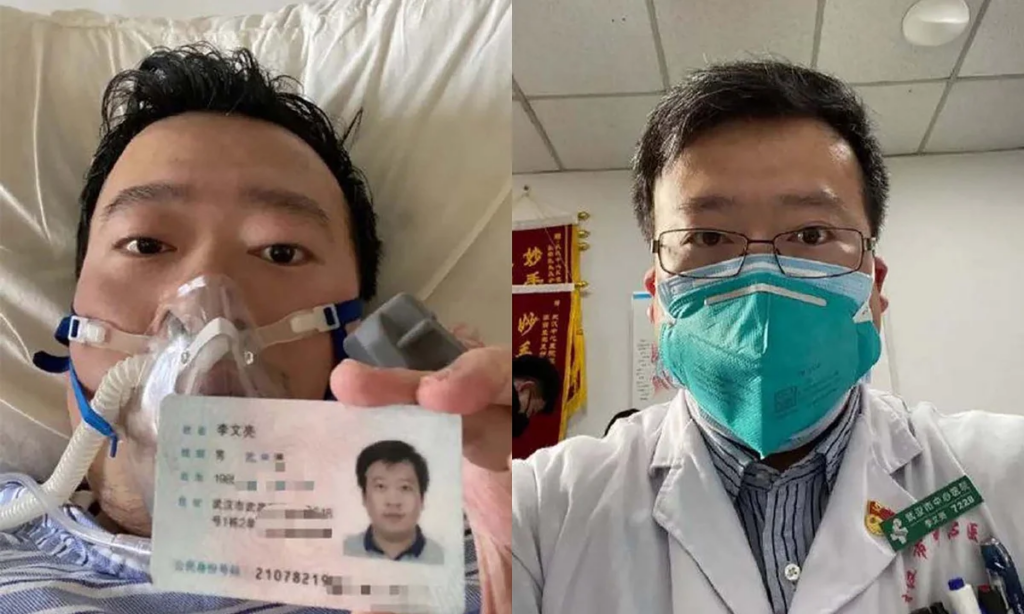
On December 30, 2019, Dr Li Wenliang, an ophthalmologist at Wuhan Central Hospital, shared a warning in a private messaging group with fellow doctors. He urged them to take precautions against what he described as a SARS-like virus.
Within days, Li was summoned by local police. He was accused of spreading rumours and disrupting social order. An official reprimand forced him to sign a statement admitting wrongdoing and promising silence. Wuhan police later confirmed that at least seven other medical professionals were similarly warned in early January 2020.
Li returned to work, contracted Covid-19 from a patient, and died on February 6, 2020. His death triggered rare public anger across China. Millions of social media users mourned him and called for freedom of speech, until many of those posts were removed by censors.
China’s central authorities later acknowledged that the reprimand against Li was inappropriate and formally withdrew it. No local officials were publicly disciplined.
How hospitals discouraged speaking out
Li’s case was not isolated. Other medical professionals later described an environment where openness was treated as a liability.
Ai Fen, head of emergency medicine at Wuhan Central Hospital, said she was reprimanded by hospital superiors after circulating a diagnostic report in December 2019 that referenced a SARS-like coronavirus. In interviews months later, she said staff were warned not to share information without authorization.
On December 30, oncologist Xie Linka sent a message to colleagues advising them to avoid the Huanan Seafood Wholesale Market, citing cases of unexplained pneumonia similar to SARS. She later told Chinese media that police warned her over the message.
Several healthcare workers said hospitals were reluctant in early January 2020 to isolate suspected patients or allow staff to wear higher-level protective gear. Officials, they said, feared such steps would cause panic or attract unwanted scrutiny.
Public confirmation of human-to-human transmission did not come until January 20, 2020, despite infections among healthcare workers being a clear warning sign.
How online censorship shaped public awareness
As warnings were suppressed offline, digital discussion was also tightly controlled.
Researchers studying Chinese social media later documented keyword blocks beginning in late December 2019. Posts mentioning unknown pneumonia, SARS in Wuhan, or hospital overcrowding were removed. Accounts were warned or suspended.
Independent voices documenting conditions in Wuhan disappeared from public view. Citizen journalists who filmed hospitals and quarantine centers during the city’s lockdown were detained.
Fang Bin, who posted videos showing bodies in hospital corridors, was later sentenced to prison on public order charges, according to rights groups. Zhang Zhan, a former lawyer who traveled to Wuhan to report independently, received a four-year prison sentence in December 2020.
Chinese authorities said the detentions were necessary to combat misinformation and maintain stability.
What delay meant for the world
China informed the World Health Organization on December 31, 2019, about a cluster of unexplained pneumonia cases. But confirmation of sustained human-to-human transmission came nearly three weeks later.
During that period:
- Laboratories that sequenced the virus were ordered not to publish results without approval
- Release of genetic data needed for testing was delayed
- Millions traveled through Wuhan for the Lunar New Year
Wuhan was locked down on January 23, 2020. By then, the virus had already spread widely within China and beyond its borders.
Subsequent epidemiological studies have concluded that earlier disclosure and protection for whistleblowers could have bought valuable time for containment efforts worldwide.
Was this an isolated failure or a systemic pattern?
Analysts argue that the punishment of Covid whistleblowers reflected structural features of China’s governance system. Local officials are often rewarded for preserving stability and punished for delivering bad news upward.
In such an environment, early warnings can be perceived as political threats rather than public health safeguards. Critics point to parallels with the 2002–03 SARS outbreak, when information was also suppressed until international pressure forced disclosure.
The Covid experience reinforced concerns that political control over information can override scientific urgency, especially during the early stages of a crisis.
Why this still matters six years later
The treatment of China’s Covid whistleblowers continues to influence global debates about transparency, trust, and preparedness.
International bodies are now discussing reforms to disease reporting systems, data sharing, and protections for medical professionals who raise alarms. China’s early pandemic response is frequently cited as a cautionary case study.
The lesson, many experts argue, is not limited to one country. When warnings become crimes, outbreaks gain time to grow. By the time the truth emerges, the cost is often counted in lives across borders.
TL;DR
Six years after Covid-19 first emerged, evidence shows that Chinese doctors who warned about the virus were silenced, reprimanded, or detained. Delays in disclosure, combined with censorship and punishment of whistleblowers, cost the world critical time. The episode remains a powerful reminder of how political control over information can turn a local outbreak into a global catastrophe.