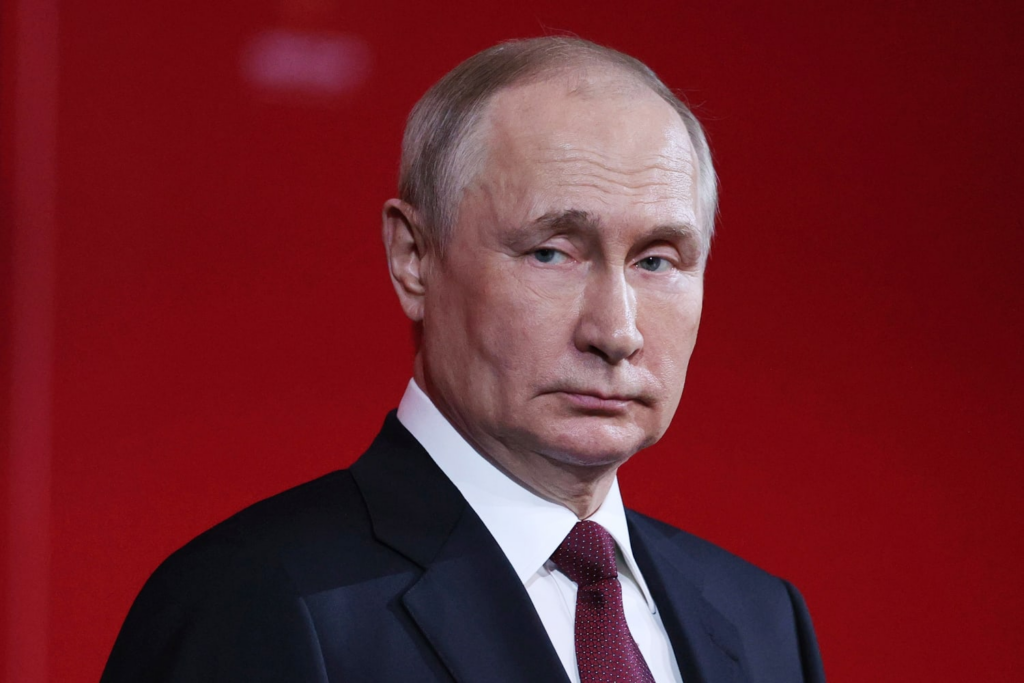
The phrase “Russia as Iran’s nuclear shield” has surged across social media, fueled by claims that Vladimir Putin issued a direct nuclear warning to Benjamin Netanyahu. The alleged source? Comments attributed to retired U.S. Army officer Douglas Macgregor.
It’s a striking narrative. It’s also unverified.
Still, the reason this claim is spreading so quickly says more about the current geopolitical climate than the rumor itself. As tensions rise between Iran and Israel, and as Russia deepens its ties with Tehran, the idea of a “nuclear backstop” feels plausible to many observers. That perception alone is shaping how the conflict is understood.
What is the “Russia-Iran nuclear shield” claim?
At its core, the claim suggests that Russia has drawn a hard red line: if Israel uses nuclear weapons in the Middle East, Moscow would retaliate.
What’s being alleged
- Putin privately issued a nuclear ultimatum to Israel
- Russia would respond to any nuclear strike in the region
- Iran is effectively under a Russian nuclear umbrella
What’s actually verified
- No credible public record of such a statement exists
- No confirmation from official Russian, Israeli, or U.S. channels
- No verified publication or speech from Macgregor supporting this exact claim
This distinction matters. In modern conflicts, misinformation doesn’t just confuse audiences. It can distort policy debates and raise tensions unnecessarily.
Why the claim is spreading anyway
If the claim lacks evidence, why is it gaining traction?
Because it fits the current mood of the conflict.
A war with rising nuclear anxiety
Recent developments have pushed the psychological boundaries of escalation:
- Strikes near sensitive nuclear infrastructure
- Rhetoric about existential threats
- Increased military coordination between Russia and Iran
When tensions climb this high, narratives that simplify risk into a single dramatic statement tend to travel faster than nuanced analysis.
The “shortcut effect” of viral narratives
Think of the “nuclear shield” idea as a compressed headline for a more complex reality:
- Russia is closer to Iran than before
- The U.S. and Israel are more deeply involved
- Nuclear risk, while still unlikely, is no longer unthinkable
The viral claim packages all of that into one stark message. It may not be accurate, but it feels directionally aligned with the fear people are sensing.
What has Russia actually signaled?
To understand the real story, it’s important to separate rhetoric from doctrine.
Russia’s official posture
Moscow has:
- Warned about the risk of “nuclear catastrophe” around Iranian facilities
- Strengthened long-term strategic ties with Iran
- Positioned itself diplomatically against Western escalation
What it has not done:
- Announced a formal nuclear defense pact with Iran
- Publicly committed to nuclear retaliation on Iran’s behalf
Strategic signaling vs. military commitment
Russia’s behavior fits a familiar pattern:
- Use strong language to deter escalation
- Avoid binding commitments that limit flexibility
- Maintain influence without direct military entanglement
This is not a nuclear umbrella in the traditional sense. It’s closer to a warning system, designed to raise the stakes without locking Russia into automatic retaliation.
Is Russia becoming a de facto deterrent for Iran?
This is where nuance matters.
Not a formal shield, but not irrelevant either
Russia’s role can be understood in three layers:
1. Political backing
Russia provides diplomatic cover for Iran in international forums.
2. Strategic alignment
Shared interests in countering U.S. influence have brought the two closer.
3. Escalation messaging
Russia’s warnings increase the perceived cost of attacking Iran’s nuclear infrastructure.
Together, these factors create a perception of protection, even without a formal treaty.
Why perception matters in nuclear strategy
In nuclear deterrence, perception can be as powerful as policy.
If decision-makers in Israel or Washington believe:
- Russia might intervene
- Escalation could spiral beyond control
Then their strategic calculations change, regardless of whether a formal guarantee exists.
What did Douglas Macgregor actually say?
Much of the viral claim hinges on Macgregor’s alleged remarks.
Verified vs. distorted interpretation
Based on available information:
- Macgregor warned about the possibility of Israel considering nuclear options under extreme threat
- He did not confirm a Russian ultimatum to Israel
- His comments were speculative, not evidentiary
This is a classic case of narrative drift, where a general warning morphs into a specific claim through repetition.
Why this narrative matters beyond fact-checking
Dismissing the claim as false misses the bigger picture.
It reflects real strategic tension
The popularity of the “Russia-Iran nuclear shield” narrative signals:
- Growing fear of nuclear escalation
- Distrust in official information channels
- A fragmented media environment where viral claims fill gaps quickly
It can influence real-world decisions
Even unverified narratives can:
- Shape public opinion
- Pressure policymakers
- Affect diplomatic signaling
In high-stakes conflicts, perception often moves faster than reality.
What comes next in the escalation ladder?
The key question isn’t whether Russia has issued a nuclear ultimatum. It’s how far each side is willing to go.
Watch for these indicators
- Official changes in nuclear doctrine or alerts
- Direct military coordination between Russia and Iran
- Statements from Israeli leadership on existential threats
- U.S. policy shifts regarding Middle East engagement
Each of these would signal a move from rhetoric to action.
- U.S. Department of Defense statements on nuclear posture
- International Atomic Energy Agency (IAEA) reports on Iranian facilities
TL;DR
- The claim that Russia has become Iran’s nuclear shield is unverified
- No credible evidence supports a direct nuclear ultimatum from Putin to Israel
- Russia has, however, intensified its alignment with Iran and issued strong warnings about escalation
- The narrative is spreading because it reflects real fears about nuclear risk, not because it is factually established
- In modern conflict, perception can shape reality, even when the underlying claim is shaky