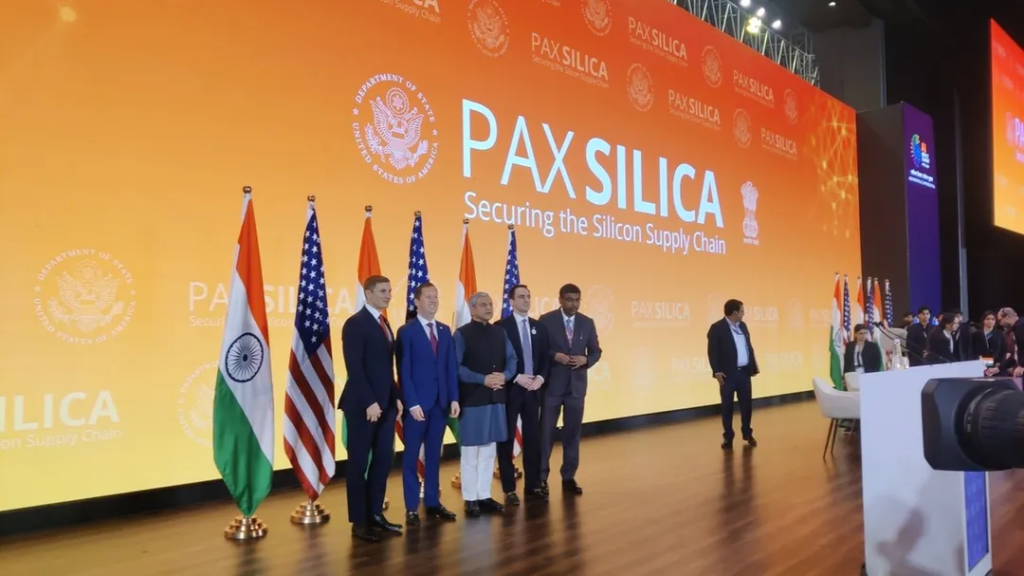
India has joined Pax Silica, a US-led strategic alliance aimed at securing global AI and semiconductor supply chains—a move that signals a deeper alignment between New Delhi and Washington in the race for technological dominance.
The Pax Silica declaration was signed in New Delhi in the presence of Ashwini Vaishnaw, India’s Union Minister for Electronics and IT, and Jacob Helberg, the US Under Secretary of State for Economic Affairs.
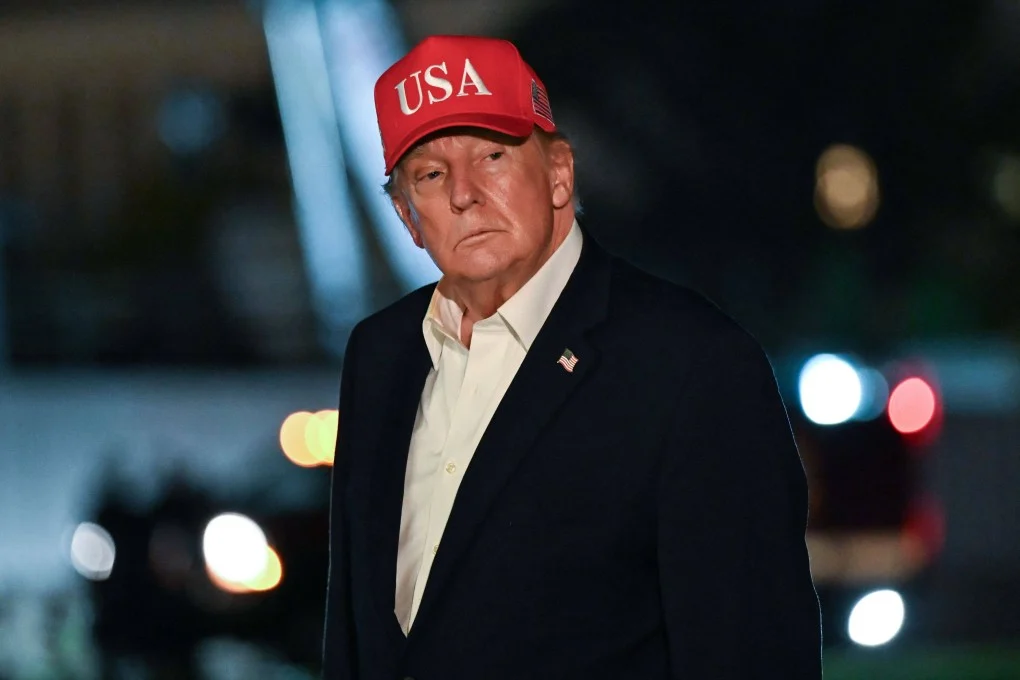
The agreement comes just days after a new India–US trade deal, following months of tariff-related tensions involving President Donald Trump. But Pax Silica goes far beyond trade. It’s about who controls the hardware powering the AI era.
What Is Pax Silica?
Launched in December 2025 by the US Department of State, Pax Silica is designed to create secure, trusted supply chains for:
- Silicon-based technologies
- AI semiconductors
- Critical minerals
- Advanced manufacturing
- Energy infrastructure
- Logistics networks
The name blends “pax”—Latin for peace—with “silica,” the compound refined into silicon, the foundation of modern computer chips.
According to a State Department fact sheet, the initiative aims to “establish a durable economic order that underwrites an AI-driven era of prosperity across partner countries.”
Who Are the Members?
In addition to the United States and India, members include:
- Greece
- Israel
- Japan
- Australia
- Singapore
- Qatar
- South Korea
- The UAE
- The UK
The grouping brings together advanced chip designers, energy exporters, logistics hubs, and fast-growing tech markets.
Why Is India Joining Pax Silica Now?
India’s decision comes at a pivotal moment.
The global AI race is no longer just about software models. It’s about access to:
- Advanced AI chips
- Semiconductor fabrication capacity
- Rare earth and critical minerals
- Energy-intensive data infrastructure
India brings scale. It is one of the world’s largest digital markets and a growing semiconductor aspirant. It also occupies a unique geopolitical position as a member of BRICS while deepening ties with Washington.
Strategic Timing
The move follows:
- A fresh India–US trade deal after tariff tensions
- Growing scrutiny over US export controls on advanced AI chips
- Heightened global competition over semiconductor supply chains
By joining Pax Silica, India secures a formal seat at the table shaping AI hardware governance.
How Pax Silica Reshapes AI Supply Chains
The US State Department framed artificial intelligence as a force reorganising the global economy. In its view, economic value will increasingly flow through every level of the AI supply chain—from energy grids to chip design.
Pax Silica’s core objectives include:
- Reducing “coercive dependencies” in supply chains
- Securing trusted semiconductor flows
- Realizing the economic upside of AI
- Safeguarding national and allied security
The phrase “coercive dependencies” is diplomatic shorthand for reducing reliance on geopolitical rivals in critical technology sectors.
The Chip Access Question
The alliance also arrives amid scrutiny over how the US grants foreign partners access to its most advanced AI semiconductors.
Reports recently highlighted a US deal granting the UAE access to 500,000 advanced AI chips annually. That raised questions about fairness, export controls, and geopolitical favoritism.
India’s inclusion in Pax Silica signals Washington’s intent to formalize chip access channels with trusted partners rather than relying on ad hoc agreements.
What Is the New US ‘Concierge Service’?
One of the more novel elements of Pax Silica is the creation of a US State Department “concierge service.”
According to Jacob Helberg, the initiative will:
- Help member countries acquire US-made AI semiconductors
- Provide consultative support on procurement
- Assist with delivery timelines and regulatory processes
Helberg described the approach as “turning diplomats into business development officers for American AI.”
In practice, that means US embassies could play a more direct role in facilitating chip supply deals between American companies and allied governments.
Why This Alliance Is Geopolitically Significant
Pax Silica is not just an economic framework. It is a geopolitical alignment.
Semiconductors sit at the center of:
- Defense systems
- AI research
- Advanced computing
- Cybersecurity
- Cloud infrastructure
By locking in supply chain partnerships, the US is building a bloc of countries aligned around secure AI infrastructure.
India’s participation is particularly noteworthy given:
- Its strategic autonomy tradition
- Its BRICS membership
- Its growing domestic semiconductor ambitions
The move suggests India sees long-term value in deeper AI hardware integration with the US and its allies.
What Does India Gain?
India’s benefits include:
1. Faster Access to Advanced AI Chips
With global shortages and export restrictions tightening, structured access to US semiconductors reduces uncertainty.
2. Investment and Technology Flows
Alliance participation can attract fabrication plants, R&D partnerships, and AI infrastructure investment.
3. Supply Chain Integration
India can position itself as a trusted node in assembly, design, or logistics within the AI hardware ecosystem.
4. Strategic Leverage
Being inside the alliance offers more influence than negotiating access externally.
What Does the US Gain?
For Washington, India offers:
- A massive AI and cloud computing market
- A skilled engineering workforce
- Democratic alignment amid tech rivalry
- A counterweight in global semiconductor politics
The alliance also strengthens US influence over where and how advanced AI chips are deployed.
The Bigger Question: Is This a New Tech Bloc?
Pax Silica reflects a broader shift in global economic organisation.
Instead of fully globalised supply chains optimised purely for cost, countries are forming “trusted networks” optimised for:
- Security
- Political alignment
- Technological standards
- Data governance
This resembles earlier energy or trade alliances—but tailored to AI and silicon.
The next phase to watch:
- Will Pax Silica expand?
- How will export controls evolve?
- Will rival blocs emerge around alternative chip ecosystems?
TL;DR
- India has joined Pax Silica, a US-led alliance focused on securing AI and semiconductor supply chains.
- The move strengthens India–US strategic ties following recent trade tensions.
- Pax Silica aims to reduce supply chain vulnerabilities and formalize chip access among trusted partners.
- A new US “concierge service” will help member countries procure advanced AI semiconductors.
- The alliance signals a shift toward geopolitical blocs in the AI hardware race.
Pax Silica isn’t just about silicon. It’s about who controls the infrastructure of the AI age.