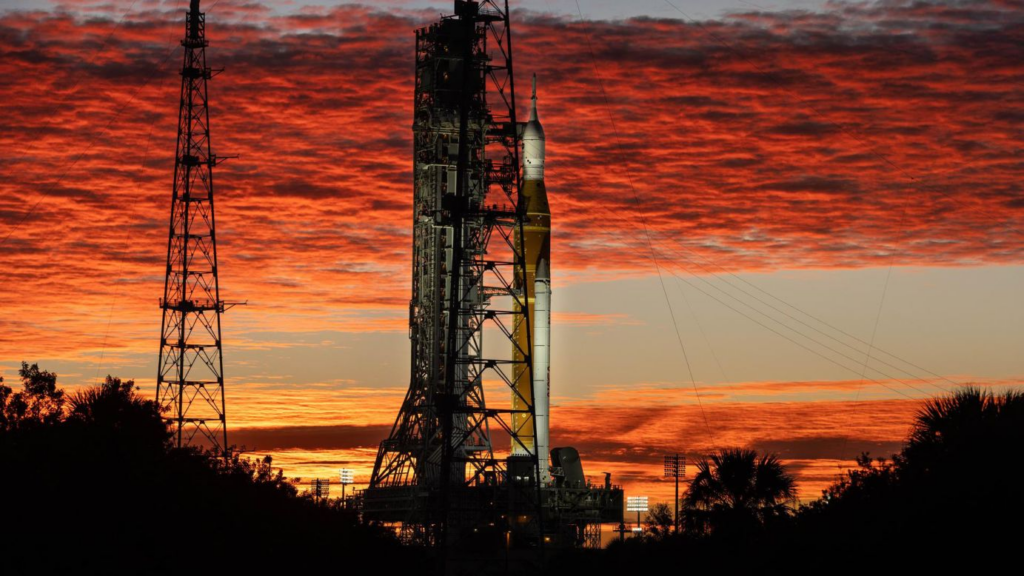
As NASA gears up for Artemis II, the first crewed mission in its return-to-the-Moon program, one invisible threat is getting as much attention as rockets and navigation systems: space radiation.
Unlike Earth, which is shielded by a powerful magnetic field, deep space offers little protection from the Sun’s high-energy outbursts. That means astronauts aboard Orion will face real risks from solar radiation, and NASA is preparing for exactly that scenario.
What Is Space Radiation and Why Does It Matter?
Space radiation isn’t just a theoretical concern. It’s a measurable, potentially dangerous phenomenon that can affect both human health and spacecraft systems.
Where Does It Come From?
The primary source is the Sun. During periods of intense activity, it releases:
- X-class solar flares (the most powerful type)
- Coronal Mass Ejections (CMEs)—huge bursts of plasma and magnetic fields
- Streams of highly charged particles travelling at extreme speeds
These events are collectively referred to as space weather.
Why Earth Is Safe—but Artemis II Isn’t
On Earth, we rarely think about radiation from space. That’s because we’re protected.
Earth’s Natural Shield
- The magnetic field deflects charged particles
- The atmosphere absorbs much of the remaining radiation
Even astronauts aboard the International Space Station benefit from partial protection because they orbit within this magnetic bubble.
The Artemis II Difference
The Artemis II mission will travel far beyond low Earth orbit. Once outside this պաշտպան:
- The spacecraft is exposed to direct solar radiation
- There is no planetary magnetic shield
- Radiation levels can spike suddenly during solar events
How NASA Is Monitoring the Sun
To reduce risk, NASA and its partners are keeping a constant watch on solar activity.
Key Monitoring Systems
Agencies like the National Oceanic and Atmospheric Administration track solar behavior in real time.
They rely on multiple spacecraft, including:
- Solar Dynamics Observatory
- Solar and Heliospheric Observatory
- GOES-19
- Interstellar Mapping and Acceleration Probe
Even the Perseverance rover plays a role by observing parts of the Sun not visible from Earth.
Why This Matters
If a solar storm is detected:
- Alerts can be sent immediately to the crew
- Astronauts can take protective action within minutes
What Happens If a Solar Storm Hits During Artemis II?
NASA has built multiple layers of defense into the Orion spacecraft and mission planning.
Real-Time Alerts
- Radiation spikes trigger onboard alarms
- Ground teams send rapid warnings
Radiation Sensors Everywhere
- The spacecraft is equipped with internal radiation sensors
- Astronauts wear dosimeters to track personal exposure
This ensures constant monitoring of:
- Radiation dose
- Exposure rate
- High-risk zones inside the capsule
The Orion “Safe Zone”: A Spacecraft Storm Shelter
One of the most critical safety features inside Orion is a designated radiation shelter area.
How It Works
If radiation levels rise:
- Astronauts move into a stowage compartment
- This area offers greater shielding due to the surrounding materials
Improvised Protection
NASA has also trained astronauts to:
- Remove stored equipment
- Reposition materials around the shelter
- Use them as physical barriers against radiation
This works because:
- Mass blocks radiation
- Even everyday items can reduce exposure when strategically placed
As NASA radiation analyst Stuart George explained, adding material around high-exposure areas helps reduce risk significantly.
Can Astronauts Get Radiation Sickness in Space?
Yes—radiation sickness is a real risk, though NASA designs missions to keep exposure well below dangerous levels.
Potential Effects of High Radiation Exposure
- Nausea and fatigue
- Increased long-term cancer risk
- Damage to cells and DNA
The goal isn’t just survival; it’s minimizing cumulative exposure over the entire mission.
Why Artemis II Is a Critical Test
Artemis II isn’t just about reaching the Moon. It’s a proving ground for deep-space safety systems.
What NASA Is Testing
- Radiation protection strategies
- Real-time response to solar events
- Crew training under deep-space conditions
This mission builds on lessons from Apollo 8, but with modern technology and a deeper understanding of space weather risks.
Why Space Radiation Matters for Future Missions
The stakes go beyond Artemis II.
Looking Ahead
Future missions to the Moon, Mars, and beyond, will involve:
- Longer durations in deep space
- Greater exposure to solar and cosmic radiation
- Increased need for advanced shielding technologies
Understanding how to manage radiation is essential for:
- Sustained lunar presence
- Human missions to Mars
- Commercial space travel
TL;DR
- Space radiation is a serious risk for astronauts beyond Earth’s magnetic field
- Artemis II astronauts aboard Orion will face direct exposure
- NASA is monitoring the Sun using multiple spacecraft
- Orion includes a radiation shelter and real-time alert systems
- The mission is a key step in preparing humans for long-duration space travel
Final Thought
Space may look calm from a distance, but it’s anything but quiet. The Sun constantly sends out bursts of energy that can turn dangerous in an instant.
For Artemis II, the challenge isn’t just getting to the Moon; it’s navigating an environment where the biggest threat can’t be seen, only measured. And how NASA handles that challenge will shape the future of human space exploration.