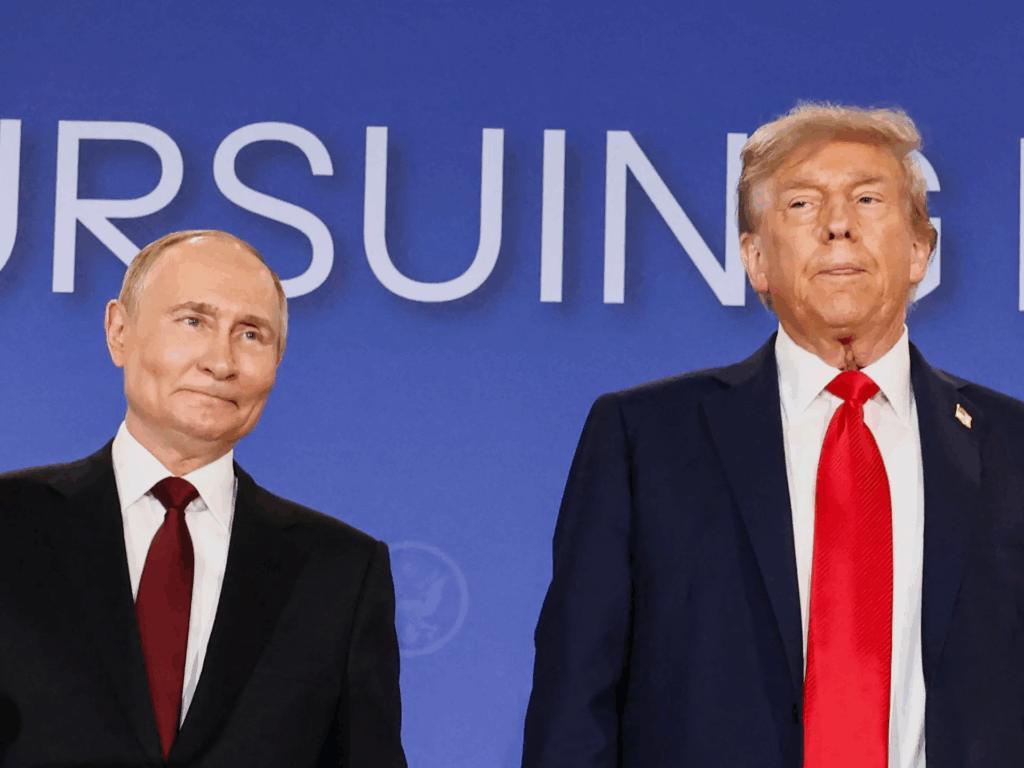
The Alaska summit between Donald Trump and Vladimir Putin may not have delivered a peace deal, but it revealed something equally important: the psychology of power. From Putin’s KGB-honed tactics to Trump’s ego-driven theatrics, the encounter showed how personality and performance, rather than policy, shaped the outcome.
Quick Summary
- Putin relied on KGB-era strategies of silence, intimidation, and symbolism.
- Trump turned the summit into a stage for his persona and showmanship.
- Both played more to domestic audiences than to each other.
- Ego and psychology defined the event more than diplomacy did.
What the Alaska Summit Revealed About Personality and Power
The August 15, 2025, meeting in Anchorage was staged with ceremony, military flyovers, limousines, red carpets, but beneath the optics lay a contest of personalities. Both leaders brought distinct psychological toolkits to the table. Instead of breakthroughs on Ukraine, the world witnessed a power performance.
- Putin’s persona: Disciplined, restrained, rooted in KGB training.
- Trump’s persona: The dealmaker showman, obsessed with optics and narrative control.
This wasn’t policy versus policy. It was psychology versus psychology.
What the Alaska Summit Revealed About Personality and Power
The August 15, 2025, meeting in Anchorage was staged with ceremony—military flyovers, limousines, red carpets—but beneath the optics lay a contest of personalities. Both leaders brought distinct psychological toolkits to the table. Instead of breakthroughs on Ukraine, the world witnessed a power performance.
- Putin’s persona: Disciplined, restrained, rooted in KGB training.
- Trump’s persona: The dealmaker showman, obsessed with optics and narrative control.
This wasn’t policy versus policy. It was psychology versus psychology.
Why Psychology Matters in Diplomacy
High-stakes diplomacy often hinges less on documents than on perceptions. Negotiations are shaped by the personalities in the room, how they project strength, manage silence, and control symbols. History offers reminders: Khrushchev’s shoe-banging at the UN, Reagan’s warmth with Gorbachev, Trump’s earlier Helsinki summit. The Alaska meeting fits this tradition, where the psychology of leaders becomes as consequential as policy itself.
Putin’s Playbook: The KGB Method
Putin leaned heavily on strategies honed during his KGB career:
- Controlled Silence: At the no-questions press event, Putin’s brevity projected calm dominance.
- Symbolism: He invoked Alaska’s Russian past to frame cooperation as historically natural.
- Projection of Authority: Military backdrops and ceremonial formality reinforced his stature.
- Ambiguity as Power: By calling the summit “constructive” and speaking of an “understanding,” he suggested progress without committing to substance.
Putin’s method is psychological judo: appear calm, offer less, force the opponent to fill the silence.
Trump’s Ego Theater: The Show Must Go On
Trump approached the summit with a performance. His tactics were consistent with his career-long reliance on optics and bravado:
- Showmanship: Military flyovers with B-2 bombers, red carpet arrivals, and the ride with Putin in “The Beast” projected spectacle.
- Optimistic Vagueness: Phrases like “great progress” and “no deal until there’s a deal” created flexibility without accountability.
- Audience-First Diplomacy: His remarks seemed tailored more for domestic political consumption than negotiation substance.
- Persona Projection: Trump ensured that the summit revolved around him, framing himself as central to any eventual peace process.
In short, Trump turned the event into a stage where optics overshadowed substance.
Clash of Styles: Chess vs. Theater
The interaction revealed a fascinating psychological clash:
- Putin’s style: Steady, disciplined, controlled.
- Trump’s style: Unpredictable, theatrical, ego-driven.
Did Putin exploit Trump’s need for spectacle? Perhaps—by giving Trump the stage, he secured legitimacy while conceding little. Did Trump blunt Putin’s control with unpredictability? Maybe—but unpredictability without outcomes risks appearing hollow.
The result: a stalemate where both declared vague success, but neither shifted the reality of Ukraine’s war.
Global Perception of the Psychology Battle
Reactions split along familiar lines:
- U.S. media: Some outlets portrayed Trump as prioritizing ego over substance, while others saw him reopening dialogue.
- Russian media: Putin was cast as calm, authoritative, and in control, with Alaska framed as a symbolic victory.
- European allies: Interpreted the summit as theater that sidelined both NATO and Ukraine.
- Ukraine’s response: Zelenskyy reiterated that no deal is possible without Kyiv at the table, underscoring the emptiness of a summit defined by optics.
Key Psychological Tactics at the Summit
Here’s a breakdown of the interpersonal strategies at play:
| Leader | Psychological Tactic | Summit Example | Intended Effect |
|---|---|---|---|
| Putin | Controlled silence | Brief, clipped remarks | Project dominance |
| Putin | Historical framing | Alaska’s Russian past | Legitimize presence |
| Trump | Showmanship | Jets, limo optics | Dominate media narrative |
| Trump | Vague optimism | “Great progress” line | Avoid accountability |
How This Shapes What Comes Next
The Alaska summit signals that future diplomacy may be shaped more by personal psychology than policy frameworks. Key risks and takeaways:
- Ego-driven negotiations: When leaders prioritize optics, substance can be sidelined.
- Ukraine’s absence: Without Kyiv’s participation, talks risk being symbolic exercises.
- Moscow follow-up: A second summit could reinforce optics of Putin’s legitimacy rather than deliver outcomes.
- Psychology as power: The Alaska meeting showed that image, silence, and ego are now central to modern diplomacy.
Final Thoughts
The Trump–Putin Alaska summit was less a negotiation than a psychological duel. Putin wielded silence and symbolism, while Trump orchestrated spectacle and ego. Together, they created a summit heavy on optics but light on substance.
Global diplomacy, once about treaties and structures, now unfolds as psychological theater. Until Ukraine is given a voice and leaders step beyond image-making, peace will remain hostage to personalities rather than policies.