TL;DR
Saudi Arabia’s push to acquire the US-made F-35—America’s most advanced stealth fighter, marks a turning point in regional geopolitics. The deal, approved by President Donald Trump during Crown Prince Mohammed bin Salman’s Washington visit, could shift military power balances, introduce new technology-security concerns, and raise tensions with Israel, whose qualitative military edge the US has long protected.
Why the F-35 matters to Saudi Arabia
Saudi Arabia has long sought access to the F-35, a fifth-generation stealth fighter unmatched in its combination of low visibility, advanced sensors, and battlefield networking capabilities. For years, Washington resisted Riyadh’s requests due to concerns about technology leakage and Israel’s military advantage.
This week’s decision ends that hesitancy. The deal signals a shift in US policy, a recalibration of Middle East alliances, and an acknowledgment of Saudi Arabia’s expanding defense ambitions under Crown Prince Mohammed bin Salman.
Why the US agreed to sell its most advanced jet now
The decision comes at a moment when the US is balancing several regional objectives:
- Consolidating diplomatic influence amid China’s growing footprint
- Securing Saudi cooperation on energy and counterterrorism
- Maintaining leverage over Gulf defense partnerships
President Trump’s move was reaffirmed during MBS’s Washington visit, despite opposition from officials concerned that China—Saudi Arabia’s largest trading partner, could exploit Riyadh’s access to American stealth technology.
Strategic motivations behind the approval
- Reinforcing US–Saudi ties
Saudi Arabia remains a key security partner, and the sale signals Washington’s trust at a time of global realignments. - Counterbalancing China’s influence
Denying advanced US platforms could push Saudi Arabia closer to Chinese military systems. Granting access keeps Riyadh within the US defense orbit. - Maintaining stability in oil and energy markets
Political goodwill with the kingdom has far-reaching economic impacts for Washington. - Supporting Trump’s regional initiatives
With the Gaza peace plan requiring sustained Israeli cooperation, Trump must balance Israeli concerns while expanding Arab partnerships.
Why Israel is concerned about the F-35 sale
For decades, the United States has upheld Israel’s “qualitative military edge,” a policy ensuring that Israel always possesses superior military capabilities over regional rivals.
Saudi Arabia receiving F-35s threatens that balance. Israel is one of 19 nations operating or ordering the aircraft and has already used it in combat—including during its recent 12-day conflict with Iran.
Risks highlighted by critics
- Reduced Israeli air dominance in scenarios involving shared or contested airspace
- Potential shifts in deterrence calculations across the Gulf region
- Concerns that sensitive technology could be exposed if Saudi Arabia strengthens cooperation with China
Some US officials worry that, even unintentionally, Chinese access to Saudi infrastructure could offer windows into the aircraft’s software, maintenance systems, or data.
Israel, however, has not publicly opposed the sale outright, in part because of diplomatic commitments tied to ongoing peace negotiations.
What makes the F-35 so valuable to Saudi Arabia
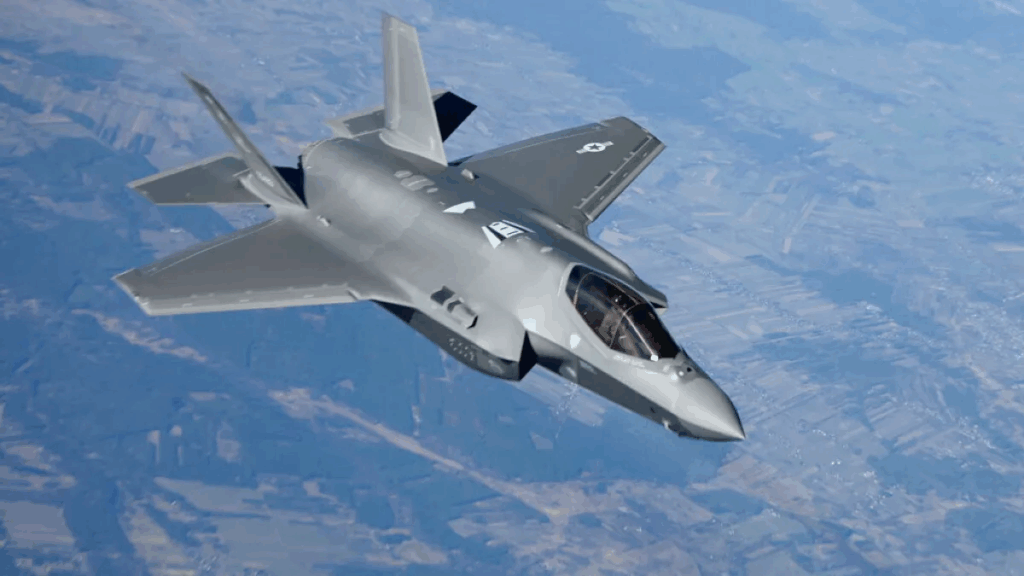
The F-35 is more than a fighter jet. It is a platform designed to dominate modern multi-domain warfare using stealth, sensors, and networked intelligence.
Key capabilities that attract Saudi interest
- Stealth profile that reduces radar detection
- Advanced AESA radar offering long-range tracking
- Fusion sensors that combine battlefield data into a single display
- Data-link networking with allied aircraft and ground systems
- Precision-strike capabilities for high-risk missions
- Ease of shifting roles mid-mission, from air-to-air combat to ground attacks
The Congressional Research Service and defense experts frequently note that the F-35’s stealth and sensor integration give it a decisive edge over fourth-generation fighters long used in the region.
Why these features matter for Riyadh
Saudi Arabia faces ongoing threats from Iran, Houthi ballistic missile attacks, and regional instability. Owning the F-35 provides:
- Credible deterrence
- Greater operational depth
- Integration with US-led military systems
- The ability to counter advanced Iranian air defenses
How F-35 deployment could change Middle East military balance
The arrival of Saudi F-35s—expected years after procurement approval—could reshape regional dynamics.
Possible effects on regional power balances
- Saudi Arabia gains parity with Israel’s top-tier capability
Although Israel still maintains operational advantages, parity in platform access narrows its edge. - Iran faces increased pressure
F-35 stealth capabilities could help Saudi Arabia penetrate Iranian airspace if necessary. - Gulf Cooperation Council alliances strengthen
UAE, long interested in the F-35, may revisit its procurement ambitions, especially if Saudi Arabia leads. - Potential arms race
The sale may push regional actors to seek next-generation aircraft from Russia or China. - Higher intelligence-sharing demands
As the jet requires interconnected systems, Riyadh’s cooperation with Washington will likely deepen.
What US experts are saying about the deal
Bradley Bowman, a senior defense analyst, notes that the F-35 remains unmatched in modern aerial warfare. His argument echoes sentiments across Washington: if the aircraft were compromised by Chinese espionage, Saudi Arabia would not be investing in it.
Other analysts warn that while the sale strengthens US–Saudi ties, it complicates America’s tightrope walk between supporting Israel and courting Arab states crucial for balancing Iran.
What the deal means for the future of US–Saudi relations
The F-35 sale is more than a weapons agreement—it is a strategic declaration.
Key takeaways for bilateral relations
- Saudi Arabia becomes more deeply tied to US defense systems
Maintenance, training, and systems integration will bind the kingdom to American defense contractors for decades. - Greater leverage for Washington
With advanced weapons platforms comes long-term dependency, giving the US strategic influence. - Political implications for MBS’s domestic agenda
The acquisition strengthens Saudi Arabia’s modernization narrative under Vision 2030, portraying MBS as a leader investing in cutting-edge national security.
What to watch for next
The deal still needs congressional clearance and extensive vetting by US technology-security officials. Points to track include:
- The number of jets likely to be approved
- Conditions placed on maintenance, data access, and Chinese involvement
- Israel’s official response
- Integration timelines for Saudi pilots and bases
Even after approval, operational deployment could take years, as the F-35 requires high-precision logistics, dedicated facilities, and extensive pilot training.