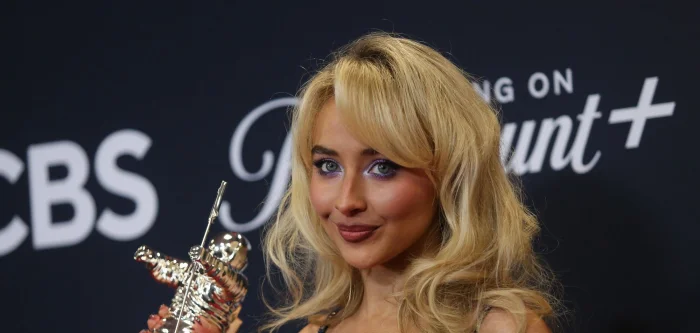
Sabrina Carpenter’s Coachella 2026 debut was designed as a glossy, cinematic pop spectacle. Instead, a brief onstage comment turned into a cultural flashpoint. Carpenter is now facing criticism after misidentifying a traditional Arabic cheer as yodeling and calling it “weird” during her set, prompting conversations about cultural awareness, live performance pressure, and how artists respond in real time.
What happened during Sabrina Carpenter’s Coachella performance?
The moment unfolded between songs during Carpenter’s Friday night set. As she transitioned from “Please, Please, Please” to a piano segment, a fan in the crowd let out a high-pitched celebratory trill.
Carpenter responded on mic: she thought someone was yodeling and added that she didn’t like it. The comment landed awkwardly. What she heard wasn’t yodeling, but a zaghrouta, a culturally significant expression used in celebrations across parts of the Middle East and North Africa.
The clip spread quickly online. Within hours, criticism followed.
What is a zaghrouta, and why does it matter?
A zaghrouta, also known as zagharit, is a vocal expression of joy typically performed by women. It’s common at weddings, festivals, and major life events.
Why the misunderstanding struck a nerve
- It’s not just a sound, it’s cultural identity
- Mislabeling it as “weird” felt dismissive to many
- The setting amplified the moment: a global stage with a diverse audience
In a festival environment like Coachella, where global cultures intersect, these moments carry more weight. Audiences expect artists to be at least somewhat aware of the diversity in front of them.
Why Sabrina Carpenter faced backlash
The backlash wasn’t only about the mistake. It was about tone, timing, and perception.
Key reasons behind the criticism
- Language used on stage
Calling the sound “weird” felt dismissive, even if unintended - Power dynamics
A global pop star reacting to a cultural expression in front of thousands carries influence - Audience reaction
Some online users pointed out that laughter from the crowd made the moment feel more uncomfortable - Cultural sensitivity expectations
Artists performing internationally are increasingly expected to navigate cultural nuances carefully
Social media users described the moment as insensitive, with some going further and labeling it discriminatory. That escalation reflects how quickly online discourse can intensify, especially around identity and culture.
How Sabrina Carpenter responded to the controversy
To her credit, Carpenter responded quickly. Within a day, she posted an apology on X.
She acknowledged that she didn’t see the person clearly and misheard the sound. More importantly, she admitted she “could have handled it better” and clarified there was no harmful intent.
She also added that she had since learned what a zaghrouta is and welcomed such expressions going forward.
Why the apology worked for many
- It was prompt
- It acknowledged the mistake directly
- It showed a willingness to learn
In today’s media environment, accountability often matters as much as the original misstep. Many fans appreciated that she didn’t deflect or ignore the issue.
The bigger issue: cultural awareness in live performances
This incident taps into a broader conversation about how artists engage with global audiences.
Live performances are unpredictable. Artists react in the moment, often without context. But that spontaneity is now constantly recorded, clipped, and scrutinized.
The challenge for performers
- Processing unfamiliar cultural cues in real time
- Balancing humor and sensitivity
- Navigating a global audience with different norms
For younger artists like Carpenter, who transitioned from acting into pop stardom, these moments are part of a steep learning curve.
From Disney star to pop headliner: why expectations are higher
Carpenter’s career arc adds another layer to the story. She first gained recognition on Disney’s Girl Meets World, then successfully pivoted into music.
By 2026, she wasn’t just performing at Coachella, she was headlining with a full-scale production branded “Sabrinawood.”
What made her set stand out
- Hollywood-inspired staging
- References to classic films like Dirty Dancing
- High production value and choreography
With that level of visibility comes heightened scrutiny. Headliners aren’t just entertainers, they’re cultural figures.
Social media’s role in amplifying the moment
Ten years ago, this might have been a fleeting moment. Today, it becomes a global conversation within minutes.
How the cycle works
- A clip surfaces
- Context is debated
- Opinions polarize
- The artist responds
- Narrative settles or evolves
This cycle played out almost textbook-style in Carpenter’s case.
What artists can learn from this moment
Carpenter’s experience offers a few takeaways for performers navigating global stages:
- Pause before reacting when something unfamiliar happens
- Assume diversity in the audience
- Lean toward curiosity instead of dismissal
- Address mistakes quickly and clearly
None of this removes the human element. Live shows are messy, unpredictable, and real. But they’re also increasingly permanent in the digital record.
TL;DR
- Sabrina Carpenter faced backlash after mistaking a zaghrouta for yodeling during her Coachella set
- Her onstage comment calling it “weird” triggered criticism online
- She issued a quick apology, acknowledging the mistake and showing willingness to learn
- The incident highlights the growing importance of cultural awareness in global live performances