A symbolic first for law enforcement
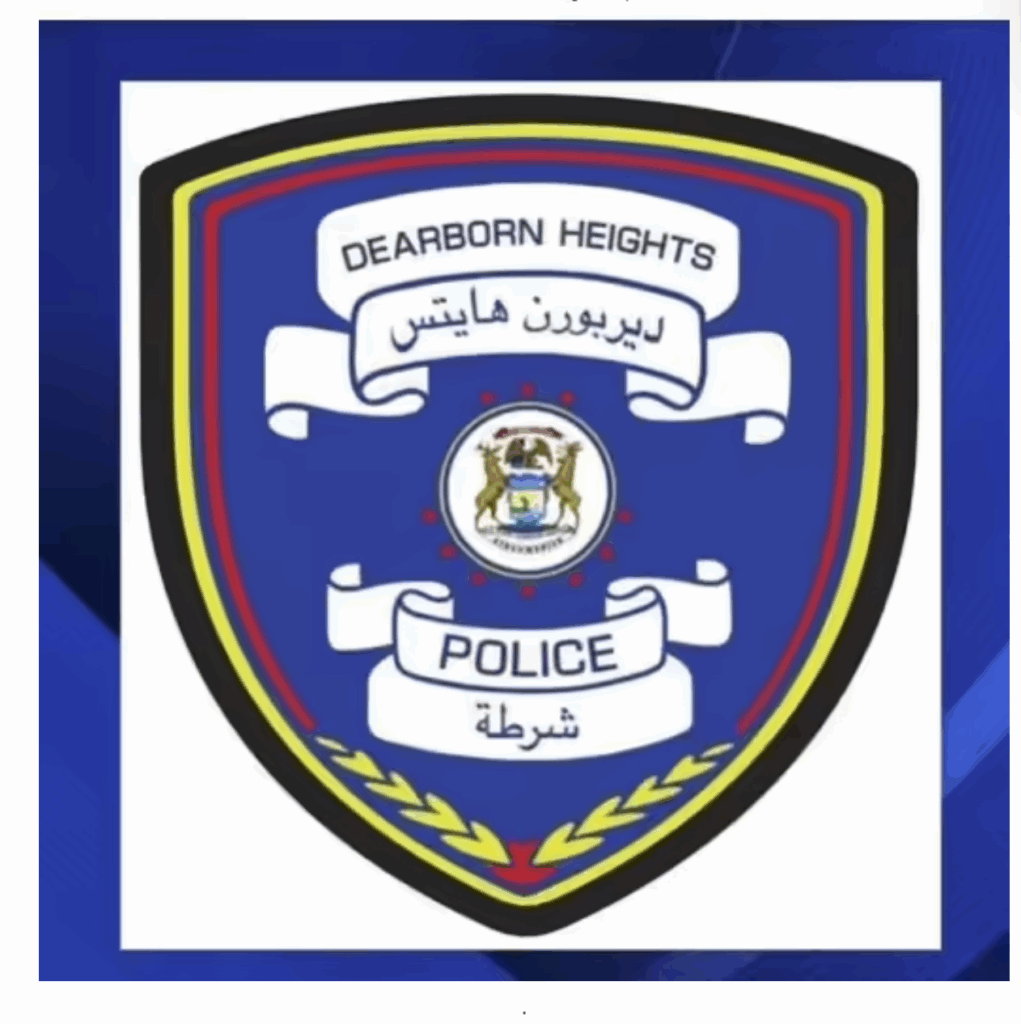
The Dearborn Heights Police Department in Michigan has introduced a new patch that makes history: it is the first police insignia in the United States to feature both English and Arabic text.
The optional patch was designed by Officer Emily Murdoc to honor the city’s large Middle Eastern and North African (MENA) community. It places the Michigan state seal in the center, surrounded by the words “Dearborn Heights Police” written in both English and Arabic.
By choosing bilingual design, the department says it hopes to reflect the diversity of the city and recognize the cultural identity of nearly 40 percent of its residents.
Why Dearborn Heights?
Dearborn Heights has long been shaped by its Arab American population. In 2023, nearly 39% of residents identified as Middle Eastern or North African, according to census estimates. That figure climbs even higher in nearby Dearborn, where more than half of the population—about 55%—shares that heritage.
This demographic reality has made the region one of the cultural centers of Arab America, with family-owned businesses, mosques, churches, and community centers that serve as anchors. It also explains why the department felt the patch should represent both English and Arabic speakers.
For many in the community, law enforcement uniforms are not just symbols of authority—they are also signals of belonging, trust, and respect. A patch that visually includes Arabic is a small but powerful way of saying: you are seen.
The officer behind the design
The idea came from within the department itself. Officer Emily Murdoc, who serves in Dearborn Heights, took on the challenge of creating a design that celebrated the community she serves.
On Facebook, the department praised her initiative:
“This patch was created by Officer Emily Murdoc, who designed it to reflect and honor the diversity of our community—especially the many residents of Arabic descent who call Dearborn Heights home. By incorporating Arabic script alongside English, this patch represents unity, respect, and our shared commitment to service.”
The department added that officers “proudly serve all members of our community, and this new design is another way we continue to celebrate the rich cultures that make our city unique.”
Why it matters
Symbols like police patches may seem small, but they carry weight. Uniforms are among the most visible representations of local government. When those uniforms acknowledge a community’s identity, they can strengthen trust and reduce the sense of “us versus them.”
Bilingual or culturally inclusive designs also challenge stereotypes that law enforcement is slow to adapt. By adopting Arabic alongside English, Dearborn Heights is signaling not only recognition but also respect.
At a time when debates around representation, immigration, and diversity remain politically charged, the patch stands out as a gesture of inclusion that is tangible and visible in everyday policing.
Navigating sensitivities
The department was careful in how it announced the patch. While it posted images and an explanation on Facebook, it disabled comments to avoid inflaming political or cultural tensions online.
That decision reflects a balancing act: celebrating diversity while steering clear of becoming a lightning rod in polarized conversations around identity in America.
Still, the move positions Dearborn Heights as a leader among U.S. police departments in how they engage with communities whose first language may not be English.
How this compares to other U.S. police patches
Police patches typically feature state seals, local symbols, or mottos in English. In rare cases, departments have incorporated Indigenous languages or regional symbols. But according to city officials, no other U.S. department has issued an official patch using Arabic script until now.
This makes Dearborn Heights the first to create a bilingual patch that reflects the demographics of its city in such a direct and visible way.
If other departments in similarly diverse communities follow suit, we could see more police insignia that incorporate Spanish, Mandarin, Tagalog, or other widely spoken languages in the U.S.
The bigger picture
The Dearborn Heights patch may be a single design choice, but it represents larger conversations about how law enforcement connects with the people it serves.
Cultural representation doesn’t erase systemic challenges between police and minority groups, but it can be one piece of a broader effort to build trust. Small steps, like language inclusion on uniforms, can help officers appear more approachable and community-oriented.
It also reflects a national shift: more U.S. cities are recognizing that visible symbols of inclusion—whether flags, signage, or public art—can shape how residents perceive belonging and acceptance in civic life.
What happens next
The patch is optional, meaning not every officer will wear it. But even in limited use, its visibility is likely to spark conversations—within the Arab American community, across Dearborn Heights, and perhaps in other departments considering similar steps.
Whether the idea spreads beyond Michigan remains to be seen. For now, Dearborn Heights has made its mark as the first to bring Arabic script onto the police uniform, setting a precedent that others may one day follow.
TL;DR
The Dearborn Heights Police Department in Michigan has unveiled the first U.S. police patch featuring English and Arabic text. Designed by Officer Emily Murdoc, the optional patch honors the city’s large Middle Eastern and North African population. While the department disabled comments on its social media announcement to avoid controversy, the patch has been praised as a symbol of unity and representation, marking a historic first in American policing.