
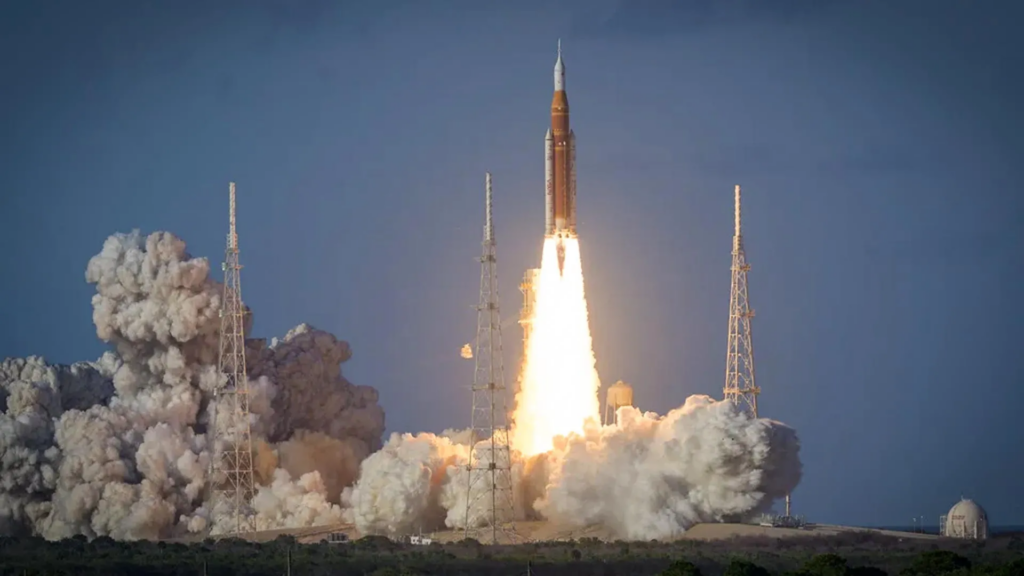
NASA’s Artemis II mission has reignited global interest in human spaceflight, marking a pivotal moment in the agency’s push to return astronauts to deep space. Launched on April 1, 2026, the mission sends four astronauts on a 10-day journey around the Moon—farther than any human crew has travelled in decades.
But beyond the headlines and stunning visuals, Artemis II raises deeper questions: What makes this mission different? How does it compare to Apollo-era flights? And what does it reveal about the realities of being an astronaut—including how much they’re actually paid?
What Is the Artemis II Mission?
Artemis II is NASA’s first crewed mission under its Artemis program, designed to lay the groundwork for long-term lunar exploration and eventual missions to Mars.
The crew—Reid Wiseman, Victor Glover, Christina Koch, and Jeremy Hansen—represents both experience and diversity, including the first woman and first person of colour to travel to the vicinity of the Moon.
What Will the Crew Do?
Over the course of 10 days, the astronauts will:
- Travel beyond low Earth orbit to the Moon’s far side
- Test critical spacecraft systems in deep space
- Capture high-resolution images of the lunar surface
- Experience unique celestial events, including a reported solar eclipse
Why this matters: Artemis II isn’t just symbolic—it’s a high-stakes systems test. Every maneuver, communication delay, and onboard system will inform future missions, especially Artemis III, which aims to land humans on the Moon.
Why Artemis II Matters for the Future of Space Exploration
Artemis II represents more than a return to the Moon—it’s a strategic step toward sustained human presence beyond Earth.
Key Objectives
- Validate deep-space travel systems: Including life support, navigation, and propulsion
- Test crew readiness: Long-duration exposure to space conditions
- Enable future lunar landings: Particularly Artemis III and beyond
- Support Mars ambitions: Acting as a proving ground for longer missions
Unlike earlier missions, Artemis is built with continuity in mind. NASA isn’t just visiting the Moon—it’s preparing to stay.
How Does Artemis II Compare to Apollo 13?
Artemis II is frequently compared to Apollo 13, the 1970 mission that became a survival story after an onboard explosion.
Similarities
- Both missions involve crewed lunar flybys
- Each tests the limits of human space travel
- Both operate far beyond Earth’s immediate orbit
Key Differences
- Technology: Artemis II uses modern avionics, automation, and advanced materials
- Mission intent: Apollo 13 was exploratory; Artemis II is preparatory and strategic
- Safety systems: Redundancies and fail-safes are significantly more advanced today
Bottom line: While Apollo 13 proved survival was possible, Artemis II is about proving sustainability.
How Much Do Artemis II Astronauts Earn?
One of the more surprising aspects of space travel is astronaut compensation. Despite the risks and prestige, astronauts are paid according to standard U.S. government pay scales.
Average Salary
- Approximately $152,258 per year
- Based on the federal General Schedule (GS) pay grades
Do Astronauts Get Extra Pay for Missions?
No. Astronauts do not receive:
- Overtime pay
- Hazard pay
- Mission bonuses
This may seem counterintuitive given the risks involved, but it reflects the structure of federal employment.
Military vs. Civilian Astronauts
- Military personnel: Continue receiving pay through their respective branches
- Civilian astronauts: Follow federal pay scales
What Benefits Do NASA Astronauts Receive?
While base salaries may appear modest, the benefits package is substantial and designed to support long-term careers.
Core Benefits
- Comprehensive health insurance
- Paid leave and retirement plans
- Access to elite training facilities
- Travel and mission-related support
Additional Perks
- Subsidized transportation and parking
- Membership in federal credit unions
- Eligibility for scholarship and education programs
These benefits reflect the broader value of working within NASA, where career development and mission impact often outweigh financial incentives.
What Challenges Did Artemis II Face Before Launch?
No mission of this scale launches without hurdles. Artemis II underwent years of testing, delays, and refinements before liftoff.
Pre-Launch Challenges
- Technical testing: Ensuring spacecraft reliability under extreme conditions
- Budget constraints: Managing costs within federal funding limits
- Timeline shifts: Delays due to system readiness and safety checks
Each delay, while frustrating, contributed to mission safety, a non-negotiable priority in human spaceflight.
What Happens During the Lunar Flyby?
Once the spacecraft reaches the Moon, it enters a critical phase of the mission.
Key Activities
- Orbiting within the Moon’s gravitational sphere
- Capturing detailed images of the surface
- Monitoring spacecraft performance in deep space
Reports indicate that the crew also witnessed a solar eclipse, a rare and scientifically valuable event.
What Comes Next After Artemis II?
Artemis II is a stepping stone. Its success or failure will directly impact future missions.
Looking Ahead
- Artemis III: Planned lunar landing mission
- Lunar Gateway: A space station orbiting the Moon
- Mars missions: Long-term aim for human exploration
NASA’s broader vision is clear: establish a sustainable human presence beyond Earth, starting with the Moon.
TL;DR
- Artemis II is NASA’s first crewed lunar mission in over 50 years
- Four astronauts are on a 10-day journey around the Moon
- The mission tests systems for future lunar landings and Mars exploration
- Astronauts earn about $152,258 annually with no mission bonuses
- Artemis II builds on Apollo-era lessons but uses modern technology