
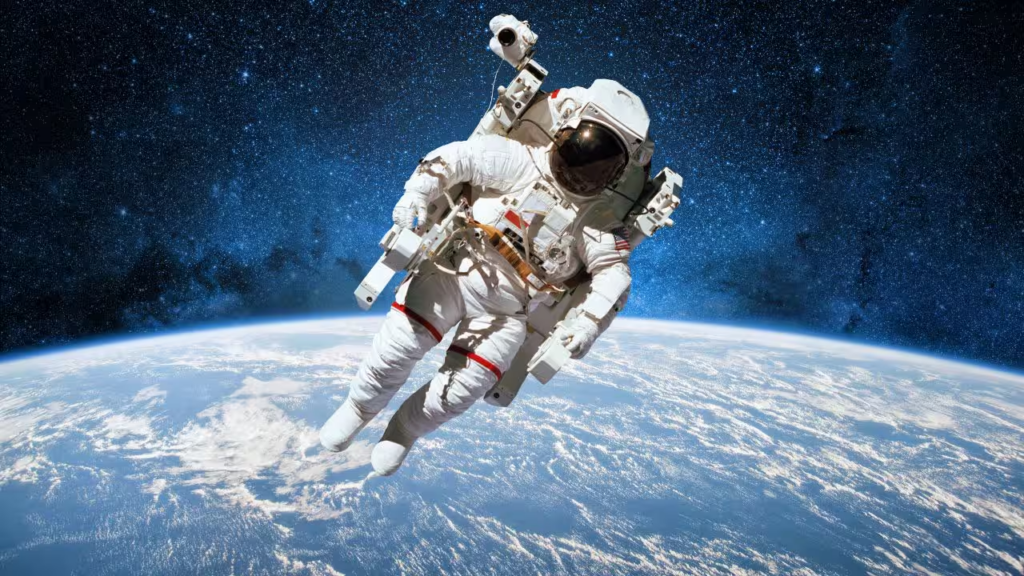
For the first time in the history of human spaceflight, astronauts will be allowed to carry modern smartphones on active missions. The change, announced this week by NASA Administrator Jared Isaacman, marks a quiet but significant shift in how space agencies think about technology, storytelling, and life in orbit.
The new policy will debut with SpaceX Crew-12, scheduled to launch February 11 to the International Space Station, and Artemis II, NASA’s first crewed mission around the Moon in more than 50 years, expected to launch in March.
“We are giving our crews the tools to capture special moments for their families and share inspiring images and videos with the world,” Isaacman wrote on X.
That may sound simple, but for NASA, it’s a big leap.
Why weren’t smartphones allowed in space before?
For decades, astronauts have lived in one of the most technologically advanced environments imaginable—yet their personal tech lagged far behind what most people carry in their pockets.
The reasons were practical, not philosophical
- Radiation exposure can damage consumer electronics.
- Battery safety is critical in oxygen-rich spacecraft.
- Electromagnetic interference can affect onboard systems.
- Every device must pass rigorous certification and testing.
Until now, smartphones simply hadn’t been fully qualified for extended use in orbit or deep space.
That’s changed.
An Apple spokesperson confirmed to CNET that this marks “the first time the iPhone has been fully qualified for extended use in orbit and beyond.”
NASA has not publicly named specific phone brands or models, but Apple’s statement strongly suggests iPhones are among the approved devices.
What missions will allow smartphones?
The rollout starts with two high-profile missions that represent very different chapters of NASA’s future.
SpaceX Crew-12 (Launch: Feb. 11)
- Four astronauts traveling to the International Space Station
- Part of NASA’s ongoing commercial crew program
- A relatively routine ISS mission—but a first for smartphones in orbit
Artemis II (Expected launch: March)
- Four astronauts
- A 10-day mission that will circle the Moon and return to Earth
- The first crewed lunar mission since Apollo 17 in 1972
Artemis II, in particular, raises the stakes. This is not low-Earth orbit, it’s deep space. Allowing smartphones on this mission signals NASA’s confidence that consumer technology can now survive environments once reserved for custom-built hardware.
What were astronauts using before this?
Despite advances in spaceflight, onboard photography has relied on surprisingly dated gear.
According to Ars Technica, current missions still use:
- Nikon DSLR cameras from 2016
- GoPro action cameras
- Specialized legacy imaging equipment
These tools are reliable, but limited:
- No instant editing
- No intuitive touch interfaces
- No seamless integration with modern workflows
- No personal familiarity for most astronauts
Smartphones change that equation overnight.
Why photography matters so much in space missions
This isn’t just about convenience or aesthetics. Photography has always shaped how the public understands space.
A brief history of space photography
- Apollo missions used modified Hasselblad cameras
- Apollo 11 astronauts captured some of the most iconic images of the 20th century
- Earthrise, the Blue Marble, and lunar surface shots reshaped environmental and cultural awareness
Those images didn’t just document history; they created it.
NASA understands that today’s audiences consume space exploration differently. High-resolution images, short videos, and behind-the-scenes moments now travel instantly across platforms.
Smartphones are built for that world.
What smartphones add that legacy cameras don’t
Modern phones aren’t just cameras. They’re multi-purpose tools designed for speed, storytelling, and usability.
Key advantages in space
- Computational photography for low-light and high-contrast scenes
- 4K and HDR video without bulky equipment
- Touch-based controls usable in tight spaces
- Faster image review and selection
- Familiar interfaces that reduce training time
For astronauts, this means less friction between experiencing a moment and capturing it.
For NASA, it means more authentic, human-centered storytelling.
Is this about social media?
Partly, but not entirely.
NASA has long used social platforms to build public engagement. Astronauts already post updates from orbit, often through official channels.
What changes now is how directly those moments can be captured.
Instead of:
- Shooting on a DSLR
- Transferring files
- Processing images on specialized systems
Astronauts can:
- Capture moments naturally
- Review them instantly
- Share content more efficiently with NASA teams
This doesn’t mean astronauts will be live-streaming TikToks from the Moon—but it does mean the barrier between life in space and life on Earth is shrinking.
What does this say about NASA’s approach to technology?
Allowing smartphones reflects a broader shift inside NASA.
A more flexible, modern mindset
- Greater trust in commercial technology
- Willingness to adopt tools astronauts already know
- Recognition that inspiration is part of the mission
It also aligns with NASA’s partnerships with private companies like SpaceX, which prioritize rapid iteration and modern design.
Are there risks?
Yes, but they’re calculated.
NASA would not approve smartphones without:
- Extensive testing for radiation tolerance
- Battery safety validation
- Secure operating configurations
- Strict usage guidelines
These phones won’t be casual personal devices in the traditional sense. They’ll be tightly controlled tools, integrated into mission protocols.
Still, the fact that consumer tech can now meet NASA’s standards is notable in itself.
Why this matters beyond space
This decision isn’t just about astronauts—it reflects how far everyday technology has come.
If a smartphone can function:
- In microgravity
- Under radiation exposure
- On a lunar flyby
It says something profound about the power packed into devices that most people upgrade every few years.
It also signals a future where:
- Space exploration feels more human
- Astronauts are seen not just as operators, but as storytellers
- The gap between Earth and space narrows, visually and emotionally
TL;DR
- NASA will allow astronauts to bring modern smartphones on missions starting with SpaceX Crew-12 and Artemis II.
- This is the first time smartphones—likely iPhones—have been fully qualified for extended use in orbit and beyond.
- Until now, astronauts relied on older DSLR and GoPro cameras.
- Smartphones will improve photography, video, and personal documentation in space.
- The move reflects NASA’s shift toward modern, commercial technology and human-centered storytelling.