
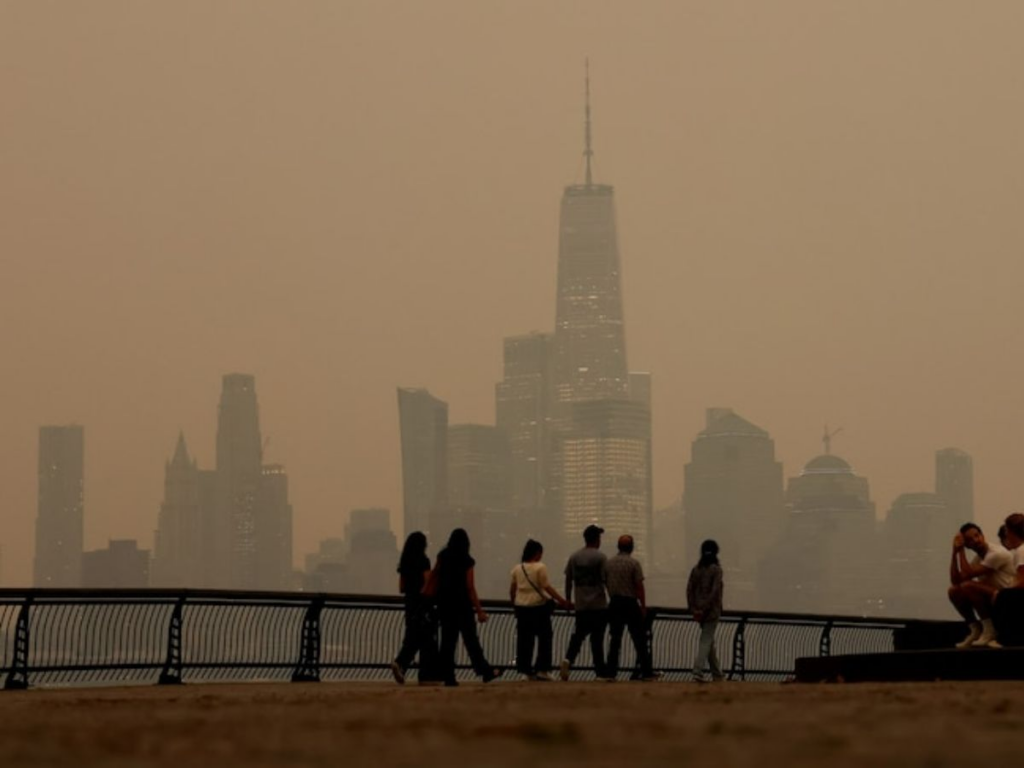
The 2026 FIFA World Cup final between Argentina and Spain is set to take place on Sunday at MetLife Stadium in East Rutherford, New Jersey, with nearly 80,000 fans expected to attend. But as anticipation builds for one of the biggest matches in international football, an unexpected concern has emerged: deteriorating air quality caused by smoke from Canadian wildfires.
The smoke has drifted across parts of New York and New Jersey, creating hazy skies and raising questions about whether conditions will be safe enough for players, officials, and spectators. While there has been no announcement of a postponement, U.S. officials and FIFA are closely monitoring the situation.
TL;DR
- The 2026 FIFA World Cup final between Argentina and Spain is scheduled for Sunday at MetLife Stadium in New Jersey.
- Smoke from Canadian wildfires has worsened air quality across parts of New York and New Jersey.
- FIFA is working with the U.S. National Weather Service to monitor conditions.
- The White House confirmed that air quality concerns have been discussed with tournament organisers.
- No decision has been made to postpone or relocate the final.
Why Is Air Quality a Concern Ahead of the World Cup Final?
The issue stems from wildfire smoke drifting south from Canada, affecting large portions of the northeastern United States.
The smoke contains fine particulate matter (PM2.5), which can penetrate deep into the lungs and may pose health risks, particularly during strenuous outdoor activity. High concentrations can reduce visibility and make breathing more difficult for athletes and spectators alike.
Because MetLife Stadium is an open-air venue, changing weather and air quality conditions could directly affect the match.
What Have Officials Said?
The White House confirmed that the situation is being monitored in coordination with tournament organisers.
Speaking during a press conference, Andrew Giuliani, executive director of the White House World Cup Task Force, said:
“It has been discussed, and we actually have someone from the National Weather Service working out of FIFA headquarters, so we are tracking it very closely.”
His comments indicate that meteorologists are providing FIFA with real-time weather and air quality updates as officials assess conditions ahead of kickoff.
Could the FIFA World Cup Final Be Postponed?
As of now, there is no indication that the final will be postponed.
However, FIFA has protocols in place for extreme weather and environmental conditions. Tournament organizers typically consult medical experts, weather agencies, and local authorities before deciding whether a match should proceed, be delayed, or, in rare cases, be rescheduled.
Factors likely to be considered include:
- Air Quality Index (AQI) readings
- Visibility around the stadium
- Health risks for players and fans
- Guidance from public health officials
- Weather forecasts leading up to kickoff
Until an official announcement is made, the match remains scheduled to proceed as planned.
Why Wildfire Smoke Can Affect Sporting Events
Wildfire smoke has increasingly disrupted outdoor sporting events in recent years as climate-related wildfires become more frequent and intense.
Poor air quality can affect:
- Players’ endurance and breathing
- Individuals with asthma or respiratory conditions
- Young children and older spectators
- Stadium staff and volunteers
Elite athletes, despite their fitness, often inhale significantly larger volumes of air during competition, potentially increasing exposure to airborne pollutants.
What Fans Attending the Match Should Know
Fans traveling to MetLife Stadium should monitor local weather and air quality advisories before heading to the venue.
If air quality remains poor, public health experts generally recommend:
- Limiting prolonged outdoor exposure.
- Staying hydrated.
- Wearing a well-fitting N95 or equivalent mask if sensitive to smoke.
- Following instructions issued by stadium officials and local authorities.
Those with asthma, heart disease, or other respiratory conditions should take extra precautions and carry prescribed medications.
Argentina vs. Spain: A Highly Anticipated Final
Beyond the weather concerns, Sunday’s match promises to be one of the standout fixtures of the tournament.
Defending champions Argentina will look to retain their world title, while Spain aims to add another World Cup trophy to its history. With approximately 80,000 supporters expected inside MetLife Stadium and millions watching worldwide, the final is among the year’s biggest sporting events.
For now, organizers remain focused on ensuring the match can be played safely while continuing to monitor environmental conditions.