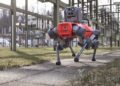
For years, OpenAI has been synonymous with software. Its products, including ChatGPT and advanced reasoning models, have helped define the modern artificial intelligence boom. Now, the company is preparing for its next frontier: robotics.
OpenAI CEO Sam Altman has announced a major recruitment effort aimed at building robots capable of assisting people in the physical world. The initiative signals a significant expansion beyond digital AI systems and into hardware, placing OpenAI in the middle of a rapidly intensifying global robotics race.
The move comes as countries such as China and South Korea continue to make major advances in humanoid robotics, raising the stakes for companies seeking to shape the future of AI-powered machines.
OpenAI’s robotics team marks a major strategic shift
OpenAI’s latest hiring campaign is focused on building a dedicated robotics division capable of designing, developing, and manufacturing machines intended to be “useful for society.”
The company is actively seeking professionals across several disciplines, including:
- Hardware engineering
- Machine learning
- Systems engineering
- Manufacturing and operations
- Robotics infrastructure
- Product development
The breadth of roles suggests OpenAI is not merely experimenting with robotics research. Instead, it appears to be laying the groundwork for an end-to-end robotics organization capable of taking products from concept to deployment.
For a company best known for software, this represents one of the most ambitious expansions in its history.
Why OpenAI wants AI to move beyond screens
Artificial intelligence has made remarkable progress in digital environments. AI models can write reports, generate code, analyze data, and answer questions. Yet much of daily life takes place in the physical world.
Sam Altman has repeatedly argued that AI should eventually help people beyond computer screens.
That vision includes machines capable of:
- Performing household tasks
- Assisting elderly individuals
- Supporting healthcare workers
- Helping in warehouses and factories
- Handling repetitive or dangerous jobs
The long-term goal is to create systems that combine advanced reasoning with physical capabilities, allowing AI to interact directly with people and environments.
In simple terms, OpenAI wants to build machines that can not only think but also act.
How OpenAI’s robotics project evolved
According to Altman, the robotics initiative emerged from OpenAI’s world simulation research efforts led by researcher Aditya Ramesh.
World simulation research focuses on teaching AI systems to understand how objects, environments, and physical interactions work. Before a robot can operate safely in the real world, it must understand concepts such as movement, balance, object manipulation, and cause-and-effect relationships.
This research forms a critical foundation for robotics.
The project has now evolved into a dedicated robotics division that combines machine learning breakthroughs with purpose-built hardware.
Why world models matter
One of the biggest challenges in robotics is transferring intelligence from digital environments into physical spaces.
A chatbot only needs to generate accurate text. A robot must understand:
- Distance and depth
- Object properties
- Human behavior
- Safety constraints
- Environmental changes
World models help bridge that gap by allowing AI systems to simulate and predict real-world outcomes before taking action.
Many researchers believe these models will become a key building block for the next generation of intelligent robots.
What makes this different from OpenAI’s previous robotics efforts?
This is not OpenAI’s first encounter with robotics.
The company previously experimented with robotic systems capable of manipulating objects using machine learning. One notable project involved a robotic hand learning to solve a Rubik’s Cube through reinforcement learning.
However, OpenAI eventually shifted much of its attention toward large language models and generative AI systems.
Products such as ChatGPT, GPT-4o, and OpenAI’s reasoning models became the company’s primary focus and commercial success stories.
The latest announcement suggests robotics is once again becoming a strategic priority, but with a major difference.
This time, OpenAI has access to significantly more advanced AI models, improved computing infrastructure, and greater financial resources than it did during its earlier robotics experiments.
The global robotics race is heating up
OpenAI’s renewed interest in robotics comes at a time when global competition is accelerating.
Several countries are investing heavily in humanoid robots and automation technologies.
China’s growing influence
China has emerged as one of the world’s most aggressive robotics markets.
Companies such as Unitree and Booster Robotics have gained attention for developing increasingly capable humanoid machines at prices that are often lower than many Western competitors.
Chinese manufacturers are also benefiting from strong supply chains and extensive government support for advanced manufacturing technologies.
South Korea’s robotics push
South Korea has embraced robotics both as an industrial tool and a public showcase of technological innovation.
Humanoid robots are increasingly appearing at technology exhibitions, research institutions, and public events, reflecting the country’s broader commitment to automation and AI development.
The United States responds
The United States remains home to several influential robotics companies and AI research organizations.
OpenAI’s entry into the sector could increase competition with firms pursuing similar goals, including those developing humanoid robots for consumer, industrial, and enterprise applications.
What challenges does OpenAI face?
Building advanced robots is significantly harder than building software.
Even the most capable AI models face major obstacles when operating in the physical world.
Some of the biggest challenges include:
- Hardware reliability
- Battery life
- Safety testing
- Manufacturing scale
- Regulatory compliance
- Real-world adaptability
A robot must perform consistently in unpredictable environments, interact safely with people, and handle tasks that often seem trivial to humans but remain difficult for machines.
This complexity explains why robotics development timelines tend to be much longer than software development cycles.
Why OpenAI’s robotics move matters
OpenAI’s hiring push signals a broader shift in how the AI industry views the future.
The first wave of AI transformed digital work by helping users create content, write software, and analyze information. The next wave may focus on bringing that intelligence into the physical world.
If successful, OpenAI could help accelerate the arrival of robots capable of assisting people at home, in workplaces, and across industries.
The timeline remains uncertain, and significant technical hurdles remain. However, the company’s decision to invest heavily in robotics suggests that the race to build useful humanoid machines is no longer a distant vision.
It is becoming one of the technology industry’s most important battlegrounds.
TL;DR
- OpenAI has launched a major hiring effort focused on robotics.
- CEO Sam Altman wants AI to assist people in the physical world, not just through software.
- The initiative evolved from OpenAI’s world simulation research program led by Aditya Ramesh.
- The company is recruiting hardware, machine learning, systems, and operations engineers.
- OpenAI’s move marks a significant expansion beyond ChatGPT and software-based AI products.
- China and South Korea are currently among the leaders in humanoid robotics development.
- The effort positions OpenAI to compete in the rapidly growing global robotics market.