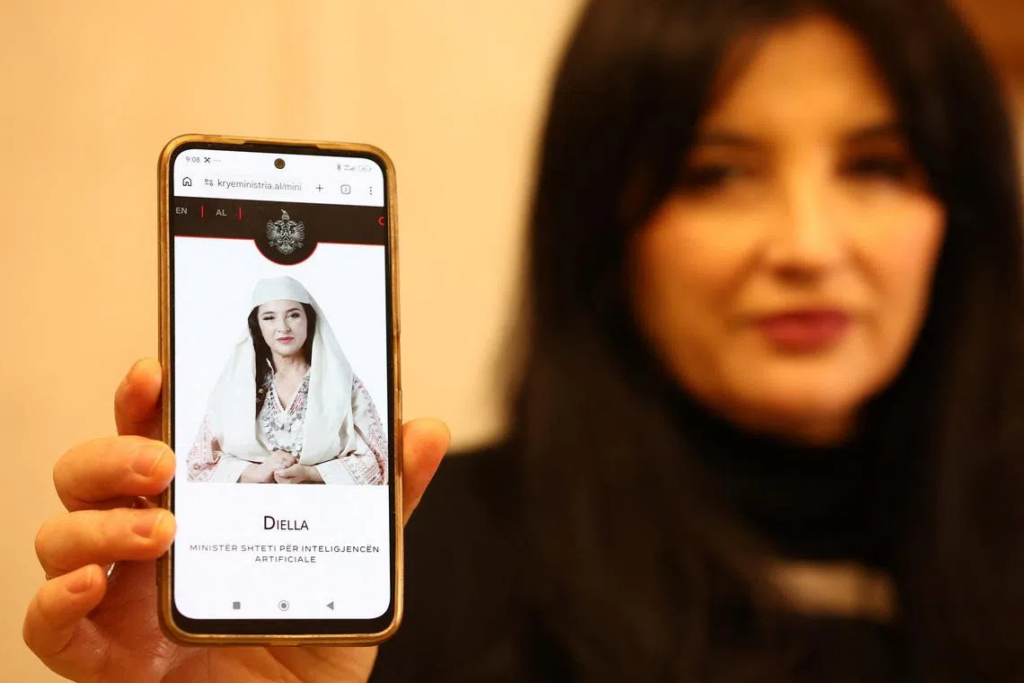
An unusual legal battle in Europe may shape how governments worldwide use artificial intelligence in public communication. Albanian performer Anila Bisha has filed a lawsuit claiming officials used her face and voice without permission to create a virtual government official, Diella.
The avatar, called “Diella,” was introduced by Prime Minister Edi Rama as an AI-powered anti-corruption initiative. What began as a tech showcase has now become a courtroom test of consent in the age of synthetic media.
This article explains what happened, why the dispute matters, and how it could influence the future of digital identity law.
Who is the Diella AI minister?
Diella is a government chatbot designed to help oversee public contracts and strengthen transparency efforts. The avatar appears on official websites alongside cabinet members, giving it the presentation of a public officeholder.
The name translates to “sun” in Albanian, and the project was framed as a modernization effort: an always-available digital official assisting citizens and businesses.
The government’s intended role for AI
According to officials, the system aimed to:
- Guide citizens through administrative services
- Monitor procurement processes
- Improve anti-corruption oversight
- Automate routine government responses
Why Anila Bisha is suing
Bisha says she consented only to the limited use of her likeness for a virtual assistant, not for representation as a cabinet-level figure.
Her claim focuses on two key points:
- permission scope
- reputational harm
She alleges the government exceeded the agreed usage and effectively turned her identity into a political persona.
Reported consequences she described
- strangers calling her “the minister” in public
- harassment from critics of the administration
- association with political decisions she did not make
Her lawyer is seeking €1 million in damages, arguing misuse of personal data by a state institution.
The government’s response
Officials have rejected the allegations, calling the lawsuit baseless and stating the issue should be settled in court.
The case unfolds amid broader political scrutiny, including accusations against Deputy Prime Minister Belinda Balluku involving infrastructure tenders, which she denies. That context has intensified public attention on the AI minister project.
The legal question at the heart of the case
The dispute revolves around a modern legal frontier: digital likeness rights.
Traditional privacy law covered photos and recordings. AI introduces a new category, synthetic identity, where a person’s appearance and voice can be recreated indefinitely.
Key legal questions courts must answer
- Does consent for one AI use apply to all AI uses?
- Is a virtual avatar equivalent to impersonation?
- Can governments deploy human-based avatars in official roles?
- Does reputational harm occur even without direct speech by the person?
Why this case matters globally
The outcome could ripple far beyond Albania.
Governments worldwide are experimenting with AI spokespeople, automated help desks, and virtual officials. If the court rules that expanded usage violates consent, agencies may need stricter contracts and disclosures.
Potential global impact
If Bisha wins
- tighter consent standards
- compensation claims from performers
- mandatory labeling of AI personas
If the government wins
- broader institutional use of synthetic representatives
- fewer barriers to AI public communication tools
- expansion of automated political messaging
The bigger issue: humans as reusable digital assets
The case reflects a growing tension in AI deployment. Human identity is becoming programmable.
Actors, voice artists, influencers, and ordinary citizens now face a question that barely existed five years ago:
Who owns your face once it becomes data?
Companies typically negotiate licensing for films, ads, or recordings. AI complicates this because the same scan can generate unlimited new performances long after recording ends.
What happens next
A court will determine whether the government must stop using the avatar and whether compensation is warranted.
The ruling may establish precedent in three areas:
- consent scope in AI agreements
- government accountability for digital avatars
- damages for synthetic impersonation
Expect policymakers across Europe to watch closely. The decision could influence upcoming AI regulation frameworks.
TL;DR
- Albanian actor Anila Bisha says the government used her likeness to create an AI minister without consent
- The government denies wrongdoing
- The case tests digital identity rights and AI impersonation law
- A ruling could affect how governments and companies deploy human-based avatars worldwide