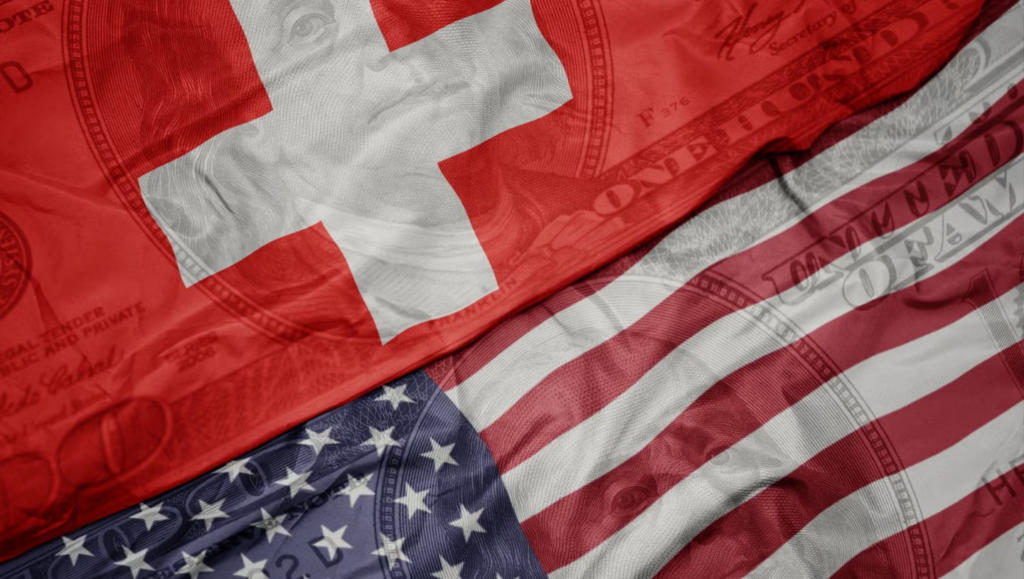
The question, “Is the US getting isolated?” has resurfaced after a series of developments tied to the ongoing West Asia conflict. A fresh signal came from Switzerland, which announced it would suspend military exports to the United States during the conflict.
At the same time, several key Western allies have declined to join a proposed US-led coalition to secure the Strait of Hormuz, a critical global oil chokepoint.
Taken together, these moves raise a serious geopolitical question: Is Washington facing strategic isolation or simply a moment of disagreement among allies?
What Did Switzerland Actually Do and Why?
A Neutrality Doctrine in Action
Switzerland’s decision isn’t sudden, it’s rooted in a long-standing policy of neutrality.
The Swiss government stated it will:
- Suspend authorization of war material exports to countries involved in the conflict with Iran
- Review existing export licenses for compliance with neutrality
- Continue restricting military involvement, including denial of overflight permissions
This applies to the US because it is directly engaged in the conflict.
What Does Switzerland Export?
While not a major arms superpower, Switzerland supplies:
- Precision components
- Ammunition
- Specialized military equipment
Even limited restrictions can disrupt supply chains, especially for high-spec components used in advanced systems.
Why Are US Allies Rejecting the Hormuz Coalition?
Europe’s Reluctance to Escalate
Several major US allies have declined to participate in a proposed coalition aimed at securing the Strait of Hormuz.
Key positions include:
- Friedrich Merz (Germany): Ruled out involvement, stressing NATO’s defensive role
- Keir Starmer (UK): Opposed entering a broader regional war
- Emmanuel Macron (France): Said France is not a party to the conflict
- Giorgia Meloni (Italy): Criticized operations as outside international law
- Spain: Refused participation entirely
Even Canada declined involvement, noting it was not consulted beforehand.
Legal and Political Concerns
A recurring theme among allies is legality.
Several governments argue:
- The conflict may fall outside international legal frameworks
- Participation could escalate tensions with Iran
- Domestic political pressure favors restraint
This suggests the divide is not purely strategic—it’s also legal and political.
What About Asia-Pacific Allies?
Japan’s “Neutral but Supportive” Position
Japan has taken a cautious approach.
Prime Minister Sanae Takaichi signaled:
- Support for the US in principle
- Participation limited to “legally permissible” actions
This reflects a balancing act: maintaining alliance commitments without direct military involvement.
Does This Mean the US Is Isolated?
Not Quite—But It’s Complicated
Calling this “isolation” would be an overstatement.
The US still maintains:
- Strong military alliances (NATO, bilateral treaties)
- Global military presence
- Deep economic ties with allies
However, what we are seeing is selective divergence.
A Shift From Automatic Alignment
In previous conflicts, US allies often aligned more quickly and uniformly.
Now, the pattern looks different:
- Allies are independently evaluating risks
- Participation is conditional, not automatic
- Legal justification is becoming central
This marks a shift toward a more multipolar Western alliance system.
Why Are Allies Hesitating Now?
1. War Fatigue and Domestic Politics
After years of conflicts in Iraq, Afghanistan, and elsewhere, Western publics are wary of new military engagements.
Leaders are responding to:
- Voter skepticism
- Economic pressures
- Political polarization
2. Economic Stakes
The Strait of Hormuz is critical for global oil flows—but escalation could:
- Disrupt energy markets
- Trigger inflation
- Impact fragile post-pandemic economies
Countries may prefer stability over confrontation.
3. Concerns About Escalation
A direct confrontation with Iran risks:
- Regional war
- Involvement of non-state actors
- Disruption across the Middle East
Allies appear cautious about entering a conflict with unclear limits.
What Role Does NATO Play Here?
A Defensive Alliance—Not an Intervention Tool
Germany’s stance highlights a key point: NATO is fundamentally defensive.
Unless member states are attacked:
- NATO is not automatically obligated to act
- Individual countries decide their level of involvement
This gives allies room to opt out without formally breaking alliance commitments.
How Significant Is Switzerland’s Move?
Symbolic vs Practical Impact
Switzerland’s export suspension has both symbolic and practical dimensions.
Symbolically:
- Reinforces neutrality
- Signals discomfort with the conflict
Practically:
- May affect niche supply chains
- Adds friction to military logistics
But it is unlikely, on its own, to materially weaken US military capabilities.
What This Means for Global Geopolitics
A More Fragmented Western Bloc
The current situation suggests a shift:
- From unified Western action
- To issue-by-issue cooperation
This could redefine how alliances function in future conflicts.
Rise of Strategic Autonomy
European countries, in particular, are increasingly asserting:
- Independent foreign policy decisions
- Reduced reliance on US leadership
This trend has been building for years and is now more visible.
What to Watch Next
To understand whether this is a temporary rift or a lasting shift, watch for:
- Whether any allies eventually join the coalition
- Changes in NATO positioning
- Escalation or de-escalation in the conflict with Iran
- US diplomatic efforts to rebuild consensus
If divisions persist, it could signal a deeper transformation in global alliances.
TL;DR
- Switzerland has suspended military exports to the US due to neutrality rules.
- Several US allies have refused to join a Hormuz coalition.
- Concerns include legality, escalation risk, and domestic politics.
- The US is not isolated—but allies are no longer automatically aligned.
- This reflects a broader shift toward more independent decision-making among Western nations.