
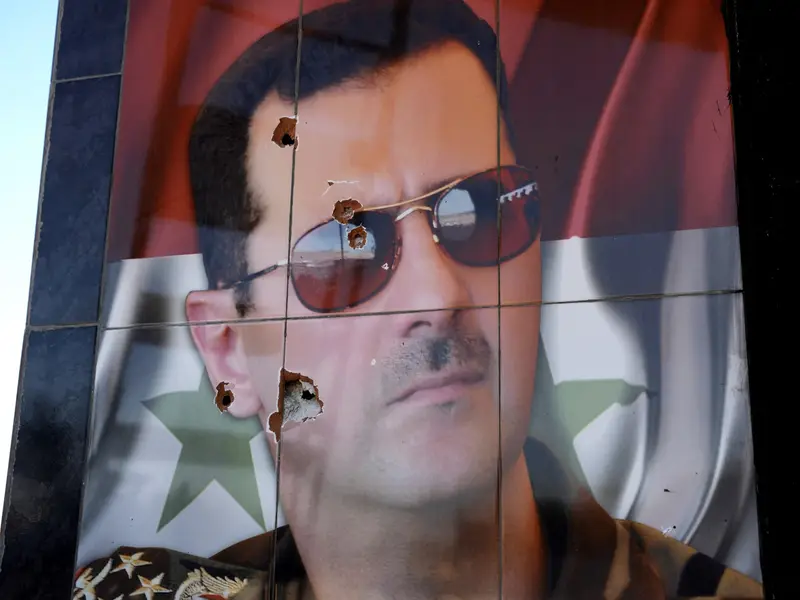
Reports about former Syrian president Bashar al-Assad have resurfaced with claims that, during the final phase of his rule, his attention drifted away from governing toward personal relationships, internal rivalries, and isolation from military decision-making.
The accounts, attributed to former associates and regional sources, paint a portrait of a leadership circle fracturing from within while Syria faced mounting military pressure. Because many details come from unnamed insiders and disputed intelligence narratives, they remain allegations rather than verified historical records. Still, they offer insight into how political power can erode long before it collapses publicly.
What do the reports say about Bashar al-Assad’s private life?
According to accounts cited in international media reporting, members of Assad’s inner circle described a president increasingly detached from formal governance. The allegations include:
- Dependence on a tight group of confidants
- Personal relationships overlapping with political appointments
- A shrinking advisory network after experienced officials were sidelined
- Decisions influenced by loyalty rather than competence
At the center of the claims is Luna al-Shibl, a former journalist who later worked within the Syrian presidential communications apparatus. Sources allege she became both a trusted aide and a personal confidante.
Claims involving his inner circle
Some former officials alleged:
- She acted as a gatekeeper, controlling access to the president
- Senior officers’ families were drawn into the leader’s private orbit
- Traditional military intermediaries lost influence
These accusations have not been independently verified and should be treated as claims from politically interested sources, including defectors and rival factions.
The mysterious death of Luna al-Shibl
In July 2024, al-Shibl was found dead in a car outside Damascus. State media described the incident as a traffic accident. However, competing narratives quickly emerged.
Competing explanations reported
- Official version
Authorities reported a fatal crash. - Insider suspicion
Some associates questioned the severity of injuries compared to vehicle damage. - Foreign intelligence theories
Regional speculation linked the death to alleged information leaks involving Russia or Israel.
No definitive public investigation has confirmed any version. The event remains unresolved in open-source reporting. For sourcing, consider referencing:
- Statements from Syrian state media archives
- Human Rights Watch or UN documentation timelines
- Reputable international outlets that tracked the incident chronology
Reports about Assad’s behavior during the 2024 crisis
Several former fighters and officials told journalists that, during escalating military pressure in 2024, the Syrian leadership appeared disorganized. Among the most widely repeated claims: al-Assad spent long periods disengaged from operational briefings, including time on his phone playing mobile games such as Candy Crush. These accounts cannot be independently confirmed. However, they are often cited to illustrate perceived detachment between leadership and battlefield developments.
Why this matters politically
In authoritarian systems, decision bottlenecks matter more than ideology. When authority becomes centralized:
- Information narrows
- Advisors filter bad news
- Leaders react more slowly to fast-moving fronts
Even rumors of disengagement can accelerate elite defections because commanders begin planning for survival rather than victory.
Silence during regional conflict escalation
After the October 2024 regional escalation involving Israel and armed groups across the Levant, al-Assad issued fewer public statements than expected from Damascus. Observers noted:
- Reduced televised addresses
- Limited operational directives
- Reliance on allied militias
Some regional analysts interpreted the silence as strategic caution. Others saw it as reduced control over events.
The final military phase and departure claims
When opposition forces advanced toward Aleppo in late November 2024, reports described confusion among commanders regarding orders. According to officials quoted in various outlets:
- Field units expected reinforcements that never arrived
- Communication with central command became irregular
- Government statements insisted leadership remained in Damascus
Later accounts alleged al-Assad left the country aboard a Russian aircraft. Authorities did not immediately confirm the timeline publicly.
Aftermath
The subsequent transitional administration announced legal actions against members of the former government. Assad’s exact status became unclear in early reporting cycles. For fact-checking, consult:
- United Nations situation reports from late 2024
- Russian Foreign Ministry statements
- Satellite flight tracking analyses reported by major investigative outlets
Why insider stories emerge after regimes fall
Accounts like these often appear immediately after a political collapse. That timing affects reliability.
Three reasons narratives multiply
- Defectors justify their decisions
- Victors shape legitimacy narratives
- Foreign intelligence leaks selective information
Historians typically reassess such claims years later once archives open. A helpful visual: a timeline showing the difference between real-time reporting vs confirmed archival history in past regime collapses (e.g., Iraq 2003, Romania 1989).
Separating verified events from allegations
Broadly confirmed developments
- Intensified fighting in Syria in late 2024
- Fragmentation within pro-government forces
- Departure of leadership figures from Damascus
Unverified or disputed claims
- Details of personal relationships
- Cause of al-Shibl’s death
- Specific daily behavior of the president
- Alleged intelligence sharing
Responsible reporting requires distinguishing between both categories.
Why leadership perception matters in war
In conflicts, morale follows belief in command competence more than troop numbers. When insiders begin describing:
- Distraction
- Isolation
- Favoritism
The impact can be strategic, even if some claims are exaggerated. Armies collapse psychologically before territorially. This pattern appears in multiple historical cases: - Imperial Russia, 1917
- Iraq 2003
- Libya 2011
TL;DR
- Reports from insiders and regional sources describe Bashar al-Assad as increasingly isolated near the end of his rule.
- Allegations involve internal rivalries, reliance on close confidants, and limited engagement with military developments.
- The death of aide Luna al-Shibl remains disputed.
- Many details are unverified and shaped by post-conflict narratives.
- The broader takeaway is about regime fragility rather than confirmed personal behavior.