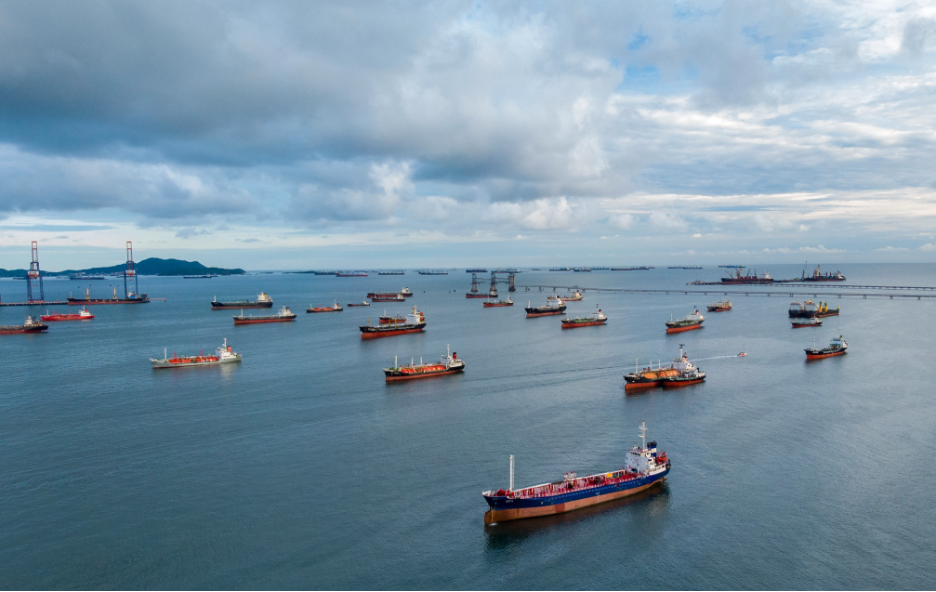
Thousands of vessels delayed in and around the Strait of Hormuz could unintentionally transport invasive marine species across the world’s oceans, according to a new scientific study. Researchers warn that prolonged periods of inactivity allow organisms such as barnacles, mussels, algae, and microbes to accumulate on ship hulls, increasing the risk that these species will be introduced into ecosystems where they do not naturally occur.
While some headlines have described the scenario as a potential “biological apocalypse”, the study itself focuses on the growing threat of biofouling and biological invasions rather than predicting an imminent global ecological collapse.
Here’s what scientists found and why the issue matters.
Why are scientists concerned about ships stranded in the Strait of Hormuz?
The Strait of Hormuz is one of the world’s busiest maritime chokepoints, carrying a significant share of global oil and cargo traffic.
The study was carried out by a team of researchers led by the University of Maryland Center for Environmental Science (UMCES). According to the study, disruptions to shipping have left many vessels stationary for far longer than normal. Researchers estimate that ships remained idle for at least 40 times longer than a typical stay in the region.
That extended period creates ideal conditions for marine organisms to colonize ship hulls.
Once those ships resume sailing, they can unintentionally carry these organisms to ports thousands of miles away, where they may establish new populations.
What is biofouling?
Biofouling is the accumulation of living organisms on submerged surfaces such as ship hulls, offshore platforms, and docks.
Common biofouling organisms include:
- Barnacles.
- Mussels.
- Sea squirts.
- Algae.
- Bacteria and microbial biofilms.
- Small marine invertebrates.
Although biofouling has existed for centuries, modern global shipping has made it one of the leading pathways for transporting invasive marine species between continents.
Why does a stationary ship increase the risk?
When ships remain in motion, water flow and routine maintenance help limit the buildup of marine organisms.
However, prolonged inactivity allows larvae and microorganisms to settle and mature.
According to the researchers:
- Colonization can begin within about 10 days.
- Warm water accelerates growth.
- Anti-fouling coatings become less effective over time.
- Larger and more mature organisms become harder to remove.
Because many vessels in the Strait of Hormuz remained idle during the hot spring and summer months, environmental conditions favored rapid growth.
Can these organisms survive long ocean voyages?
The researchers believe many can.
Marine species native to the Persian Gulf already tolerate some of the harshest ocean conditions on Earth, including:
- Extremely high salinity.
- Water temperatures exceeding 38°C (100°F).
- Industrial pollution.
- Urban environmental stress.
Those adaptations may improve their chances of surviving long-distance voyages before reaching new coastal ecosystems.
Once introduced elsewhere, some species could establish breeding populations if environmental conditions are suitable.
Why are invasive marine species a concern?
Invasive species can disrupt ecosystems by competing with native organisms for food and habitat.
Potential consequences include:
- Declines in native biodiversity.
- Damage to fisheries.
- Harm to coral reefs and seagrass habitats.
- Increased maintenance costs for ports and vessels.
- Economic losses for coastal industries.
Some marine organisms may also carry parasites or pathogens capable of infecting fish, shellfish, or other marine animals.
However, the study does not conclude that a human pandemic or widespread biological catastrophe is imminent. Instead, it warns of elevated ecological risks that require proactive management.
What did the researchers recommend?
The study, led by researchers from the University of Maryland Center for Environmental Science (UMCES) and published in the journal Biological Invasions, recommends stronger international coordination before stranded vessels resume normal operations.
Suggested measures include:
- Inspecting ship hulls before departure.
- Assessing the extent of biofouling.
- Identifying vessels at highest risk of transporting invasive species.
- Monitoring destination ports.
- Implementing rapid-response measures where invasive species are detected.
Researchers note that once extensive biofouling has developed, preventing initial colonization is no longer possible. Instead, efforts should focus on limiting the spread to new regions.
Is “biological apocalypse” an accurate description?
The phrase has attracted attention, but it overstates what the research concludes.
The study warns about the potential for a large-scale marine biofouling event that could increase the spread of invasive species if many heavily fouled ships depart simultaneously.
That is a serious environmental concern, but it is different from predicting a global biological apocalypse or an imminent threat to humans.
Scientists instead emphasize the need for monitoring, inspections, and coordinated management to reduce ecological impacts before ships leave affected waters.
TL;DR
A new study warns that prolonged delays affecting ships in the Strait of Hormuz could increase the spread of invasive marine species through biofouling. Organisms such as barnacles, mussels, algae, and microbes can accumulate on stationary ship hulls and be transported to new ecosystems once vessels resume sailing. While some headlines describe the risk as a “biological apocalypse,” the research itself focuses on preventing ecological damage through inspections, monitoring, and international cooperation.