
A Kuwait drone attack on Thursday killed two Italian technicians who were servicing the country’s air defenses. Kuwait and Italy both blame Iran. Tehran denies any role and calls the incident “a precooked recipe for war.”
For Americans, the location is the point. Kuwait hosted about 13,500 US troops before the war. Iran has hit it again and again since the US-Israeli war with Iran began on Feb. 28. This strike also looks different from recent ones, because it did not follow any reported American attack.
Who was killed, and what they were doing
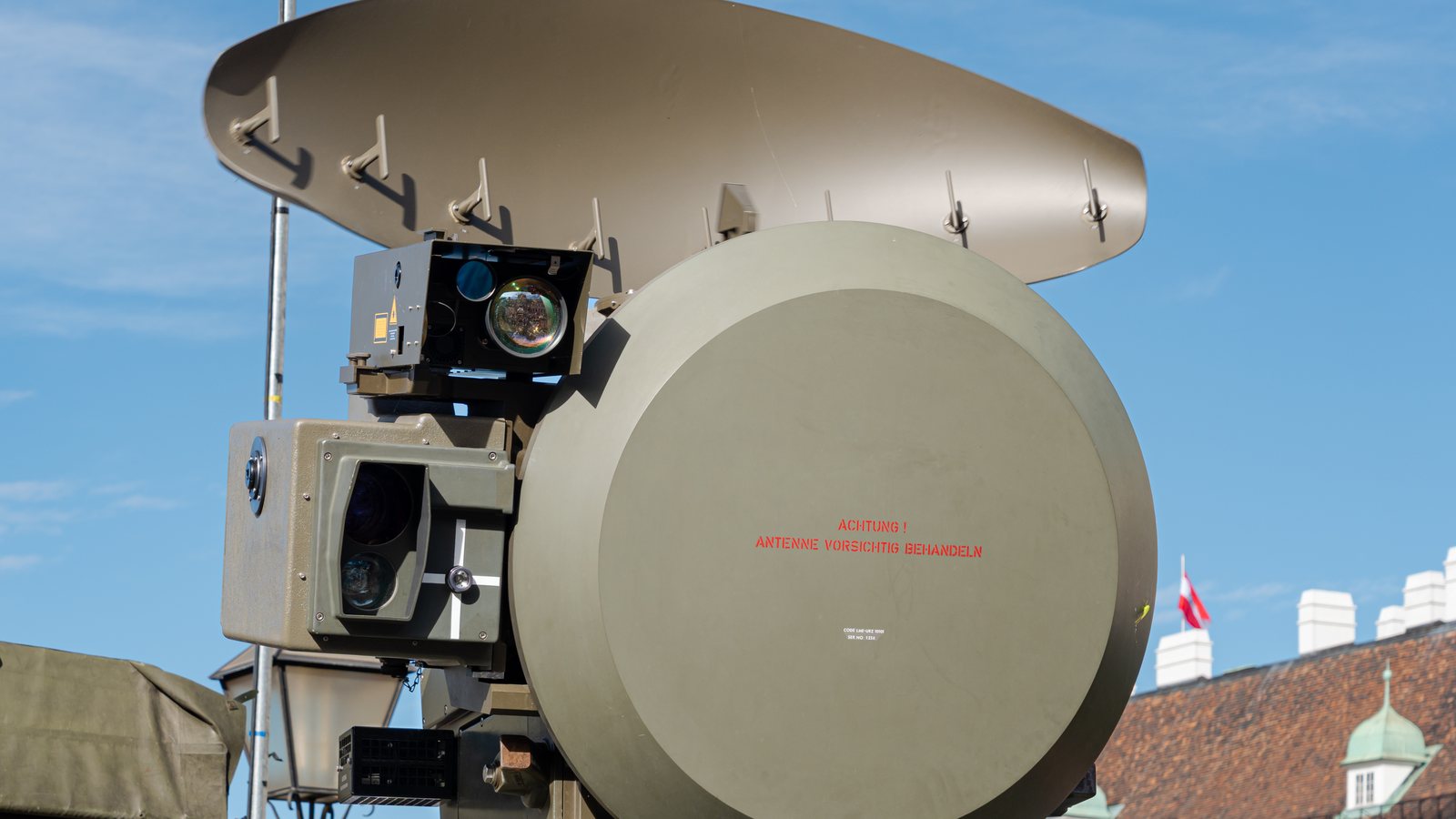
The two men worked for Rheinmetall Italia, the Italian arm of the German defense company Rheinmetall. They were maintaining detection antennas for the Skyguard air-defense system that Kuwait’s military uses. That account comes from Italy’s Foreign Ministry, Bloomberg reported via Livemint. Skyguard is a radar fire-control system that guides anti-aircraft guns and missiles.
Falling debris also injured a Kuwaiti and a Pakistani, Kuwait’s military said. Its forces had engaged hostile drones over what it called a “vital” site. It has not said what the site was.
Foreign Minister Antonio Tajani told Italy’s Senate that several Iranian-made drones targeted Kuwaiti military sites. One was the detection station where the men worked, AFP reported via Gulf Today. Tajani also noted that “numerous pro-Iranian militias operate in the region,” according to CNN. Gulf Today called it the first fatal strike in Kuwait in months.
Kuwait’s Foreign Ministry called the attack a violation of its sovereignty. It said Kuwait reserves the right to defend itself under Article 51 of the UN Charter, Firstpost reported.
Iran denies it and offers a joint investigation
Foreign Minister Abbas Araghchi spoke with his Kuwaiti and Italian counterparts and rejected the accusation. “The incident is suspicious and looks like a precooked recipe for war,” he wrote on X, Firstpost reported. He offered to work with Kuwait and Italy to find the cause.
The military’s spokesman, Abolfazl Shekarchi, went further. Iran’s forces had carried out no offensive operation of any kind in that region, he said. Bloomberg cited his remarks from state broadcaster IRIB. He blamed Israel and US forces for a “false flag,” Al Jazeera reported, without offering evidence.
Europe’s response was sharper. “We must step up pressure on Iran to put an end to these unacceptable attacks,” wrote Ursula von der Leyen, CBS News reported. She heads the European Commission. Italian Prime Minister Giorgia Meloni sent condolences, and the Gulf Cooperation Council condemned a “brutal” attack.
No independent investigation has yet established where the drones came from.
Why Kuwait keeps getting hit
Kuwait is one of the most important US military hubs in the world. In January 2025, the State Department put the US presence at about 13,500 troops. Most are at Camp Arifjan and Ali Al Salem Air Base, says a Congressional Research Service report updated this January. Counting rotational forces, only Germany, Japan and South Korea host more US troops, the report says.
That makes Kuwait an easy place for Iran to reach American assets. Bahrain, next door, hosts the US Navy’s Fifth Fleet. Both countries have been Iranian targets since Tehran’s April ceasefire with Washington collapsed, Bloomberg reported.
The latest round started this month. On Nov. 17, Iran attacked a US radar installation in Bahrain. The US answered by striking a missile launch site on Iran’s Qeshm Island, Al Jazeera reported. That was not the first raid on Qeshm: US forces also hit the island on the eve of the midterms.
The same week, Kuwait switched on its air defenses against Iranian drones for the first time since early September. Iran’s military said it had aimed at “American drone and missile installations” at Ali Al Salem, Khaleej Times reported.
This attack did not follow a US strike
That earlier pattern was tit-for-tat. Thursday’s strike broke it. Unlike earlier Iranian attacks on Kuwait, it came after no reported US attack on Iranian territory, Bloomberg reported. The attacks on Kuwait this month came after a two-month lull.
Bader Al-Saif teaches at Kuwait University and is an associate fellow at Chatham House. “Iran is going on the offensive, gradually abandoning the gray area that has defined the latest phase of the war,” he told Bloomberg.
If Iran is responsible, the target matters too. The technicians were servicing the radar that helps Kuwait shoot down incoming drones. Hitting that kind of equipment weakens the shield over a country full of US personnel.
Iran’s economy may help explain the timing. A US blockade keeps Iran from exporting oil and limits some essential imports. Inflation has climbed to around 90%, Bloomberg reported. “Iran doesn’t have a drop of oil on the water left to sell,” Treasury Secretary Scott Bessent said on Wednesday.
How Trump is responding so far
As of Friday morning, we found no comment on the Kuwait attack from the White House, the Pentagon or US Central Command.
Trump spoke about the war more broadly. On PBS late Thursday, he said the US had “victory at hand.” It would come “whenever I want it to be, to be honest,” he added, CNBC reported. On a Thanksgiving call with troops, he said Washington was still trying to give Iran “every chance to make a deal and save a lot of lives.”
Earlier this month he called renewed full-scale action “quite unlikely,” even as Netanyahu pushed for more strikes. Gulf states are urging him to end the conflict without another round of all-out hostilities, Bloomberg reported. The war has already cost the US about $47 billion, mostly in munitions.
What it means for oil prices
Markets are pricing in more risk, not panic. Brent crude rose above $97 a barrel on Friday, on track for its first weekly gain in four weeks, Trading Economics reported. Brent is still nearly 20% lower this month as Gulf shipments resume.
The Kuwait strike was one of several in 24 hours. Unknown projectiles struck two tankers near the Strait of Hormuz, ABC News reported with Reuters and AP. Iran-aligned Houthi rebels also hit Saudi refineries at Ras Tanura and Jazan. Before the war, about a fifth of all oil and gas traded worldwide moved through the strait.
The next markers are whether Kuwait and Italy take up Iran’s offer of a joint inquiry. The other is how Washington answers a strike on a country hosting thousands of US troops.