
What Happened at Pōkaʻī Bay?
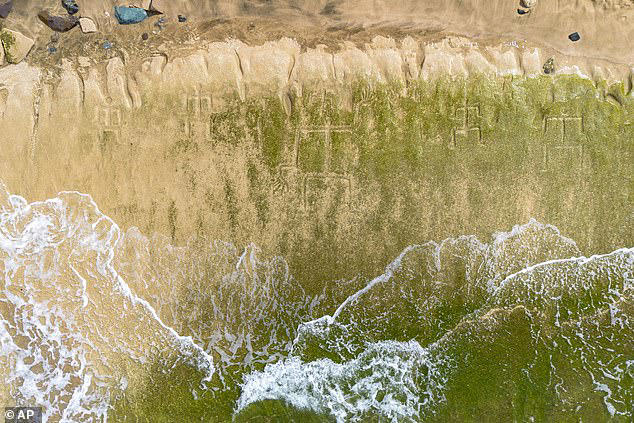
In late July 2025, the shoreline of Pōkaʻī Bay on Oahu, Hawaii, revealed a striking sight: 26 ancient petroglyphs, etched in sandstone and believed to be between 600 and over 1,000 years old, became fully visible for the first time in nearly a decade. Usually hidden beneath sand, algae, and Pacific tides, these symbols reappeared after shifting ocean currents and seasonal waves washed them clean, just days before the massive 8.8 Kamchatka earthquake that set off tsunami warnings across the Pacific, including Hawaii.
What Do the Symbols Show, and Why Are They Important?
- The site covers about 115 feet of coastline and features mainly human-like stick figures—18 anthropomorphic carvings, with some showing unique details like raised hands or fingers.
- Eight carvings include what appears to be male genitalia; several figures are arranged in dynamic stances.
- The largest figure depicts one hand raised upward and one downward, which some cultural practitioners interpret as symbolizing the sun’s rise and set—an allusion to Maui, the revered Hawaiian demigod.
- The petroglyphs’ full meanings remain scientifically unclear, but Native Hawaiian experts assert they may have commemorated important community events, ceremonial narratives, or even carried warnings about natural changes to come.
Why Do Native Hawaiians See This As an “Ancestral Warning”?
For many Native Hawaiians, these figures are deeply spiritual markers, not just historic art. Local cultural leader Glen Kila, whose ancestry in Waianae dates back centuries, argues that the reemergence is ancestral communication. He interprets the carvings, especially the directional hands, as a warning to the community: “It’s telling the community that the ocean is rising.”
- The fact that these petroglyphs emerge from the sea during periods of environmental change—this time, just before a major earthquake and tsunami alert—fuels local beliefs that they act as omens or urgent reminders tied to climate, sea level rise, and natural disasters.
- The timing couldn’t be ignored: the symbols cleared mere days before the Russian quake and Pacific tsunami warnings, linking them in public imagination, even if no direct scientific correlation exists.
How Do the Symbols Resurface, and What Triggers It?
- Seasonal weather (mainly May–November): Pacific storms and wave systems wash away the covering sand and algae.
- Beach dynamics: The profile of Pōkaʻī Bay’s shore constantly changes; at low tide or after significant sea activity, more of the panel is exposed.
- Historical surfacing: The carvings were last fully revealed in 2016 and have occasionally appeared in smaller sections in between, depending on storm activity and tidal cycles.
Scientific and Cultural Perspectives: What Do Experts Say?
Scientific View
- Archaeologists date the petroglyphs to at least 600 years old (possibly older), referencing other sites in the area as comparisons.
- There’s no definite agreement on the original intent, but petroglyphs in Hawaii often marked historical records, community landmarks, or spiritual stories. Some experts suggest birth records or ceremonial tales, while others see the dynamic poses as depicting significant cultural or religious events.
Cultural Significance
- For Native Hawaiians, the carvings are living history and spiritual guides—indicators of ancestral wisdom, resilience, and caution in the face of changing nature.
- The demigod Maui’s outstretched hands, interpreted to reflect the journey of the sun, echo traditional cosmology and the concept of perpetual balance and cycles.
- Community leaders underscore these moments to remind Hawaiians—and visitors—of their deep connection to land and sea, and the need for respect and vigilance as climate risks increase.
Is There a Link to Recent Earthquakes and Tsunami Warnings?
While no scientific evidence ties the petroglyphs’ reemergence directly to the Kamchatka earthquake or tsunami, locals can’t ignore the symbolic timing. Both the petroglyphs’ appearance and the quake serve as urgent reminders of Hawaii’s vulnerability to climate change, rising sea levels, and Pacific tectonic activity. The public’s fascination with this ancient “warning” highlights how cultural memory and modern events often intertwine on islands shaped by powerful natural forces.
Protecting and Honoring This Cultural Heritage
- Preservation challenges: The site’s popularity means balancing community access, tourist curiosity, and protection from damage, especially as the petroglyphs are only temporarily accessible and naturally fragile.
- Ongoing collaboration between Native Hawaiians, local authorities, and the U.S. Army (which manages the nearby recreation center and beach) aims to safeguard the site while educating the public about its value.