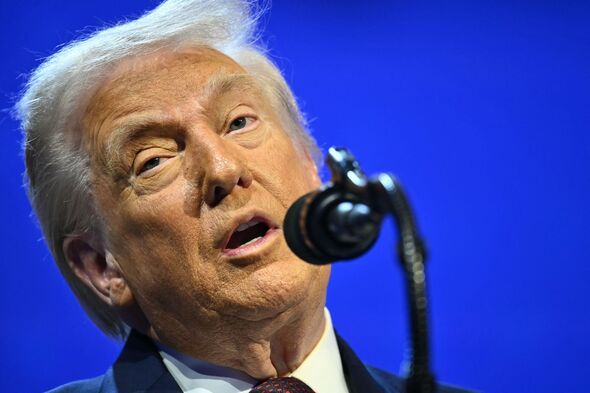
Questions about a sitting U.S. president’s health are never just personal—they’re political, constitutional, and deeply public. That reality resurfaced this week after Mary Trump, President Donald Trump’s niece and a longtime critic, suggested that her uncle may be showing signs consistent with Alzheimer’s disease.
Her remarks, made in an interview with New York Magazine, have reignited debate over Trump’s cognitive health, his family medical history, and how much transparency Americans should expect from their leaders.
This article breaks down what Mary Trump actually claimed, what evidence is—and isn’t—on the table, and why such allegations resonate far beyond family drama.
What Did Mary Trump Say About Donald Trump and Alzheimer’s?
Mary Trump, 60, a clinical psychologist and author, drew a direct comparison between her uncle and her grandfather, Fred Trump, who suffered from Alzheimer’s disease before his death in 1999 at age 93.
“Not Oriented to Time and Place”
In the interview, Mary Trump said she has occasionally observed what she described as a “deer-in-the-headlights” expression in the president—an expression she associates with her father-in-law’s decline.
“Sometimes it does not seem like he’s oriented to time and place,” she said. “And on occasion, I do see that deer-in-the-headlights look.”
It’s important to note what she did not say. Mary Trump did not claim to have diagnosed the president, nor did she cite medical tests or evaluations. Her comments were observational, rooted in personal familiarity and her professional background—but not supported by disclosed clinical evidence.
Why Fred Trump’s Alzheimer’s History Matters
Family medical history often becomes central in discussions about cognitive health—and in this case, it’s already part of the public record.
Fred Trump’s Diagnosis
Fred Trump, Donald Trump’s father, developed Alzheimer’s disease in his late 80s. The condition progressed over several years before his death in 1999.
Alzheimer’s can have a genetic component, especially in early-onset cases, though most diagnoses occur later in life and involve a complex mix of genetics, environment, and overall health.
Did Trump Address Alzheimer’s Himself?
Yes—and the moment has drawn renewed scrutiny.
Forgetting the Word, Then Dismissing the Concern
In a separate interview, Trump spoke about his father’s illness but appeared to momentarily forget the word “Alzheimer’s,” turning to his press secretary, Karoline Leavitt, for help.
“He had one problem. At a certain age, about 86, 87, he started getting, what do they call it?”
“Alzheimer’s,” Leavitt replied.
Trump then added:
“Like an Alzheimer’s thing. Well, I don’t have it… I don’t think about it at all.”
He went on to argue that genetics favor him, citing his mother’s long-lived family line and the absence of heart disease.
Context Matters
Forgetting a word, especially a medical term, is not, on its own, evidence of dementia. Neurologists caution against concluding isolated incidents, particularly without formal cognitive testing.
How Old Is Trump and Why Age Is Central to the Debate
At 79, Donald Trump is among the oldest presidents in U.S. history. Age alone does not determine fitness for office, but it does raise legitimate questions about stamina, memory, and long-term health.
The Precedent Problem
The U.S. Constitution sets no upper age limit for the presidency. Instead, it relies on:
- Voter judgment
- Medical disclosures
- The 25th Amendment, which addresses presidential incapacity
Yet the system largely depends on self-reporting and selective transparency—a reality that leaves room for speculation.
Trump’s Health Claims and Aspirin Use
Trump has long insisted he is in excellent health. He has also publicly discussed aspects of his medical routine that raise eyebrows among physicians.
Daily Aspirin and Visible Bruising
Trump has acknowledged taking 325 milligrams of aspirin daily for roughly 30 years—despite saying his doctors do not approve of the dosage.
“But it works for me,” he said.
Aspirin at that dose can increase the risk of bruising and bleeding, which Trump has cited as the reason for visible marks on his hands.
Why These Claims Gain Traction Even Without Proof
Mary Trump’s remarks landed because they fit into a broader, ongoing narrative about presidential health, transparency, and trust.
The Public’s Information Gap
When medical records are summarized rather than released in full, speculation fills the void. In Trump’s case, critics argue that
- Medical updates are overly curated
- Cognitive testing details are vague
- Family history raises unanswered questions
Supporters counter that no credible medical professional has diagnosed Trump with Alzheimer’s and that political opponents often weaponize health concerns.
What Medical Experts Generally Agree On
While experts are not weighing in on Trump specifically, there is a broad consensus on a few key points:
- Alzheimer’s cannot be diagnosed by observation alone
- Public figures should not be medically assessed without exams
- Aging-related memory slips are common and often benign
Any definitive claim would require neuropsychological testing, brain imaging, and longitudinal evaluation, none of which are publicly available.
Why the Donald Trump Alzheimer’s Claim Matters Politically
This is not just about one man’s health. It’s about how democracies handle leadership risk.
Voters, Power, and Transparency
Health concerns influence:
- Voter confidence
- International diplomacy
- Crisis decision-making
As the U.S. electorate ages—and candidates do too—calls for clearer standards of disclosure are growing louder.
TL;DR
- Mary Trump suggested her uncle may show signs reminiscent of Alzheimer’s, citing family history and personal observation.
- There is no medical diagnosis backing the claim.
- Trump denies any cognitive issues and points to favorable genetics.
- The controversy underscores broader concerns about transparency, age, and presidential health.