
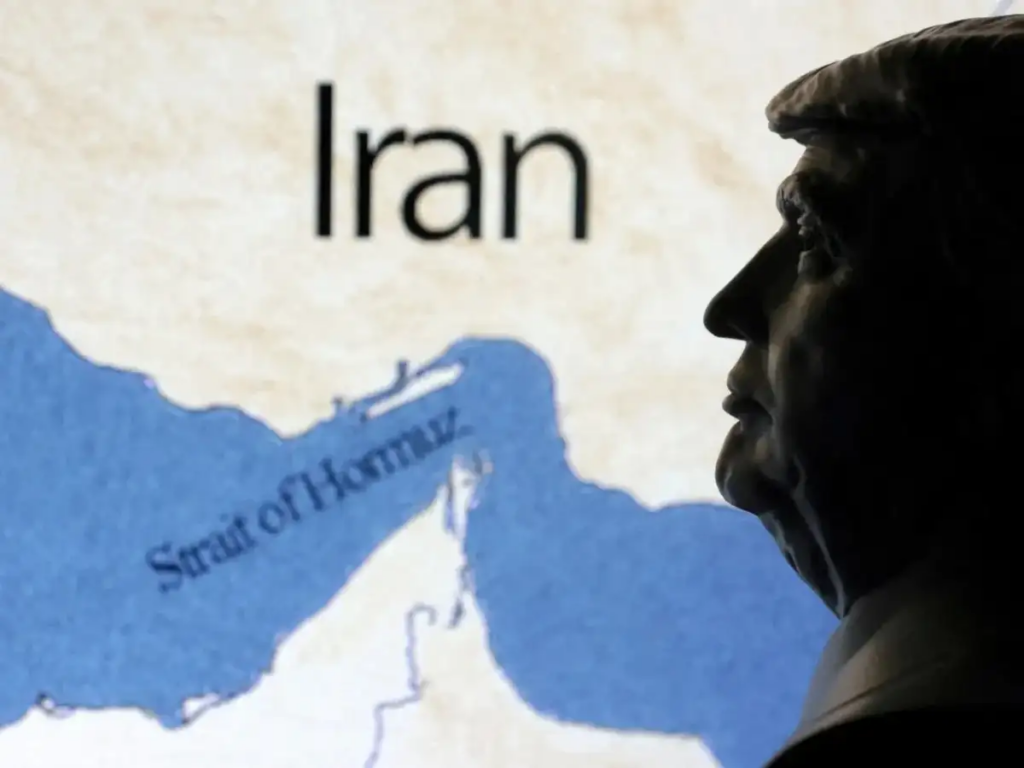
When Donald Trump declared that the United States would “blockade” the Strait of Hormuz, it sounded like a dramatic escalation in an already tense region. But the reality of how such a move would work is more complex and, in some ways, more limited than the headline suggests.
The strait is already partially disrupted by Iran. So what exactly would a US blockade change? And what would it cost the world?
Why the Strait of Hormuz matters so much
The Strait of Hormuz is not just another shipping lane. It is the narrow valve through which a significant share of the world’s energy flows.
- Roughly 20% of global seaborne oil and gas passes through it
- It connects Gulf producers like Saudi Arabia, Iraq, and the UAE to global markets
- Even minor disruptions can trigger major price swings
Think of it as the world’s oil heartbeat. Squeeze it even slightly, and the shock travels everywhere.
What Trump actually proposed
Trump’s statement suggested a sweeping naval blockade. But operational details released by the United States Central Command indicate something more targeted.
Not a full shutdown
The US is not planning to seal off the entire strait. Instead:
- Ships traveling to or from Iranian ports could be stopped
- Traffic between non-Iranian ports may still be allowed
- Enforcement would apply to vessels of all nations, at least in principle
This is less a wall and more a controlled checkpoint at sea.
How a US blockade would actually work
Naval blockades are governed by international law, and they rarely look like a total barrier. Instead, they function through control and inspection.
The “visit and search” principle
Under the laws of naval warfare:
- Warships can stop and inspect vessels
- They can determine whether ships are carrying prohibited cargo
- They can deny passage if the rules are violated
In Hormuz, this would likely mean US naval forces:
- Intercepting tankers
- Boarding or scanning them
- Deciding whether they can proceed
It’s less cinematic than a naval standoff and more like a high-stakes customs check floating on open water.
Enforcement challenges
Even this limited approach comes with complications:
- The strait is only about 21 miles wide at its narrowest point
- It is crowded, with dozens of vessels moving daily
- Any confrontation risks escalation with Iranian forces nearby
In short, enforcement is possible but risky.
Why target Iran’s oil exports?
The strategic logic behind a US blockade is economic pressure.
Iran’s economy depends heavily on oil exports. By restricting its ability to sell crude:
- Government revenue drops
- Military operations become harder to sustain
- Domestic pressure on leadership increases
Some analysts argue this could weaken Iran’s ability to continue regional conflict over time.
The numbers behind the strategy
- Iran has been exporting around 1.8–1.9 million barrels per day
- Reports suggest some tankers are paying fees for passage
- Control over the Strait gives Tehran leverage over global markets
A US blockade aims to flip that leverage.
Why has the US hesitated until now
If the strategy is so clear, why hasn’t it been fully implemented already?
Because the consequences don’t stop with Iran.
Global oil price shock
Blocking Iranian oil would reduce supply in an already tight market.
- Oil prices could spike sharply
- Fuel costs would rise worldwide
- Inflation pressures would increase
Recent movements show how sensitive markets are:
- US crude jumped above $100 per barrel
- Brent crude surged past $100 as well
Energy markets react quickly, and voters feel it at the pump.
Collateral damage to allies
Countries that rely on Gulf oil, including US partners, would also be affected.
A blockade doesn’t just punish Iran. It ripples outward, hitting:
- Asian energy importers
- European economies
- Global shipping and insurance markets
This is why the US has, at times, allowed Iranian oil to flow despite sanctions.
Iran’s current strategy in the Strait
Iran is not fully closing Hormuz. Instead, it is controlling it selectively.
- Allowing some ships to pass
- Charging fees or imposing conditions
- Prioritizing its own oil exports
This creates a hybrid situation: not a full blockade, but not free passage either.
It’s a pressure tactic designed to influence both markets and diplomacy.
How Iran might respond to a US blockade
Tehran has signaled it is not overly concerned, at least publicly. Typically, around 150 vessels navigate the Strait of Hormuz each day. Yet in March, the entire month saw over 150 tankers pass through, per S&P Global Market Intelligence data.
Possible responses include:
- Escalating naval harassment
- Expanding restrictions on shipping
- Leveraging higher oil prices to offset reduced volume
Iran’s calculus is shaped by one key factor: rising oil prices can partially compensate for lower exports.
What happens next?
A US blockade of Hormuz would not be a static move. It would evolve quickly based on reactions from Iran, global markets, and allies.
Potential scenarios
- Limited enforcement: Focus on Iranian-bound ships only
- Escalation: Broader restrictions and naval confrontations
- De-escalation: Negotiated reopening of the strait
Each path carries different risks, but none are low-stakes.
Why this moment matters
This is not just about one waterway.
It reflects a larger shift in how economic warfare is being used alongside traditional military tools. Control over trade routes, energy flows, and supply chains is becoming as important as control over territory.
Hormuz sits at the center of that shift.
TL;DR
- Trump has proposed a US blockade of the Strait of Hormuz
- The plan likely targets ships linked to Iran, not a full shutdown
- Enforcement would rely on naval inspections and control
- The goal is to cut Iran’s oil revenue and weaken its economy
- The risk: a global oil price surge and wider economic fallout