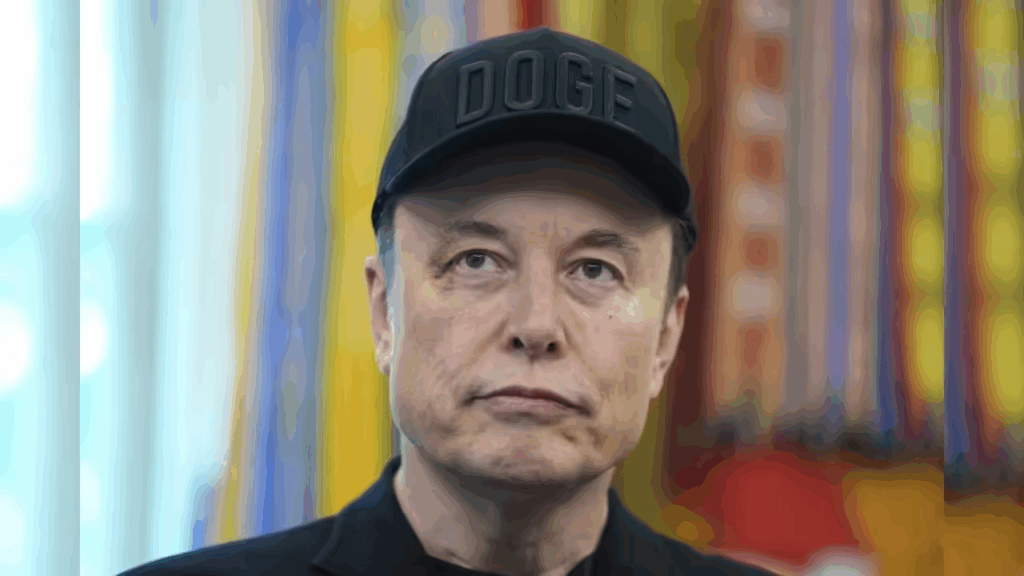
Elon Musk has once again stepped into the center of a global political debate—this time by endorsing El Salvador President Nayib Bukele’s controversial war on gangs. Nayib Bukele, who proudly calls himself the “world’s coolest dictator,” has overseen one of the most aggressive anti-crime campaigns in modern history. Critics call it authoritarian overreach; supporters call it the only reason El Salvador is no longer the homicide capital of the world.
Musk’s comment that Nayib Bukele’s methods are “the only way” has amplified an already polarizing discussion about crime, governance, and human rights in Central America. This article breaks down what Bukele’s strategy entails, why Musk’s endorsement matters, the dramatic shifts in El Salvador’s crime landscape, and the fierce human rights debate around the country’s new identity as one of the world’s safest nations.
What did Elon Musk say about Nayib Bukele’s crackdown?
Musk’s endorsement came in response to a post by Bukele, who was defending mass arrests and his zero-tolerance security apparatus. Bukele argued that:
- You can, in fact, “imprison your way out of crime.”
- A strong police force is essential.
- A tough and well-managed prison system is key to transforming a violent society.
- Critics misunderstand what it takes to dismantle entrenched criminal networks.
Musk replied succinctly: “It is the only way.”
The remark matters for two key reasons:
- Musk’s social influence is enormous. A single statement from him often becomes part of the global news cycle.
- His comment aligns him with one of the most divisive anti-crime experiments in the world.
The interplay between a Silicon Valley magnate and an authoritarian-leaning leader raises questions about the ethics of tech billionaires endorsing extreme governance models.
How did Nayib Bukele turn El Salvador from ‘homicide capital’ to one of the world’s safest countries?
For decades, El Salvador suffered some of the highest murder rates globally, fueled largely by notorious gangs like MS-13 and Barrio 18. Bukele’s strategy to reverse this trend has involved a combination of:
Military and police deployments across the country
The “Territorial Control Plan” placed soldiers on the streets, expanded surveillance, and targeted entire neighborhoods known for criminal activity.
Mass arrests under a state of exception
Since 2022, more than 70,000 people have been detained—about 1 percent of the country’s population.
Construction of CECOT prison
The Centre for Terrorism Confinement (CECOT) is a massive, high-security mega-prison capable of holding 40,000 inmates. Its austere conditions and militarized management make it one of the most controversial prisons in the world.
Expansive intelligence and monitoring systems
Drones, wiretapping, and advanced surveillance tools support the crackdown.
According to El Salvador’s government statistics, homicides dropped from around 18 per 100,000 residents in 2021 to under 2.5 in 2023—an unprecedented decline in the region.
Why Elon Musk’s endorsement carries global weight
Musk’s influence extends beyond business. His reputation as a visionary—and increasingly, as a cultural and political figure—means his public statements shape global conversations.
1. His brand aligns with radical transformation
Musk often supports leaders or ideas that promise disruption. Bukele’s war on gangs, framed as a dramatic transformation of a once-lawless society, fits that worldview.
2. Musk’s platform X shapes political debate
Nayib Bukele and Musk share a preference for speaking directly to the public via social media instead of traditional press channels. Musk’s endorsement therefore amplifies Bukele’s message to millions of politically engaged users.
3. Tech billionaires influencing governance is a growing trend
From AI regulation to digital surveillance, corporate leaders increasingly shape policy debates. Musk’s admiration for Bukele adds to the ongoing conversation about whether such figures should wade into complex global political issues.
How Donald Trump factors into the El Salvador strategy
El Salvador’s crime crackdown received praise from U.S. President Donald Trump, who has frequently highlighted Bukele as a model for tough policing.
Trump even ordered the transfer of certain gang-affiliated American criminals to El Salvador’s prisons—an unprecedented move that drew heavy criticism. Human rights groups argue the decision subjects inmates to harsh conditions that violate international norms.
Trump’s alignment with Bukele mirrors Musk’s admiration: all three promote a “law and order” philosophy that prioritizes security over civil liberties.
What is the reality inside El Salvador’s mega-prison CECOT?
CECOT has become a symbol of Bukele’s crackdown—a sprawling fortress designed exclusively for high-risk gang members.
Key characteristics
- Holds up to 40,000 inmates
- Surrounded by military checkpoints
- Maximum-security cells with minimal sunlight or recreation
- Zero tolerance for communication with the outside world
Images of tattooed prisoners sitting shirtless, handcuffed, and herded in lines have gone viral globally—praised by some as justice, condemned by others as dystopian.
International watchdogs report allegations of torture, beatings, overcrowding, and prolonged isolation. Prisoners are often held without due process for months or years.
Why critics warn Bukele’s model could undermine democracy
Even as crime plummets, the human rights cost remains a central concern.
Mass arbitrary arrests
Thousands of innocent civilians, including minors, have reportedly been detained during sweeps.
Lack of due process
Under the state of exception, detainees can be held without formal charges or immediate legal representation.
Power consolidation
Nayib Bukele’s government has reshaped the judiciary, replaced Supreme Court justices, and increased executive control—moves that critics say create an unchecked authoritarian environment.
International backlash
Human Rights Watch, Amnesty International, and multiple United Nations bodies have raised alarms about systemic abuses.
The dilemma is clear: can a safer society be justified if it relies on mass detention and weakened civil liberties?
Why Nayib Bukele’s strategy continues to inspire global fascination
Despite criticism, Bukele remains one of the most popular leaders in Latin America. His approval ratings routinely exceed 80 percent. Citizens credit him with freeing them from decades of gang extortion, violence, and territorial control.
Supporters highlight
- Safer streets
- Revival of public spaces
- Growth in tourism
- Decline in extortion rackets
- More investment opportunities
Critics highlight
- Democratic backsliding
- Militarization of society
- Fear-based governance
- Violations of international law
Bukele has reframed the narrative: safety first, liberties later. It resonates with populations tired of failed policing and generational violence—even beyond El Salvador’s borders.
TL;DR
Elon Musk endorsed El Salvador President Nayib Bukele’s harsh anti-gang crackdown, calling it “the only way.” Bukele has dramatically reduced crime through mass arrests, military deployment, and construction of a massive 40,000-capacity prison. While the strategy has transformed El Salvador into one of the world’s safest countries, it has also sparked accusations of torture, abuse, and authoritarianism. Musk’s public praise reinforces Bukele’s global image as a bold but controversial leader reshaping crime policy through extreme measures.