
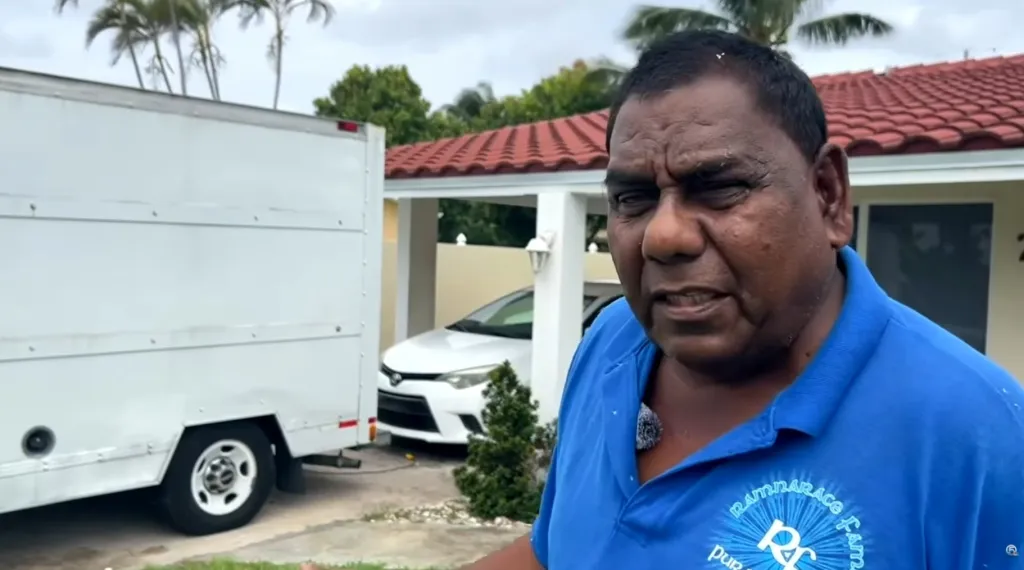
A Florida handyman’s $345 fine for parking his work truck in his own driveway has ignited a broader conversation about local rules, property rights, and how cities balance neighborhood standards with real-life needs.
At the center of the dispute is Bali Ramnarace, a disabled single father in Boynton Beach, who says the vehicle is essential to both his livelihood and daily mobility.
What happened in the Florida handyman truck case?
Ramnarace has been parking his 10-foot commercial box truck in his driveway for decades. But under updated city rules, that same practice is now considered a violation.
City officials fined him $345 and warned that he could face an additional $75 monthly penalty if the truck remains.
For Ramnarace, the issue is not just financial. He says removing the truck would make it significantly harder to work and manage daily life due to his physical limitations.
Why does the city say the truck violates the law?
Understanding Boynton Beach’s parking code
The dispute hinges on a local ordinance designed to regulate what kinds of vehicles can be parked in residential neighborhoods.
According to the city’s municipal code:
- Large commercial vehicles are restricted in residential areas
- Trucks, tractors, and similar vehicles cannot be parked for extended periods
- The goal is to preserve neighborhood character and property values
Officials argue that rules like these are necessary to prevent residential streets from resembling commercial zones.
They also maintain that enforcement is about safety, not revenue generation.
Why does the handyman say the rule is unfair
“This is how I make a living”
Ramnarace argues that his truck meets most of the city’s requirements:
- It is relatively small for a commercial vehicle
- It weighs far below the maximum limit allowed under similar classifications
- It has been parked at the property for about 45 years
His main contention is simple: the vehicle is being penalized for its label as a “truck,” not for its size or impact.
He has also requested to be “grandfathered” in, meaning allowed to continue under older rules since his situation predates the new ordinance.
For him, the truck is not just a vehicle. It is his mobile workshop, carrying tools and materials necessary for his job.
Without it, he says, earning a living becomes nearly impossible.
What changed in the city’s rules?
A stricter ordinance rolled out in 2026
In February 2026, Boynton Beach updated its parking regulations, tightening restrictions across both residential and commercial areas.
Key changes include:
- Bans on parking certain vehicles in yards, swales, or streets
- Limits on driveway parking for non-compliant vehicles
- Allowances only for temporary exceptions like events or gatherings
The updated rules have affected not just commercial vehicle owners but also everyday residents.
Some locals say the changes have made it difficult to find legal parking, especially in neighborhoods without homeowner associations.
Why is this case drawing wider attention
A clash between policy and practicality
This story resonates because it highlights a tension many cities face:
- How do you maintain neighborhood aesthetics?
- Without making life harder for working residents?
For people in trades like construction, plumbing, or handyman services, work vehicles are not optional. They are essential tools.
“We literally have nowhere to park our cars except in our own yards, and if you don’t have a yard, tough luck,” Cristina Super previously told WPTV. “We don’t even live in an HOA, yet they’re shoving their ordinance down our throats.”
Critics of the ordinance argue that:
- It disproportionately affects blue-collar workers
- It fails to account for disability-related needs
- It imposes HOA-style restrictions on non-HOA neighborhoods
Supporters, however, say:
- Rules ensure consistency and order
- Property values are protected
- Safety concerns, such as visibility and obstruction, are addressed
Could “grandfathering” be a solution?
What it means and why it matters
“Grandfathering” allows existing situations to continue under old rules even after new regulations are introduced.
In this case, it could mean allowing Ramnarace to keep parking his truck because
- He has done so for decades
- The practice predates the updated ordinance
- His circumstances involve both livelihood and disability
However, cities are often cautious with such exceptions, as they can create uneven enforcement or open the door to legal challenges.
What happens next?
Ramnarace is now involved in a legal dispute with the city.
The outcome could set an important precedent:
- If the city prevails, stricter enforcement may follow
- If Ramnarace wins, it could encourage exemptions for similar cases
Either way, the case underscores how local regulations, often overlooked, can have significant real-world consequences.
Why this story matters beyond one driveway
At first glance, this might seem like a minor zoning dispute. But it touches on larger questions:
- Who gets to define what a neighborhood should look like?
- How flexible should rules be for people with unique needs?
- Where is the line between regulation and overreach?
As cities across the U.S. continue to update codes to manage growth and maintain standards, conflicts like this are likely to become more common.
TL;DR
- A Florida handyman was fined $345 for parking his work truck at home
- The city says it violates residential parking rules
- He argues the truck is essential for his job and daily life
- New 2026 regulations tightened restrictions on vehicle parking
- The case highlights tensions between local laws and practical needs