Newly released footage has offered a rare glimpse into the high-risk US military operation that rescued two Air Force officers after their F-15E Strike Eagle was shot down over Iran in April.
The two crew members, identified by the call signs Alpha and Bravo, ejected from the aircraft after it was hit. While Alpha was recovered within hours, Bravo, a weapons systems officer, spent roughly 50 hours alone and injured in mountainous terrain while Iranian forces searched for him.
The details were revealed through newly declassified material featured by CBS’s 60 Minutes, which described the recovery as one of the largest and most complex rescue operations in US military history.
How were the two US airmen shot down?
The F-15E was conducting a strike mission over Iran when it was brought down by a shoulder-fired missile.
Both crew members successfully ejected, but they landed roughly five miles apart in rugged terrain. Their locations left them vulnerable to Iranian forces searching for the downed American airmen.
Alpha, the aircraft’s pilot, was rescued within hours in a high-risk operation conducted during daylight.
Bravo’s ordeal was considerably longer.
How did Bravo survive for two days?
Bravo’s ejection went badly.
His parachute malfunctioned, sending him toward the ground at extremely high speed. In his first public account, the officer said he hit the ground at somewhere between 70 and 100 mph.
He suffered serious injuries, including a broken back, arm and shoulder. Despite those injuries, he moved into the surrounding mountains and used his survival training to stay concealed.
He eventually climbed toward a 7,000-foot ridgeline, where he waited while US forces searched for him.
CBS reported that Bravo spent about 50 hours alone on the ground before he was recovered.
What did the rescue footage show?
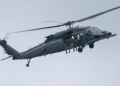
One of the newly released videos captures the recovery operation from an infrared perspective.
The footage shows two US Air Force pararescuemen moving toward Bravo, locating him and bringing him toward the extraction aircraft.
After nearly two days injured and isolated in hostile territory, the moment the rescuers reached him marked the end of an ordeal that had begun with a catastrophic ejection.
Bravo later recalled that seeing the rescue team was “one of the greatest moments” of his life.
His response when the rescuers reached him was remarkably simple: “Let’s go.”
How large was the US rescue operation?
The search for Bravo required a much larger force than a conventional helicopter extraction.
According to reporting on the operation, more than 90 elite US military personnel were involved, alongside intelligence support from the CIA.
The mission was completed on Easter Sunday, April 5, after an approximately 50-hour search-and-rescue effort.
The newly released footage is significant because operations inside hostile territory are rarely documented publicly while they are unfolding. Images from the mission provide a glimpse into how American forces located and recovered an injured airman while attempting to avoid detection.
How did the CIA help find the missing airman?
The rescue was not simply a military search from the air.
Intelligence personnel played a role in locating Bravo and supporting the operation. Reports about the mission said the CIA conducted a deception effort intended to confuse Iranian forces searching for the missing American.
The intelligence agency eventually helped establish Bravo’s location, allowing military planners to coordinate the extraction.
The operation therefore combined intelligence collection, deception, special operations and combat search-and-rescue capabilities.
What happened to the aircraft and rescue equipment?
The extraction itself created another problem.
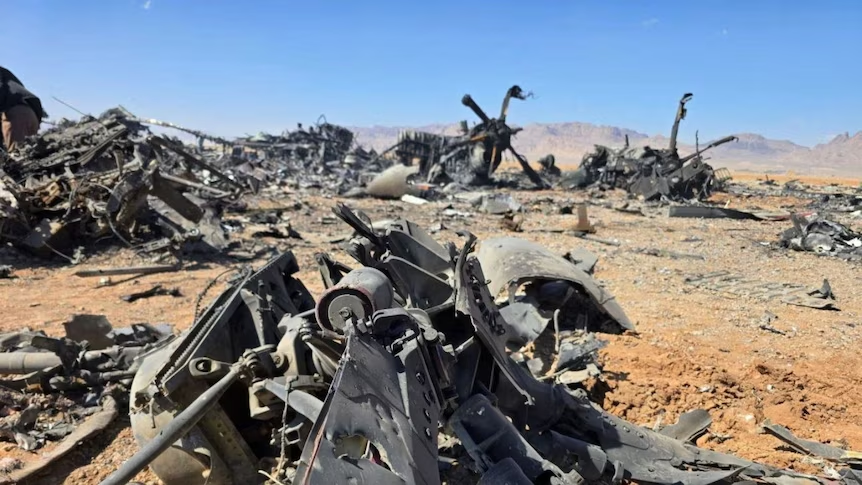
Aircraft involved in the operation at a remote airstrip were reportedly damaged, leaving US forces concerned about sensitive equipment falling into Iranian hands.
The military subsequently destroyed damaged aircraft before withdrawing, according to reporting on the mission.
The dramatic extraction was closely monitored at the highest levels of the US government. President Donald Trump announced the recovery on social media at the time, describing it as a major US search-and-rescue operation.
Who is Bravo?
The officer has publicly appeared under the mission call sign Dude 44 Bravo rather than having his full identity disclosed.
He was the weapons systems officer aboard the F-15E and was responsible for mission systems and weapons-related duties alongside the aircraft’s pilot.
His first public interview was conducted by Norah O’Donnell for 60 Minutes. The interview formed part of the show’s September 13 season premiere and gave the public his first detailed account of the ejection, injuries, time spent evading capture and eventual rescue.
Why the rescue was so dangerous
Combat search-and-rescue missions are already complicated. Conducting one inside an adversary’s territory adds another layer of risk.
The rescuers had to locate a wounded airman, reach him without alerting hostile forces and extract him while protecting the personnel and aircraft involved in the operation.
For Bravo, the danger began before he even reached the ground. His damaged parachute and violent landing left him seriously injured, yet he still had to move through unfamiliar terrain and remain hidden.
His survival over the next two days gave rescuers time to find him, but it also meant the operation had to be conducted against the possibility that Iranian forces could reach him first.
What does the newly declassified footage reveal?
The videos do not simply document the final moments of the rescue. They show the complexity of recovering an American service member deep inside an active conflict zone.
They also provide a rare visual record of the coordination between search aircraft, special operations forces and the pararescuers who ultimately reached Bravo.
For military historians, the footage offers an unusual look at a contemporary combat rescue. For Bravo, it captures the moment when two days of isolation ended with American rescuers finally reaching him.
His words were brief.
“Let’s go.”