In January, an ornate government building in Islamabad played host to a meeting that looked, at first glance, like a state visit. But the guest of honour wasn’t a head of state—it was Zachary Witkoff, a crypto executive and son of U.S. envoy Steve Witkoff.
Flanked by Shehbaz Sharif and Asim Munir, Witkoff’s presence underscored something bigger than a routine business engagement. It marked the emergence of what insiders are calling “crypto diplomacy”—or, in the words of one of its architects, “biplomacy.”
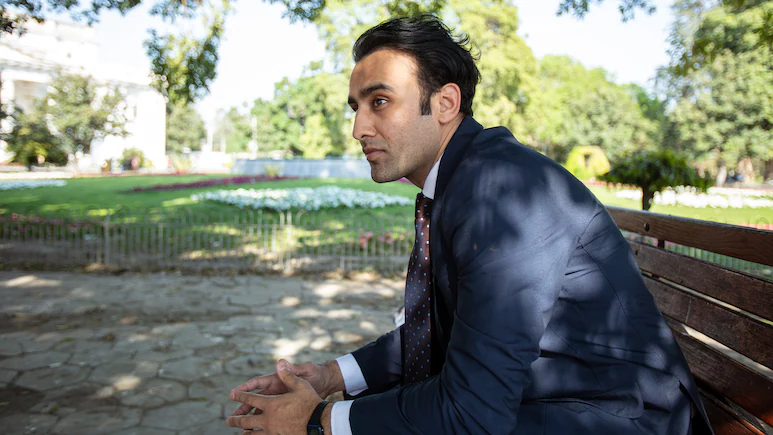
At the centre of it all is a relatively unknown figure turned power broker: Bilal Bin Saqib.
What Is “Crypto Diplomacy” and Why Does It Matter?
Crypto diplomacy refers to the use of cryptocurrency policy, partnerships, and symbolism to build geopolitical relationships.
In Pakistan’s case, it’s less about blockchain innovation and more about strategic positioning.
A new kind of diplomatic currency
Traditionally, countries build influence through:
- Military alliances
- Trade agreements
- Energy partnerships
Pakistan is now experimenting with a fourth lever: crypto alignment—particularly with U.S. political and business interests tied to Donald Trump.
Why crypto?
Because it offers:
- Speed: Deals and narratives can move faster than traditional diplomacy
- Access: Entry into influential Silicon Valley and financial networks
- Signalling: A way to show openness to innovation and investment
As one analyst put it, in an unconventional administration, unconventional tools can carry real weight.
Who Is Bilal Bin Saqib and How Did He Rise So Fast?
Until recently, Bilal Bin Saqib was far from a household name.
Today, he’s one of Pakistan’s most influential policy figures.
A rapid ascent
Within months, Saqib took on multiple roles:
- Chief adviser on crypto to Pakistan’s finance ministry
- CEO of the Pakistan Crypto Council
- Special assistant to the prime minister on blockchain
- Chairman of the Pakistan Virtual Assets Regulatory Authority
His rise is unusual, even by political standards.
By his own account, his expertise lies not in trading or technical design, but execution: turning ideas into action.
“I am the artist, not the scientist,” he said in a recent interview.
Building global crypto connections
Saqib has positioned himself at the centre of a powerful network, including:
- Changpeng Zhao (CZ), founder of Binance
- Cathie Wood, a prominent fund manager
- Michael Saylor, Bitcoin advocate
- Nayib Bukele, who made Bitcoin legal tender
But his most consequential relationship appears to be with World Liberty Financial.
How World Liberty Financial Fits Into the Picture
World Liberty Financial—co-founded by business interests linked to Donald Trump—has become a key bridge between Washington and Islamabad.
Saqib previously served as an adviser to the company before stepping down to join government service.
Why this relationship matters
The optics alone are powerful:
- A U.S. president’s business network engaging directly with Pakistan
- High-level meetings involving military and civilian leadership
- Public endorsements framing Pakistan as a rising crypto hub
Even if the underlying agreements—like the recent stablecoin deal—are exploratory and non-binding, the symbolism carries weight.
The Geopolitical Backdrop: More Than Just Crypto
Crypto diplomacy isn’t happening in a vacuum.
It intersects with a volatile geopolitical moment involving:
- Rising tensions with Iran
- Threats to global energy supply chains
- Strategic recalibration of U.S. alliances
Pakistan has positioned itself as a potential intermediary between Washington and Tehran.
Why Pakistan has leverage
- Geographic proximity to Iran
- Historical ties with both the U.S. and regional players
- A willingness to engage in unconventional diplomacy
Reports suggest Pakistan has already presented a multi-point plan to the U.S. and may host future talks tied to key diplomatic deadlines.
Energy Crisis and Strategic Incentives
Pakistan’s crypto pivot also reflects domestic urgency.
The country faces:
- A potential energy shortage
- Economic instability and debt pressures
- Limited foreign investment inflows
Complicating matters, disruptions in the Strait of Hormuz—linked to tensions with Iran—could further strain energy imports.
Crypto as a dual-purpose tool
Pakistan’s strategy aims to:
- Attract foreign capital
- Rebrand itself as a tech-forward economy
- Strengthen diplomatic ties with Washington
It’s not just about Bitcoin—it’s about survival and relevance.
From Crypto Sceptic to Crypto Advocate
Just two years ago, Pakistan’s stance on crypto was cautious at best.
Regulators cited:
- Fraud risks
- Ponzi schemes
- Money laundering concerns
What changed?
By 2024, several factors converged:
- Economic stabilisation after years of crisis
- Pressure to diversify financial tools
- Recognition of crypto’s geopolitical value
Policy shifts
Pakistan moved quickly to:
- Pass virtual asset legislation
- Establish a regulatory authority
- Allocate 2,000 megawatts (about 5% of its grid) for crypto mining
- Propose a national crypto reserve
This rapid pivot signals a coordinated, top-down strategy rather than organic market growth.
The Trump Factor: Personal Ties and Political Capital
One of the most striking elements of this story is the role of personal relationships.
Donald Trump has publicly praised Asim Munir, calling him a “great general” and “serious fighter.”
Pakistan, in turn, has:
- Voiced support for Trump on global platforms
- Positioned itself as aligned with U.S. strategic interests
- Leveraged crypto ties to deepen engagement
Why this matters
In administrations where personal rapport influences policy, these connections can translate into tangible diplomatic advantages.
Risks and Open Questions
While the strategy is bold, it’s not without risks.
Key concerns
- Regulatory uncertainty: Crypto markets remain volatile and loosely regulated
- Conflict of interest questions: Ties between political figures and private ventures may draw scrutiny
- Execution challenges: Rapid institutional changes can outpace governance capacity
The bigger question
Is crypto diplomacy a sustainable strategy—or a short-term play tied to a specific political moment?
What This Means for Global Politics
Pakistan’s experiment could set a precedent.
If successful, other countries might:
- Use crypto policy as a diplomatic tool
- Align with influential tech ecosystems
- Leverage digital assets for geopolitical positioning
If it fails, it may reinforce scepticism around crypto’s role in statecraft.
TL;DR
- Pakistan is using “crypto diplomacy” to strengthen ties with the U.S.
- Bilal Bin Saqib is a central figure in this strategy
- Partnerships with World Liberty Financial and U.S. figures close to Donald Trump are key
- The move is tied to broader geopolitical and economic pressures
- It’s a high-risk, high-reward attempt to reposition Pakistan globally