
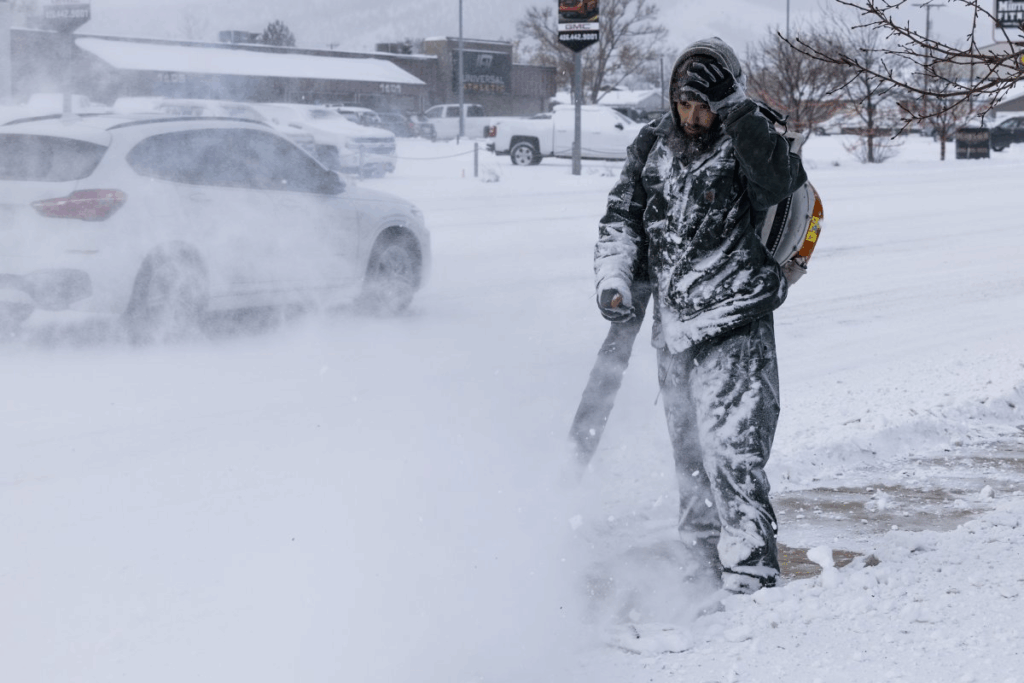
While millions of Americans endure scorching heat under a relentless “heat dome,” parts of Montana and the Rockies received a winter-style surprise snowfall during the first weekend of summer. Social media erupted with awe as residents and visitors shared images of snow-capped peaks and frosty meadows, calling the phenomenon “pure magic.”
The National Weather Service (NWS) had warned of heavy, wet snow in higher elevations, particularly around Glacier National Park, where accumulations could reach 12 to 18 inches above 6,000 feet. Meanwhile, lower elevations (around 5,000 feet) in the Rockies and Cascades saw a lighter dusting.
So, how does summer snow happen? And is it really that unusual? Here’s what’s behind this striking weather event.
Why Is It Snowing in Summer?
Summer snow is rare but not unheard of in high-altitude regions like the Rockies and Cascades. Here’s what’s driving this cold snap:
- Elevation Matters: Higher altitudes (above 5,000–6,000 feet) maintain cooler temperatures year-round. When a cold front clashes with moisture, snow can form even in June.
- Unusual Storm Patterns: A dip in the jet stream allowed Arctic air to plunge into the Northwest, colliding with Pacific moisture to create snowfall.
- “Heat Dome” Contrast: While the central and eastern U.S. bakes under record heat, the western mountains experienced the opposite extreme—a dramatic example of regional weather variability.
Did You Know?
- Denver, Flagstaff, and Salt Lake City have all recorded June snow before.
- In July 2016, parts of the northern Rockies saw snowfall, proving summer flurries aren’t unprecedented.
Social Media Reacts: “Cold But Pure Magic”
From Glacier National Park to Mount Rainier, the internet lit up with stunning visuals:
- One visitor posted: “Friday might have been the first day of astronomical summer, but it looked a lot like winter on Mount Rainier.”
- Another wrote: “It’s the first Saturday of summer, and it’s still snowing in the mountains across parts of the West.”
The contrast between the heat wave gripping much of the country and these snowy scenes made the event even more surreal.
Is Summer Snow a Sign of Climate Change?
While isolated summer snow doesn’t directly indicate long-term climate shifts, scientists note that extreme weather variability, from heat domes to unseasonal cold, aligns with broader climate trends.
- Warmer Averages, Weirder Extremes: Rising global temperatures can disrupt typical weather patterns, leading to more frequent anomalies.
- High-Elevation Sensitivity: Mountain ecosystems are particularly vulnerable to climate shifts, with snowpack reductions affecting water supplies downstream.
Key Takeaway: This event is more about weather (short-term) than climate (long-term), but it underscores Earth’s increasingly unpredictable atmospheric behavior.
What’s Next for the Region?
The NWS expects the snow to melt quickly as temperatures rebound. However, travelers to high-altitude areas should still:
- Check road conditions (some mountain passes may temporarily close).
- Pack layers—summer hikes can still start with frosty mornings.