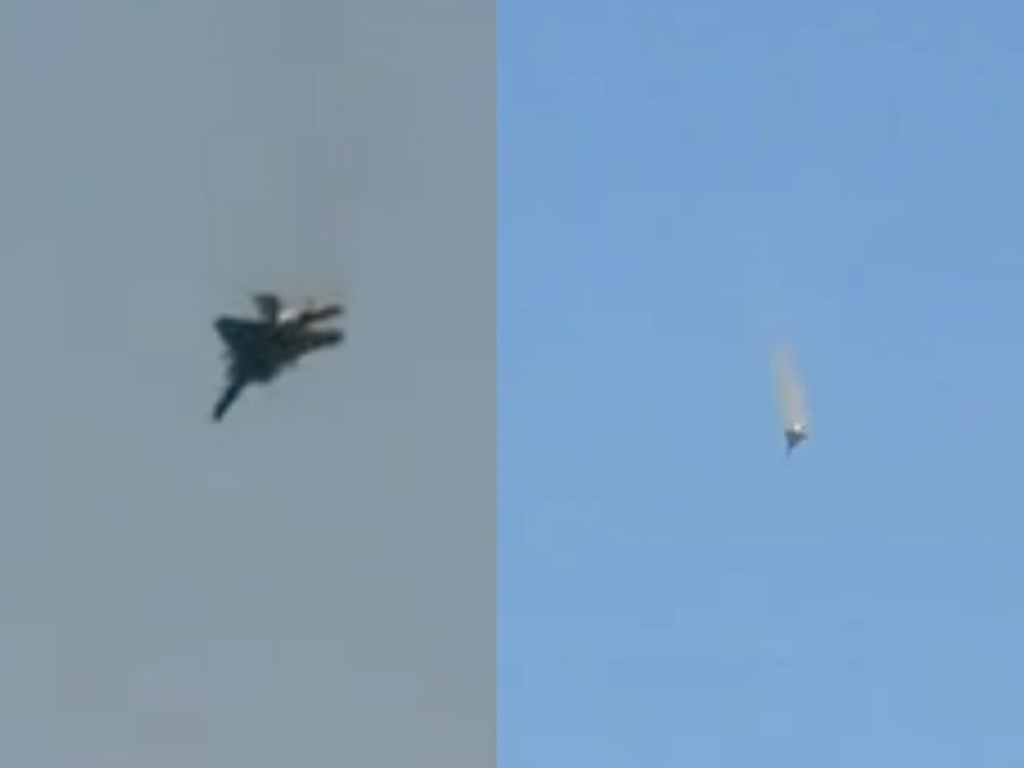
Is Kuwait under attack by Iran? That question surged across social media after reports that a US F-15 fighter jet crashed in Kuwait and black smoke was seen near the US Embassy. Videos flooded X and Telegram, some claiming the jet was shot down and the embassy struck. Official statements, however, paint a more cautious picture.
Here is what has been confirmed, what remains unverified, and why this incident matters in the wider US-Iran escalation.
What happened to the US F-15 in Kuwait?
Kuwait’s Ministry of Defence confirmed on March 2 that an American F-15 fighter jet crashed in Kuwaiti territory. The ministry said the pilot and crew were safely evacuated and transported to a hospital for medical care.
An investigation has been launched to determine the cause of the crash. The statement did not attribute the incident to hostile fire or mention Iran.
Was the F-15 shot down?
Unverified videos circulating online appear to show an aircraft descending rapidly, followed by footage of a pilot ejecting. Iranian state-linked outlets later shared images of a pilot, claiming he was the American airman involved in the crash.
Iran’s Mehr News Agency reported that Iran claimed responsibility for shooting down the aircraft. However:
• Kuwait has not confirmed hostile action
• US authorities have not publicly confirmed the cause
• No independent verification supports the shoot-down claim
Until US Central Command or the Pentagon issues a statement, the cause of the crash remains unclear.
For context, the McDonnell Douglas F-15 Eagle is a twin-engine, all-weather tactical fighter widely used by the US Air Force and allied nations. Mechanical failure, pilot error, or external fire are all possibilities that investigators would examine.
Was the US Embassy in Kuwait attacked?
Reports of black smoke near the US Embassy triggered fresh panic online. Soon after, the United States Embassy in Kuwait issued a security alert.
The alert warned of a continuing threat of missile and UAV attacks over Kuwait and instructed the public not to approach the embassy. It added that embassy personnel were sheltering in place.
Crucially, the statement did not confirm that the embassy had been hit.
In fast-moving conflict situations, embassies often issue precautionary alerts when air defense systems activate or missile threats are detected. That does not automatically mean a direct strike occurred.
How does this connect to the wider US-Iran conflict?
The Kuwait incident comes days after the United States and Israel launched strikes on Iran. Israel referred to its campaign as Operation Lion’s Roar, while the US reportedly named its operation Operation Epic Fury.
The escalation began on February 28 with strikes in Tehran. In the aftermath, Iran retaliated with missile launches targeting Israeli territory and US military bases in Gulf countries.
Among the reported targets were installations in Qatar, Kuwait, Bahrain, and the United Arab Emirates.
The situation intensified further after reports confirmed the death of Iran’s Supreme Leader, Ayatollah Ali Khamenei, during the strikes. Iranian leadership vowed continued retaliation.
Iran has warned that US bases in neighboring countries would be treated as extensions of American territory. That framing significantly raises the risk for Gulf states hosting US forces.
Why Kuwait matters strategically
Kuwait hosts significant US military infrastructure and personnel. Its geographic position near Iraq and the Persian Gulf makes it a key logistics and air operations hub.
If confirmed as a hostile shoot-down, an F-15 crash due to Iranian action would represent a major escalation. It would signal:
• Direct Iranian engagement with US aircraft
• Expanded battlefield beyond Iranian airspace
• Greater risk for Gulf host nations
On the other hand, if the crash proves mechanical, it would underscore how misinformation spreads during high-tension periods.
What role is misinformation playing?
Conflict creates an information vacuum. In that vacuum, narratives compete.
In this case, multiple claims are circulating:
• Iran shot down a US fighter jet
• The US Embassy was directly hit
• The pilot was captured
None of these claims has been independently verified.
Iranian state-linked channels, including Press TV, shared an image purportedly showing the pilot after ejection. Without confirmation from US officials, such images should be treated cautiously.
Are Gulf nations at risk?
Kuwait is not alone. Bahrain, Qatar, and the UAE also host US bases. If Iran continues retaliatory strikes, these countries could find themselves directly in the line of fire.
Regional governments have urged de-escalation while simultaneously reinforcing air defenses.
What happens next?
Several key developments will determine the trajectory of this crisis:
• A US statement clarifying the cause of the F-15 crash
• Confirmation or denial of embassy damage
• Evidence of additional Iranian strikes
• Diplomatic responses from Gulf states
If the aircraft was indeed shot down, it would mark a significant shift in the rules of engagement between Washington and Tehran.
If not, it will stand as a case study in how quickly wartime rumors can harden into perceived fact.
TL;DR
• A US F-15 crashed in Kuwait; pilot evacuated safely
• Kuwait has not confirmed hostile fire
• Iranian outlets claim responsibility, unverified
• US Embassy issued a missile threat alert but did not confirm a strike
• Regional tensions remain extremely high after US-Israel attacks on Iran