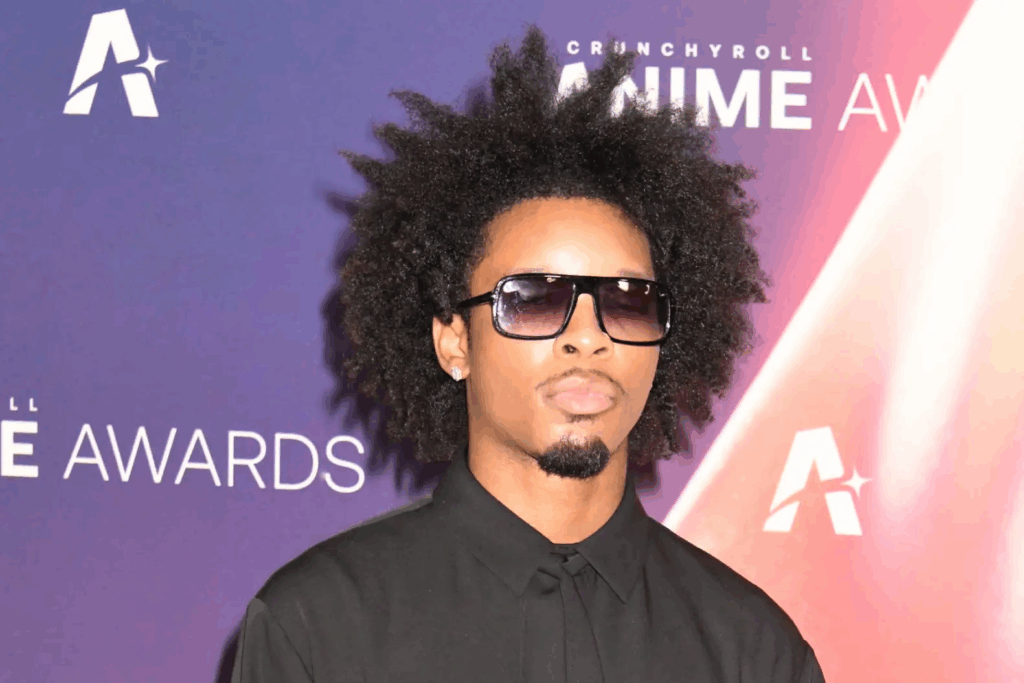
The D4vd case has become one of the most closely watched and heavily searched investigations of 2025. The 20-year-old singer, whose real name is David Anthony Burke, surged to the top of Google’s Year in Search 2025 amid the ongoing death investigation of 15-year-old Celeste Rivas.
His rise in search interest wasn’t driven by new music, tours, or celebrity buzz, but by a case that has raised questions about transparency, public accountability, and police procedure.
This article breaks down what is known, why the story continues to dominate headlines, and what larger issues it exposes.
What Led to the Surge in D4vd Searches?
Google’s Year in Search report—shared with media outlets including Complex—shows that D4vd saw the largest global spike in searches of any public figure in 2025. The primary keyword “D4vd case” saw steep upward momentum beginning in September, when major developments in the death investigation became public.
Why this matters
Search trends often reveal where public anxiety, curiosity, or unresolved narratives converge. In this case:
- The singer’s unexpected involvement in a homicide probe created a dramatic contrast with his rising musical career.
- Sparse official disclosures fueled speculation, pushing people to search for updates.
- A rare court-ordered security hold on the medical examiner’s findings added a layer of mystery.
What Do We Know About the Death of Celeste Rivas?
Discovery of the Body
Rivas was reported missing in April 2024 from Lake Elsinore, California. Her disappearance attracted limited national attention—until months later.
Her decomposed body was discovered in September 2025 inside the front trunk of a black Tesla registered to D4vd. The vehicle had been sitting in a Hollywood Hills neighborhood before being ticketed and later towed. Tow yard workers reported a foul smell, prompting the discovery.
Unanswered Questions
Authorities believe:
- Rivas likely died in the spring, months before her body was found.
- She may have been inside the vehicle for an “extended period,” according to an earlier update from the medical examiner’s office.
- The LAPD is investigating the death as a homicide.
Police also allege the singer was uncooperative early in the investigation and may have assisted in dismembering and disposing of the remains. These details remain unproven publicly and should be fact-checked against official police statements.
Why this case resonates
The victim was just 15 years old. The circumstances—hidden remains, a celebrity vehicle, a months-long timeline—evoke recent high-profile cases that captured public attention because they blurred lines between fame, internet culture, and law enforcement failures.
Why Did the Court Seal the Medical Examiner’s Records?
One of the most unusual—and controversial—developments is the court-ordered security hold placed on the medical examiner’s report.
What a security hold means
A security hold prevents the release of:
- Cause of death
- Autopsy details
- External examinations
- Any updates on the case
Typically, these holds exist to protect ongoing investigations.
However, Los Angeles County Chief Medical Examiner Dr. Odey Ukpo publicly questioned the practice, reportedly noting it is “virtually unheard of in other countries and has not been proven to improve outcomes in the legal system.”
Why are people concerned
A sealed record in a high-visibility case tends to generate:
- Public distrust due to lack of transparency
- Intense speculation on social platforms
- More search traffic, as people try to piece together missing information
How Did the D4vd Case Become a Global Story?
A collision of music fame and criminal suspicion
Before the case resurfaced, D4vd was best known for viral indie hits and bedroom-produced tracks that resonated with Gen Z audiences. Fans were young, highly online, and deeply engaged—conditions that amplify virality in both positive and negative ways.
The moment authorities confirmed he was a suspect, the story crossed over from niche Hollywood reporting into mainstream global news.
Media coverage + social algorithms = global attention
Several dynamics contributed:
- Massive social media amplification across TikTok, X, and Reddit
- True-crime communities investigating irregularities in the case timeline
- The involvement of a minor, seen as especially disturbing and urgent
- High-traffic outlets continuously updating coverage
The spike was not limited to the U.S. Google reported D4vd was the top trending person worldwide, surpassing political figures, athletes, and other celebrities.
Where the Investigation Stands Now
Confirmed facts
- D4vd is identified as a suspect.
- The case is officially treated as a homicide.
- Records related to Rivas’ death remain sealed by court order.
- The cause of death is not publicly known.
Unconfirmed or developing areas
- The extent of D4vd’s alleged involvement.
- Whether additional suspects or accomplices exist.
- Whether the sealed findings suggest new forensic evidence.
Authorities have not announced arrests or charges as of the latest update.
Why are updates limited
Investigators often withhold details in cases involving minors, decomposition, or potential accomplices. But the gap between public interest and official transparency continues to create a vacuum filled by speculation.
What Larger Issues Does the D4vd Case Expose?
1. Gaps in Missing-Teen Response Systems
Rivas disappeared 60 miles from where her body was found. Families, advocates, and experts often highlight how:
- Many missing teens—especially from working-class communities—receive minimal media attention.
- Delays in early search efforts can lead to months-long gaps, as seen here.
2. Celebrity Influence on Investigations
When a public figure is involved, even tangentially:
- Investigations face greater scrutiny.
- Police may alter information-release strategies.
- Fans and anti-fans alike flood platforms with theories.
This can help or hinder investigations, depending on the accuracy and virality of the information shared.
3. Transparency in Forensic and Legal Processes
Security holds on medical records—especially when questioned by the medical examiner himself—raise important questions:
- Should the public expect more transparency?
- Are security holds protecting investigations or creating secrecy?
This case could become a reference point in future legal debates about public access to forensic details.
TL;DR: What to Know About the D4vd Case
- D4vd topped Google’s most searched people of 2025 due to his connection to Rivas’ death.
- Rivas’ body was found in his Tesla; the case is treated as a homicide.
- A rare court order sealed details from the medical examiner’s report.
- D4vd is a suspect, but authorities have not confirmed charges.
- The case highlights broader issues around missing teens, police transparency, and celebrity culture.