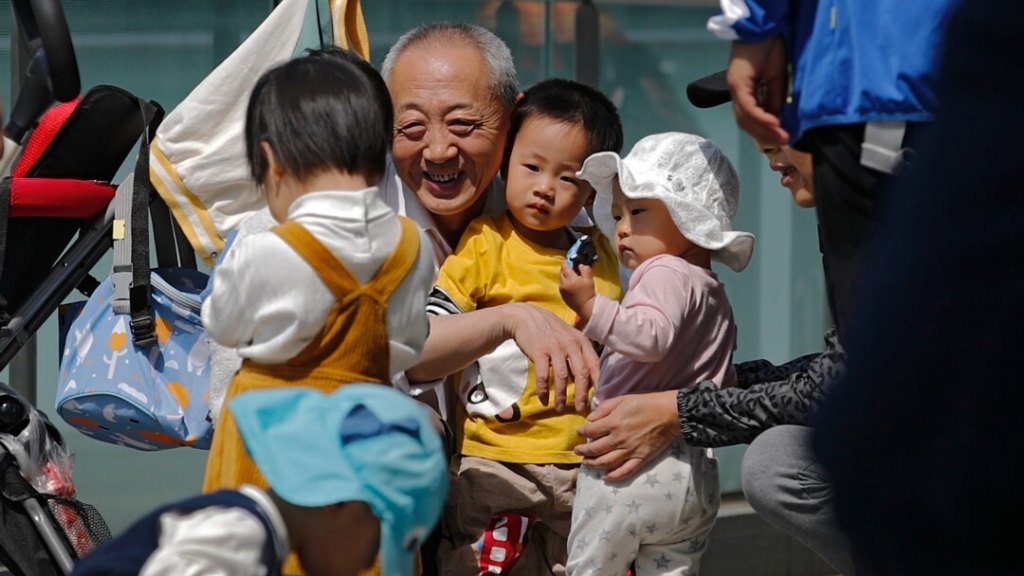
China has reached a demographic milestone with far-reaching consequences. In 2025, the country recorded its lowest birth rate since the founding of the People’s Republic in 1949, underscoring a population decline that Beijing has struggled for years to slow, let alone reverse.
Official data shows fewer babies, fewer marriages, and a shrinking workforce, trends that are colliding with President Xi Jinping’s push for long-term economic stability and social resilience. Despite new financial incentives and policy tweaks, China’s demographic slide appears to be accelerating.
What do the latest birth rate numbers show?
According to the National Bureau of Statistics, China’s birth rate fell to 5.6 births per 1,000 people in 2025, the lowest level ever recorded in the country’s modern history.
In absolute terms, newborns declined by 1.6 million year-on-year, total births fell to 7.9 million, and the overall population shrank by 3.4 million to about 1.405 billion.
This marks China’s largest population decline since the Great Famine of the early 1960s, a comparison that underscores how severe the demographic shift has become even in the absence of a national disaster.
Why China’s demographic crisis is deepening
The falling birth rate is not a one-year anomaly. It reflects long-term structural changes that are now converging.
Fewer women of childbearing age
One of the biggest drivers is simple math. The number of women in their prime childbearing years is shrinking rapidly, a delayed consequence of decades of low fertility during the era of the one-child policy.
Even if every eligible woman decided to have more children, the total number of births would still struggle to rise meaningfully.
Marriage rates are collapsing
Marriage, which remains closely linked to childbirth in China, is also declining. Young adults are marrying later or not at all due to rising housing and education costs, job insecurity, long working hours, and changing social attitudes toward family life.
Without reversing the marriage trend, pro-birth policies face a built-in ceiling.
What incentives has Beijing introduced to boost births?
Alarmed by the numbers, the Chinese government has rolled out a range of pro-natalist measures that expanded through 2025 and early 2026.
Financial support for families
Under the latest measures, couples receive around $500 per year for each child under the age of three. Additional subsidies are offered in some provinces for childcare and early education.
The goal is to reduce the immediate financial burden of raising young children, particularly in major cities where costs are highest.
Tax and policy changes
Beijing has also introduced policy adjustments aimed at encouraging family formation. These include easier marriage registration, extended maternity and paternity leave, and a 13 percent value-added tax on contraceptive drugs and devices that took effect on January 1, 2026.
The tax measure has drawn criticism from some experts, who argue that it targets behavior without addressing deeper economic pressures.
A comparison table showing China’s incentives alongside those of Japan and South Korea would add context here.
Why experts say incentives may not be enough
Despite these efforts, many demographers remain skeptical that the measures will significantly lift birth rates.
Subsidies seen as too small
Independent demographer He Yafu has said the current level of government support is too limited to meaningfully influence family planning decisions. For many urban couples, the cost of raising a child, including housing, education, healthcare, and lost income, far exceeds the subsidies on offer.
In cities such as Beijing and Shanghai, childcare and schooling alone can absorb a large share of household income.
Structural forces outweigh policy nudges
Experts point to deeper challenges that short-term incentives cannot easily overcome. These include a highly competitive education system, workplace cultures that penalize parents, especially women, and persistent gender inequality in caregiving responsibilities.
Without broader reforms in labor policy, housing affordability, and education costs, financial bonuses may have limited impact.
How the one-child policy still shapes today’s crisis
Although China officially ended the one-child policy in 2015, its demographic effects are proving long-lasting.
A smaller generation of potential parents
Decades of strict birth limits produced a smaller cohort of young adults. This has resulted in fewer potential mothers today, a structural imbalance that cannot be quickly corrected.
The policy also contributed to an aging population, a skewed age structure, and growing pressure on the working-age population to support retirees.
Why a shrinking population worries Beijing
China’s leadership sees the demographic downturn as a strategic economic challenge rather than just a social issue.
Economic growth under pressure
A shrinking and aging workforce raises concerns about slower growth, rising labor costs, and reduced productivity over time. As fewer young workers enter the labor market, sustaining economic momentum becomes harder, particularly as China tries to pivot toward innovation-led growth.
Strain on pensions and healthcare
China’s pension system is already under strain. Fewer workers contributing means greater fiscal pressure on local governments, higher healthcare costs for an aging population, and widening inequality between urban and rural retirees.
These risks make demographic recovery a central policy priority.
How China compares with other low-birth-rate countries
China is not alone in facing ultra-low fertility. Japan, South Korea, and several European countries have dealt with similar trends for years. What sets China apart is scale.
With a population still exceeding 1.4 billion, even small percentage declines translate into millions of people, with significant global economic implications.
What could actually change China’s fertility trajectory?
Most experts agree that reversing the decline will require deeper reforms rather than incremental incentives.
Potential long-term measures include affordable housing for young families, universal childcare systems, workplace reforms that protect parents, and efforts to reduce education and tutoring costs.
These steps are politically and economically complex, but without them, China’s birth rate is likely to continue falling.
Why this moment matters
The 2025 figures mark more than a statistical record. They suggest China’s demographic transition has entered a phase that may be difficult to reverse even with aggressive intervention.
For Beijing, the challenge is no longer simply encouraging people to have more children. It is about reshaping an economic and social model built during decades of rapid growth and strict population control.
How China responds will shape not only its own future but also global labor markets, supply chains, and growth patterns in the decades ahead.
TL;DR
China’s birth rate fell to 5.6 per 1,000 people in 2025, the lowest since 1949. Births dropped to 7.9 million, and the population shrank by 3.4 million. Government incentives and tax changes have failed to reverse the trend so far. Fewer women of childbearing age and declining marriage rates are key drivers. The demographic crisis poses serious risks to economic growth and pension stability.